Tile choices
Choosing between clay tile, concrete tile and stone-coated steel
Three ways to get a tile look on a Long Beach home, each with different weight, cost and lifespan. Here is how clay, concrete and stone-coated steel compare.
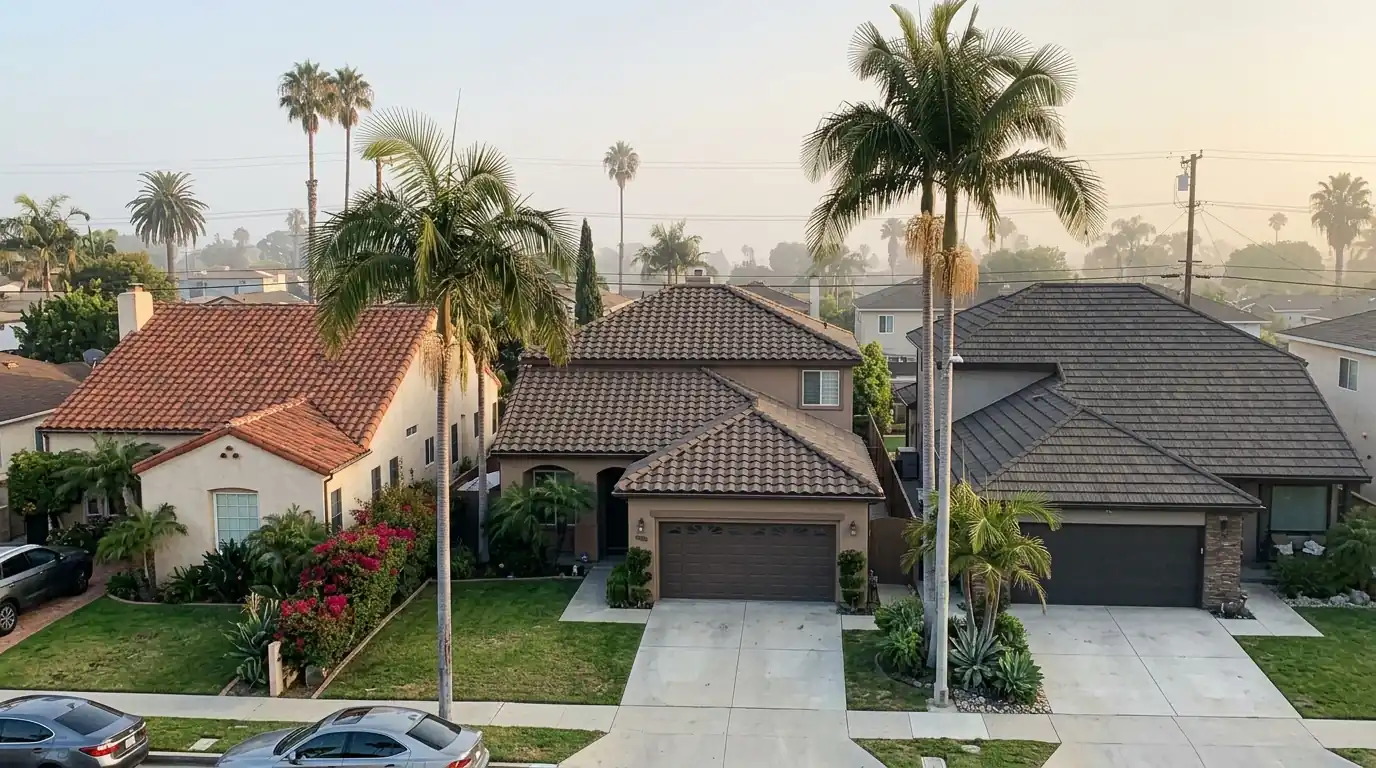
Tile roofs are part of the look of Long Beach, from the Spanish Revival cottages in Bluff Park and California Heights to the newer concrete S-tile homes in East Long Beach. If you are replacing a tile roof, or putting a tile look on a house for the first time, you have three main choices: clay tile, concrete tile and stone-coated steel.
They can look similar from the street, but they differ in weight, durability, cost and how they handle the coast. This guide compares them in plain terms, with typical Long Beach ranges for each. The right choice depends on your house, its structure, where it sits and what you want from the roof.
Clay tile: the original
Clay tile is fired clay, the material on the original Spanish Revival homes of the 1920s and 1930s. Barrel tiles in red and terracotta tones are the classic look, and clay keeps its color for decades because the color is in the clay itself. It handles sun, heat and salt air very well.
Clay is also heavy and more brittle than the other options. It cracks if walked on carelessly or hit by a falling limb. It costs the most of the three: clay tile roofing typically runs $14.60 to $27.40 per sq ft in Long Beach. On homes that had clay originally, the structure is usually built for the weight, and in historic districts clay is often the expected material.
Concrete tile: the common choice
Concrete tile is made from cement and sand, molded into shapes such as S-tile, flat and barrel profiles. It is common on newer Long Beach homes and on many re-roofs. It is strong, handles sun and wind well and costs less than clay: concrete tile roofing typically runs $10.80 to $18.40 per sq ft.
Concrete is heavier than clay in many profiles, so moving from shingle to concrete tile can call for a structural check. Its color often sits on the surface and can fade over decades, and older concrete tile can get porous and soak up water. It is a solid, practical choice when the structure can carry it.
Stone-coated steel: the light option
Stone-coated steel is steel panels pressed into tile, shake or shingle shapes and coated with stone granules. From the street it can look much like tile, and it weighs a small fraction of what clay or concrete does. That makes it a strong option when the structure cannot take heavy tile, or when an owner wants the tile look on a house that had shingles.
It resists cracking, so foot traffic and falling debris are less of a worry, and the panels interlock well in wind. Stone-coated steel roofing typically runs $10.40 to $16.90 per sq ft. Near the ocean, choose a product made for coastal exposure. Material warranties vary by product and manufacturer, and some limit coverage close to salt water.
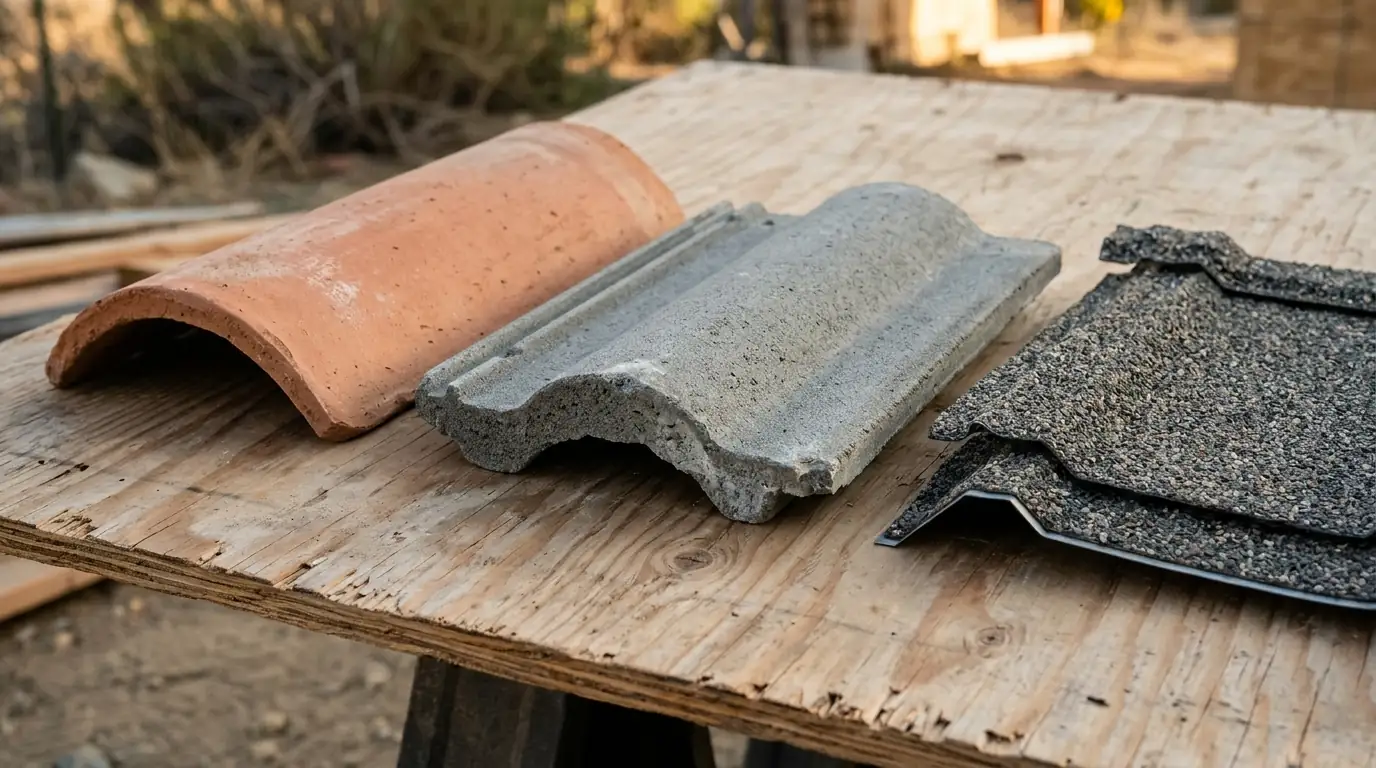
Structure, weight and earthquakes
Weight is a key issue in a seismic area. Heavy tile adds load to the roof framing, and switching from shingle to concrete or clay can need structural review and possibly framing upgrades. Older Craftsman and Spanish homes may also have framing that has sagged over the years.
Old tile roofs need care in earthquakes. Loose tiles can slide off, so we check that tiles are fastened properly on every tile job. Lighter stone-coated steel avoids much of this concern, which is one reason some owners choose it when replacing tile on homes with weaker framing.
How each one handles Long Beach weather
Our weather is gentle on tile in most ways. Winters are mild, and rain is rare most of the year. The stresses are strong UV, long dry heat, wind and, near the coast, salt air. Clay shrugs off sun and salt, and its color stays put. Concrete handles sun well but can slowly lose surface color and get more porous over decades, which matters most on roofs that see a lot of moisture from the marine layer.
Stone-coated steel handles wind well because the panels interlock and fasten directly to the deck, and it does not crack when palm debris lands on it. Its weak points are cut edges and fasteners, which need a coastal-rated product and careful detailing near the ocean. With all three, the flashings and fasteners are what age fastest within a mile or two of the water, so we use corrosion-resistant metal on coastal jobs whichever material you choose.
Historic districts and the look of the street
In Long Beach historic districts such as Bluff Park, Belmont Heights, California Heights, Bluff Heights and Rose Park, homes can need extra review before visible material changes. Replacing clay with clay of the same profile and color usually raises the fewest questions. Switching to concrete or stone-coated steel is a visible change that may need review.
Outside historic districts, the choice is more open. Still, the look of the house matters. A 1920s Spanish Revival home often looks best with clay, while a 1970s or newer home may look right with concrete or steel. We bring samples so you can see the material on your house in daylight.
Making the choice for your house
If your house has clay tile in good shape and only the underlayment is failing, a lift and relay keeps your tile and renews the waterproofing, at $9.40 to $15.80 per sq ft. If you are replacing, start with the structure: can it carry tile, or would a lighter roof be safer? Then weigh look, budget and how close you are to the coast.
Here is a quick summary of how the three compare. One thing they share: the waterproofing is the underlayment beneath them, and felt under tile often fails after 20 to 30 years even when the tiles look fine. Whichever material goes on top, we pay close attention to what goes under it.
The City of Long Beach requires a building permit for re-roofing, and changing to a heavier material may bring structural review. We look at the framing, measure the roof and give you a clear comparison of the options that fit your home. The real price comes after we look at your roof.
- Weight: clay and concrete are heavy; stone-coated steel is light
- Cost: clay highest, concrete and stone-coated steel similar
- Look: clay is the traditional look; concrete and steel imitate it well
- Breakage: clay and concrete crack; steel resists breaking
- Coast: clay and concrete hold up well; steel needs a coastal-rated product
- Color: clay holds color best; concrete and steel coatings can fade
Key takeaways
- Clay is the traditional, longest-lasting look and costs most
- Concrete tile is practical but heavy
- Stone-coated steel gives a tile look at a fraction of the weight
- The underlayment beneath any of them does the waterproofing
About the author
Hubert Tisdale edits Roof Advice for Denco Roofing Company. The articles draw on what our roofers see on Long Beach roofs every week.
FAQ
Reader questions
Can I mix new concrete tile with my existing clay tile roof?
It is possible on separate sections, but the two rarely match well in color and profile, and they age differently. On visible slopes the difference is usually obvious. Matching salvage clay tile is often the better choice for repairs.
Is stone-coated steel noisy when it rains?
Stone-coated steel is installed over a solid deck with underlayment, and the stone coating softens the sound of rain. Most owners hear little difference from tile. The setup matters, so we install it over a full deck rather than open framing.
Will switching from clay tile to stone-coated steel need historic review in Long Beach?
It might, if the home is in a historic district, because it is a visible material change. Districts such as Bluff Park and California Heights can need review before such changes. We check what applies to your address before you commit to a material.
A leak, a quote, or a question about your roof?
Call Denco at (562) 414-1770. Someone answers 24 hours a day, and our crews work out of Long Beach and La Mirada.