Find the source
Roof leak repair in Long Beach, CA
Water is showing up inside your home when it rains, and the last patch did not stop it because nobody found where the water was really getting in.
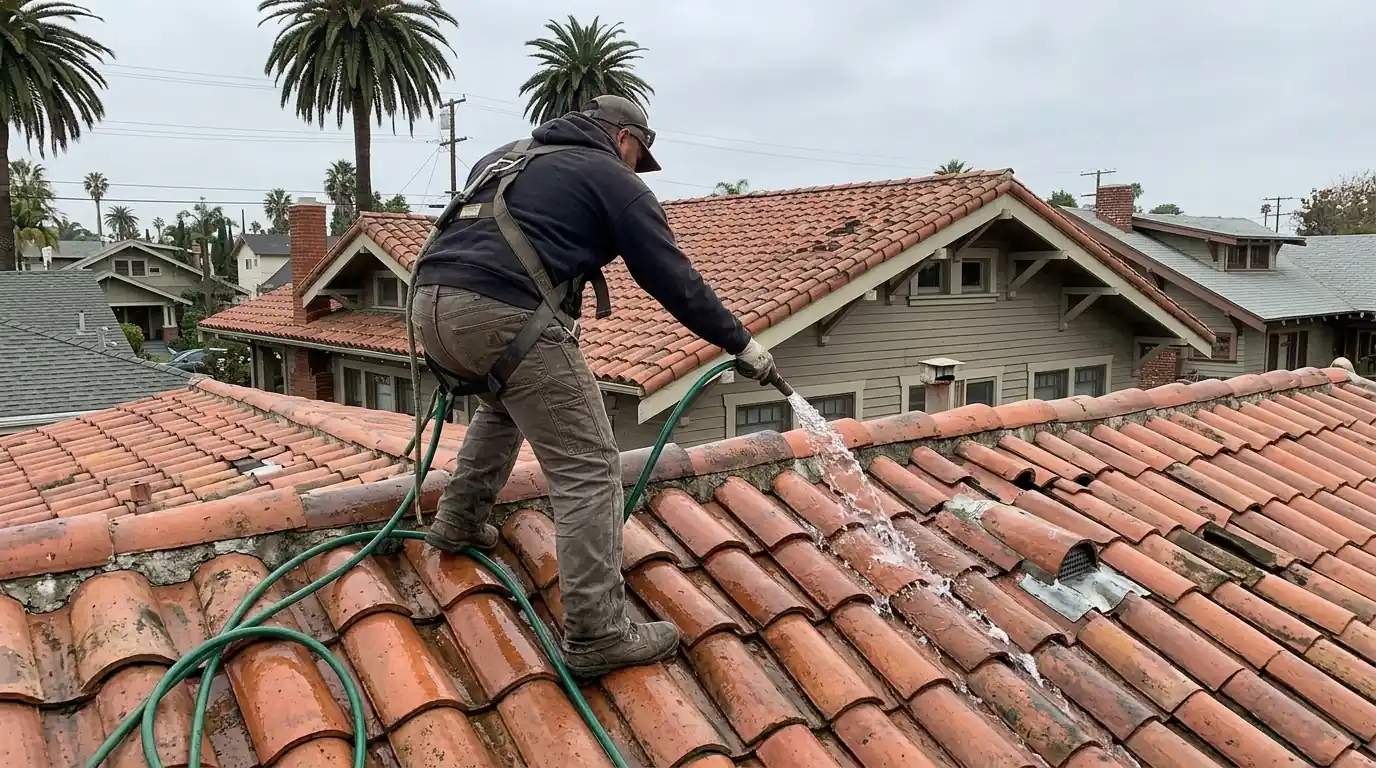
Roof leak repair means tracing water back to its entry point, then fixing that failure rather than smearing sealant where the stain shows. You need it the moment you see drips, ceiling stains or wet insulation. Expect $360 to $1,280 per leak, and we confirm the price once we have found the source.
Water rarely drips straight down. It gets under a tile or shingle, runs along the underlayment or a rafter, and comes out wherever gravity and the framing send it. That is why a stain over your hallway can start at a vent ten feet uphill, and why so many quick patches fail in the next storm. Leak repair is detective work first and roofing second.
Our roofers trace leaks from both sides. We go into the attic when there is one, follow water marks on the wood, and then match what we see to the roof above. When a leak is hard to pin down, we water-test sections of the roof in order, starting low and working up, until the drip shows inside. Then we repair that exact spot.
How we trace a leak to its source
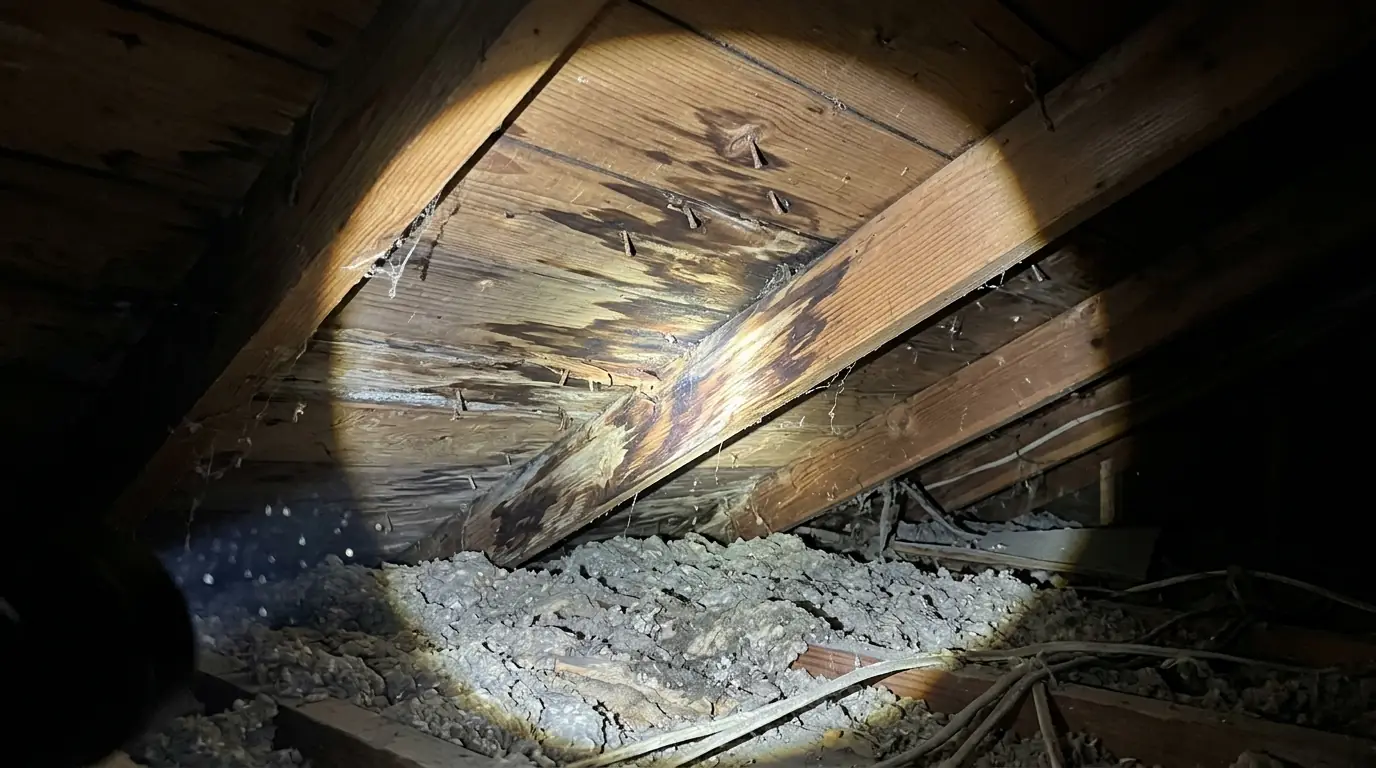
We start where you saw the water and work outward. In the attic we look for dark stains on the sheathing, rusty nail tips, damp insulation and the trail water leaves on rafters. Outside, we inspect everything uphill of that point: penetrations, flashing, valleys and any spot where the covering is cracked or lifted.
When the source is not obvious, we run a controlled water test. One person runs a hose on a single section of roof for several minutes while another watches inside. We move up the roof one section at a time. It takes patience, but it finds leaks that guessing never will.
- Attic inspection for stains, wet wood and drip trails
- Roof-side check of everything uphill of the stain
- Section-by-section water testing when needed
- Moisture readings on decking and drywall where useful
Where Long Beach roofs usually leak
Most leaks we trace come from the joints, not the open field of the roof. Pipe boots crack in the sun. Wall flashing pulls loose on additions. Valleys fill with leaves and tile debris and back water up under the edges. On tile roofs, the felt underlayment under the tile has often dried out and torn, so water that slips past a cracked tile has nothing left to stop it.
Flat roofs leak at seams, drains and parapet walls, and wherever water ponds for days after a storm. Older stucco homes can also leak at the wall itself, where cracked stucco or a failed window lets in water that looks like a roof leak. If that is what we find, we tell you.
- Cracked pipe boots and vent collars
- Open wall flashing on additions and dormers
- Clogged or worn valleys
- Torn underlayment under tile
- Seams, drains and parapets on flat roofs
Why sealant alone does not stop a leak
Roof cement and caulk have a place, but a leak fixed only with sealant usually comes back. Sealant shrinks and cracks under our UV, and it often traps water behind it. We replace failed parts with new ones: new pipe boots, new flashing, new underlayment under the tiles around the leak.
When the wood under the leak has gone soft, we cut out and replace the damaged decking before closing the roof. Leaving rotted sheathing under a new patch just moves the next leak a few inches over.
When to call about roof leak repair
Drips during rain
Active dripping or water running down a wall during a storm means water has a direct path inside.
Stains that grow
A ceiling stain that gets bigger after each rain is a leak that is still active, even if it looks dry now.
Musty attic smell
A damp or moldy smell in the attic or a closet often points to a slow leak soaking the insulation.
Peeling paint near ceilings
Bubbling paint or loose texture at the top of walls can be water traveling down from the roof.
Leak after the first storm
The first heavy rain of the season often exposes damage that built up all summer.
Repeated patching
If the same spot has been patched before and still leaks, the real source was probably never found.
Typical cost in Long Beach
What roof leak repair usually costs
$360 to $1,280 per leak
- How long it takes to find the source
- Roof type and how steep it is
- Whether wet decking has to be replaced
- Flashing or underlayment replacement around the leak
- Access to the attic and the leak area
Each leak is priced after we find it, and you approve the price before we start the repair. See every price range.
Leak season in Long Beach
Long Beach gets most of its rain in a few winter atmospheric-river storms, often between November and March, and very little the rest of the year. That pattern hides problems. A pipe boot can crack in July and nobody knows until the first real storm sends water through a bedroom ceiling. When that storm arrives, our phone gets busy fast, so tracing a suspected leak in the dry months is worth doing.
The housing stock adds its own quirks. Older tile homes in California Heights and Bluff Heights often have original or very old underlayment. Mid-century ranch homes in Los Altos and El Dorado Park Estates have additions where new roof meets old, a classic leak point. Near the water in Belmont Shore and Naples, salt air rusts flashing and fasteners through from the inside out.
How the job runs
How our crew handles roof leak repair
- 1
Tell us where it shows
Call (562) 414-1770 and describe where the water appears and when. Photos of the stain help us plan.
- 2
Attic and roof check
We trace water marks in the attic, then inspect everything uphill of the stain on the roof.
- 3
Water test if needed
For hidden leaks we test one roof section at a time with a hose until the drip shows inside.
- 4
Repair the entry point
We replace the failed part, whether flashing, a boot, underlayment or decking, instead of sealing over it.
- 5
Confirm it is dry
We water-test the repaired area again and send you photos of the source and the fix.
FAQ
Roof Leak Repair questions
Why does my roof leak repair keep failing in the same spot?
Usually because the patch went where the stain showed, not where the water entered. Water can travel several feet along underlayment and framing before it drips. We trace the path back to the real entry point and fix that.
Can you find a roof leak when it is not raining in Long Beach?
Yes. We read water stains in the attic, check the roof for failures uphill of them and, when needed, run a controlled hose test one section at a time. Dry weather is actually a good time to trace a leak properly.
Is my Long Beach ceiling stain from a roof leak or from plumbing?
It can be either. Stains that appear only after rain point to the roof, while stains that grow on dry days suggest plumbing or an AC line. Our roofer will tell you if the roof is not the source.
How much does roof leak repair cost per leak in Long Beach?
Our typical Long Beach range is $360 to $1,280 per leak. Simple boot or flashing failures sit at the low end, while leaks that need decking or underlayment replaced sit higher. We price each leak after we find it.
Does a tile roof leak in Long Beach mean the whole roof has to come off?
Not usually. Often the tile is fine and the underlayment beneath one area has failed. We can lift the tiles around the leak, replace the underlayment and flashing there, and relay the same tiles. If the underlayment is failing everywhere, we explain that and price a full lift and relay.
Where we do this work
Roof Leak Repair around Long Beach
Our crews do this work across Long Beach and the cities around it. A few of the places we cover:
A leak, a quote, or a question about your roof?
Call Denco at (562) 414-1770. Someone answers 24 hours a day, and our crews work out of Long Beach and La Mirada.