Wind and rain damage
Wind and storm damage roof repair in Long Beach, CA
A Santa Ana wind or a long winter rainstorm has left your roof with lifted shingles, slipped tiles or new leaks, and you need to know how far the damage goes.
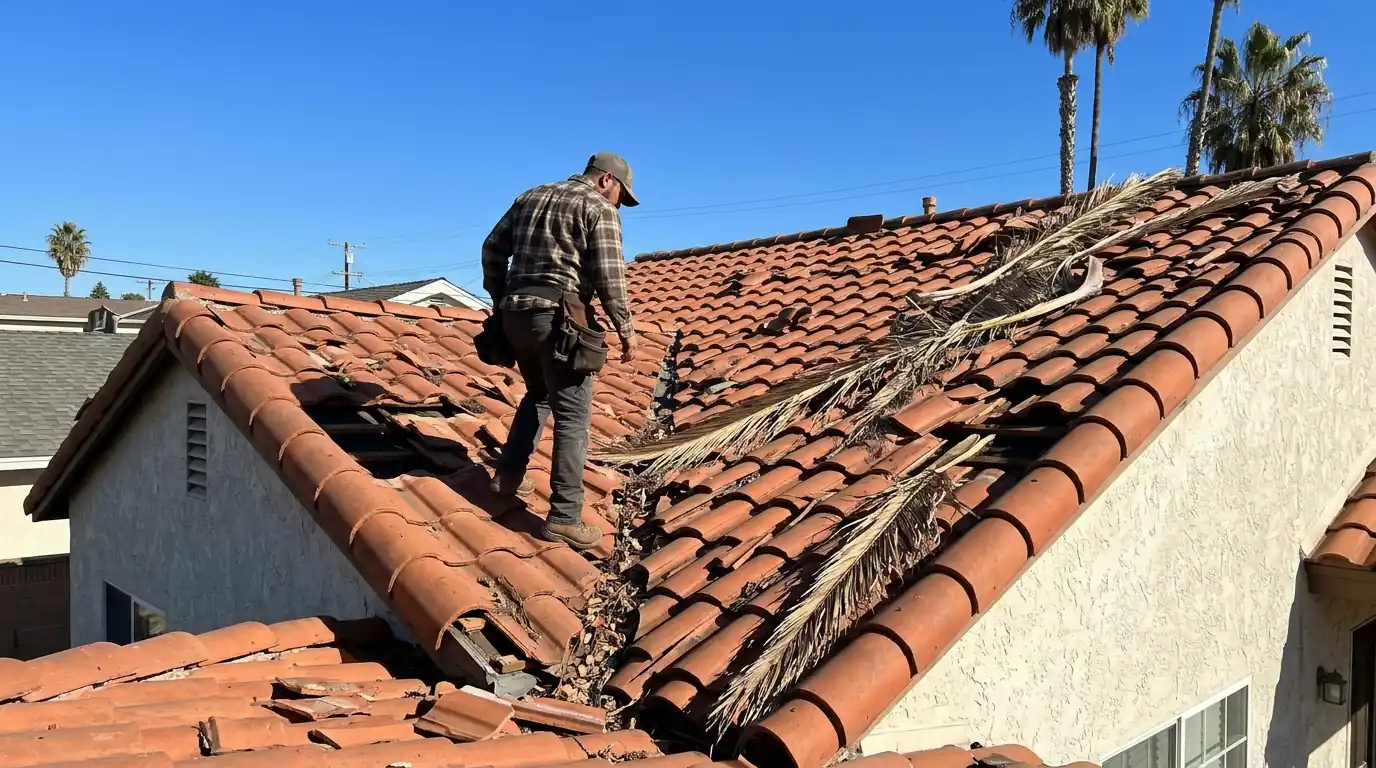
Storm damage repair restores the parts of a roof hurt by wind, driven rain and falling debris: torn or creased shingles, displaced tiles, bent flashing and soaked decking. Call after any strong wind event or a multi-day rain if you see debris or new stains. Expect $420 to $2,350 depending on the area damaged, confirmed after our inspection.
Storm damage in Long Beach has its own pattern. Here it comes from two things: strong offshore Santa Ana winds that lift and tear roofing, and long atmospheric-river storms that drive rain sideways for days and find every weak point. Both leave damage that is easy to miss from the ground.
Wind damage often starts small. A shingle tab gets lifted and creased, so the seal breaks even if it lays back down. A tile shifts an inch on its fastener. A ridge cap loosens. None of it shows until the next rain gets underneath. Our roofers know what to look for and walk the roof slope by slope after a wind event, not only where you saw a piece in the yard.
What wind does to tile and shingle
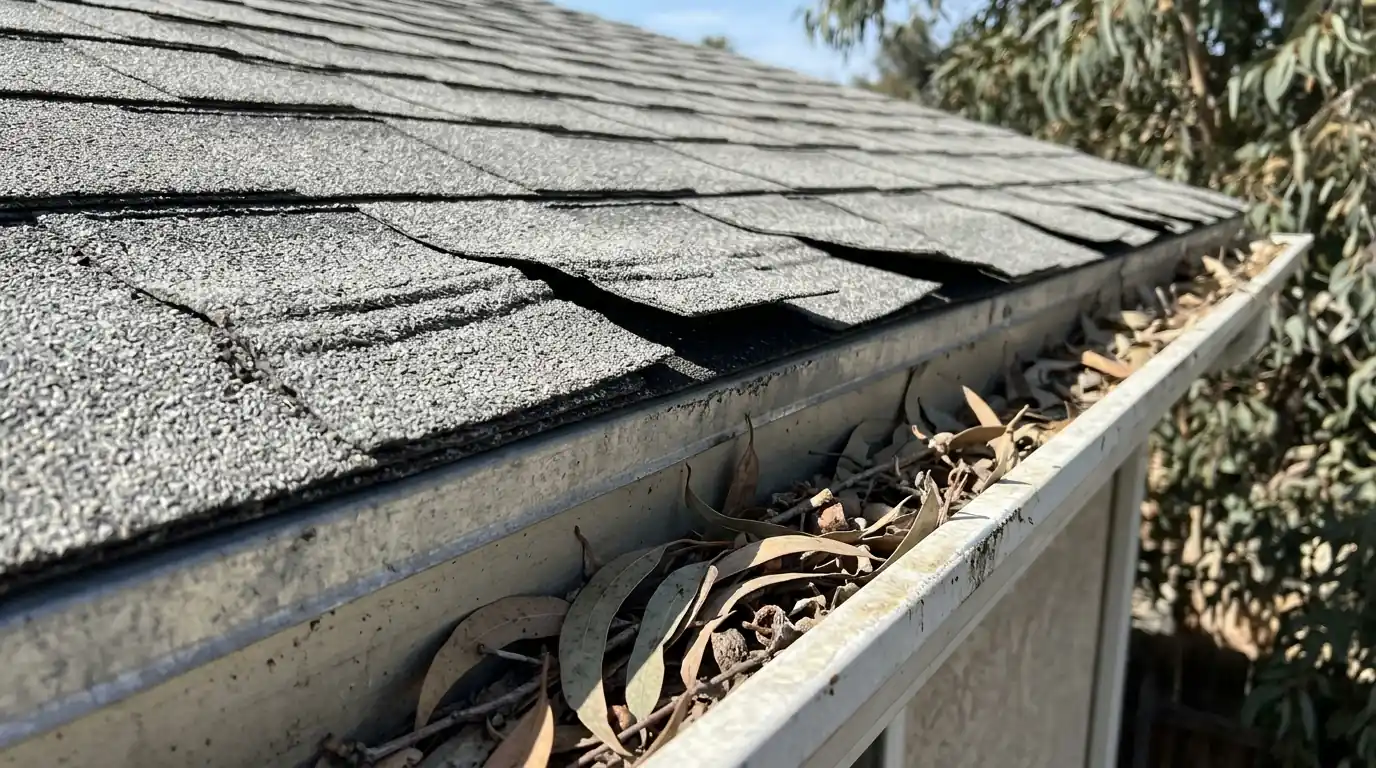
On composition shingle, wind gets under the leading edge of a tab and folds it back. Even when the tab falls back flat, the crease line weakens it and the adhesive strip has let go, so the next gust takes it off. We look for creases, broken seal strips and missing tabs along edges, ridges and rakes, where wind pressure is highest.
On tile, wind lifts the downhill edge of tiles that were set loosely or whose fasteners have rusted. Tiles slide, crack against each other or fall. Ridge and hip tiles set in old mortar break loose. Each missing tile leaves underlayment exposed to the sun and the next rain.
- Creased and unsealed shingle tabs
- Torn shingles at edges, rakes and ridges
- Slipped, cracked and missing tiles
- Loose ridge and hip caps
- Bent drip edge and lifted flashing
Damage from long rainstorms
An atmospheric-river storm can soak a roof for two or three days straight. Water gets driven under laps that normally shed rain, fills valleys and backs up behind debris. Underlayment that has dried out over years of sun finally gives way, and decking that has been slowly wetting for years turns soft.
After a storm like that, we check the attic and the decking as well as the surface. Wet insulation, swollen sheathing and new stains tell us where water got in and how long it sat. Fixing only the visible roofing over soaked wood leads to rot and the next leak.
Falling limbs and flying debris
Palm fronds, eucalyptus limbs and pieces of neighbors' fences end up on Long Beach roofs every wind season. A heavy frond can crack a row of clay tile. A limb can puncture shingles and decking. Debris in valleys and gutters dams water during the following rain.
We clear the debris, check every tile and shingle it touched, and repair punctures down to the decking where needed. If a tree keeps dropping limbs on the roof, we will tell you that trimming it back is worth doing before the next season.
Documenting damage for your insurer
Many homeowners file a claim after wind damage. We photograph each damaged area, note the type of roofing and the extent of the damage, and write down what repair it needs. You can share that with your insurer and their adjuster.
We repair storm damage either way. Whether a claim is approved depends on your policy and your insurer's review, not on us, and we will not tell you otherwise.
When to call about wind & storm damage repair
Pieces in the yard
Shingle tabs, tile shards or ridge caps on the lawn or driveway after a windy night mean the roof lost material.
Tiles out of line
Rows of tile that look uneven or tiles that have slid down the slope after a wind event.
New stains after rain
Fresh ceiling or wall stains after a long winter storm, especially near exterior walls.
Limb or frond impact
Any branch or heavy palm frond that hit or landed on the roof, even if nothing looks broken from below.
Flapping or loose edges
Drip edge, flashing or shingle edges moving in the wind or bent away from the roof.
Neighbors had damage
If homes on your block lost roofing in the same storm, your roof likely took the same wind.
Typical cost in Long Beach
What wind & storm damage repair usually costs
$420 to $2,350 depending on the area damaged
- How many slopes and areas were damaged
- Tile versus shingle, and matching older materials
- Whether wet decking has to be replaced
- Debris removal before repairs
- Ridge, hip and flashing work involved
The real number comes after we inspect the whole roof, and you approve it before work starts. See every price range.
Santa Ana winds and winter storms in Long Beach
Santa Ana winds blow offshore, from the northeast, mostly in fall and winter. That direction matters: roofing is usually installed to resist wind from the ocean side, so a strong offshore gust can catch shingle edges and tile from an unusual angle. Homes on higher ground near the bluff, on the slopes around Signal Hill and on open ranch blocks in Los Altos and El Dorado Park Estates take the brunt.
Winter storms test the city's older roofs. Many Craftsman and Spanish Revival homes in Belmont Heights, Bluff Heights and California Heights carry aging underlayment under their tile, and a two-day storm finds every tear. If your home sits in one of Long Beach's historic districts and storm damage means replacing visible material, we match the existing look and check what review the city requires.
How the job runs
How our crew handles wind & storm damage repair
- 1
Call after the storm
Call (562) 414-1770. If water is coming in, we tarp first and inspect when it is safe.
- 2
Slope-by-slope inspection
Our roofer checks every slope, edge and ridge, then the attic and decking for water.
- 3
Photo report
You get photos and notes of each damaged area, useful for your own records and your insurer.
- 4
Repair the damage
We replace torn shingles, reset and refasten tiles, fix flashing and replace soaked decking.
- 5
Secure the rest
We refasten loose tiles and reseal lifted tabs nearby so the next wind does not finish the job.
FAQ
Wind & Storm Damage Repair questions
How do I know if Santa Ana winds damaged my Long Beach roof?
Look for roofing pieces in the yard, tiles out of line or shingle edges flapping. Creased shingle tabs often lay back down and look fine from the ground, so an inspection after a strong wind event is the safest way to know.
What does wind and storm damage roof repair cost in Long Beach?
Our typical range is $420 to $2,350 depending on the area damaged. A few reset tiles cost far less than a slope of torn shingles over wet decking. We give you a firm price after inspecting the whole roof.
Can creased shingles from a windstorm be repaired, or do they need replacing?
A creased tab has lost its strength and its seal, so we replace it rather than gluing it down. If only a few tabs are affected, that is a straightforward repair. If whole slopes are creased, we discuss whether a larger repair makes more sense.
Will you document storm damage to my roof for an insurance claim?
Yes. We photograph each damaged area and write notes on the roofing type, the damage and the repair it needs. Your insurer makes the decision on the claim, but clear records help.
Why did my roof start leaking only after a long rainstorm in Long Beach?
Long atmospheric-river storms drive rain under laps for days, which exposes worn underlayment and small gaps that a short shower would never reach. That is common on older Long Beach roofs. We trace where the water got in and repair it.
Where we do this work
Wind & Storm Damage Repair around Long Beach
Our crews do this work across Long Beach and the cities around it. A few of the places we cover:
A leak, a quote, or a question about your roof?
Call Denco at (562) 414-1770. Someone answers 24 hours a day, and our crews work out of Long Beach and La Mirada.