Manufactured home roofs
Mobile home roofing in Long Beach, CA
The metal roof on your manufactured home rumbles in the wind, drips at the seams and turns the inside into an oven by afternoon. A roof-over or coating fixes those problems without tearing the home apart.
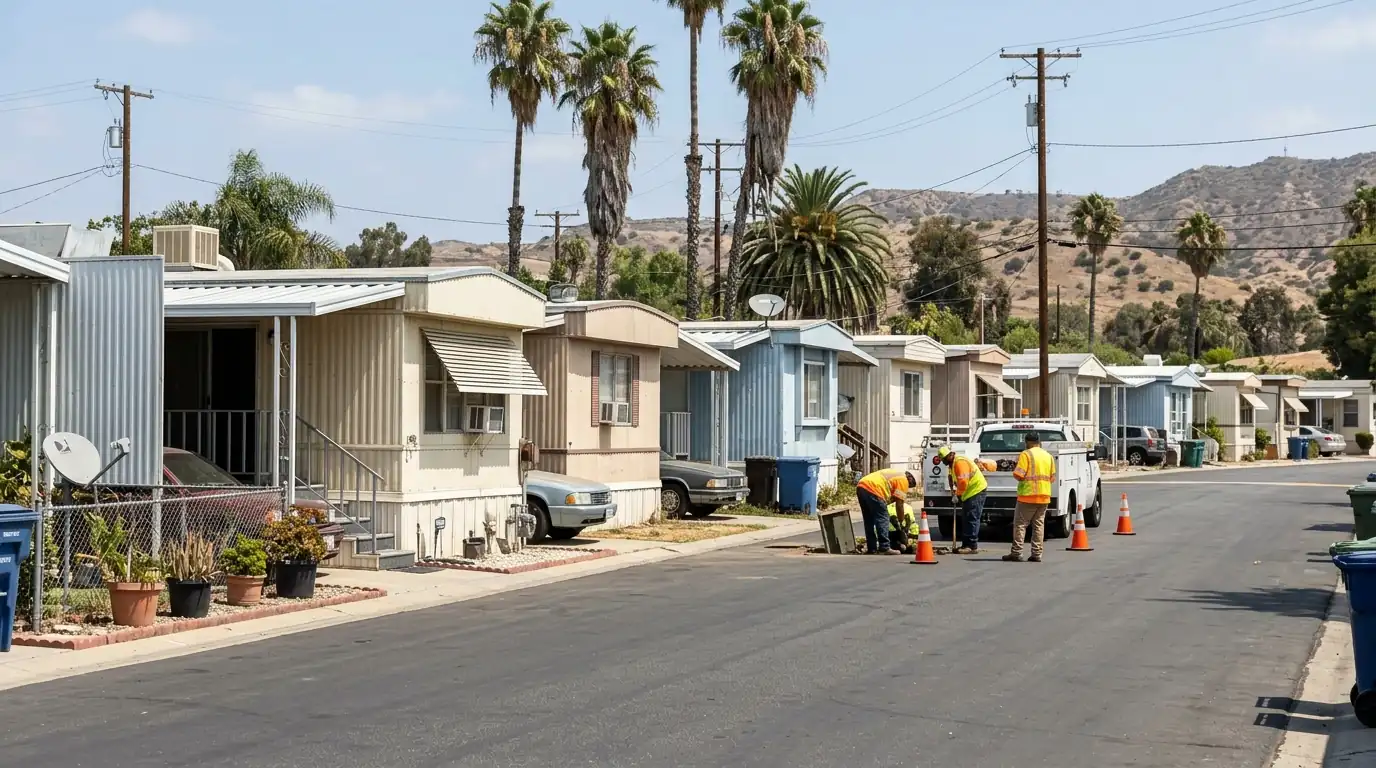
Mobile home roofing covers roof-overs, where a new framed or insulated roof system is built over the existing one, and reflective coatings that seal and cool an existing metal or membrane roof. It suits manufactured homes with leaking seams, rust, heat problems or worn coatings. Most jobs run $4,600 to $11,800 for a typical roof-over, depending on home size and the system chosen.
Manufactured homes are built differently from site-built houses, and their roofs are too. Many older units have a thin metal roof with long seams, shallow slope and very little insulation, while newer ones may have a shingle roof on light trusses or a membrane roof. They share the same weak points: seams that open up, fasteners that loosen as the metal moves with heat, and roof edges where water gets behind the trim.
We offer two main fixes. A roof-over adds a new roof system over the existing one, often with insulation and a slight pitch, and finishes with shingle, metal or a membrane. A coating seals and reflects heat on a roof that is still structurally sound. We check the roof structure, the park's rules and the condition of the existing roof before recommending either.
Roof-over systems for manufactured homes
A roof-over is a new roof built on top of the existing one without removing it. On a flat or nearly flat metal roof, that usually means installing a light framework or insulation board to create a slight slope, then decking and a finish roof. The result is better drainage, an insulating layer that cuts heat, and a quieter roof in wind and rain.
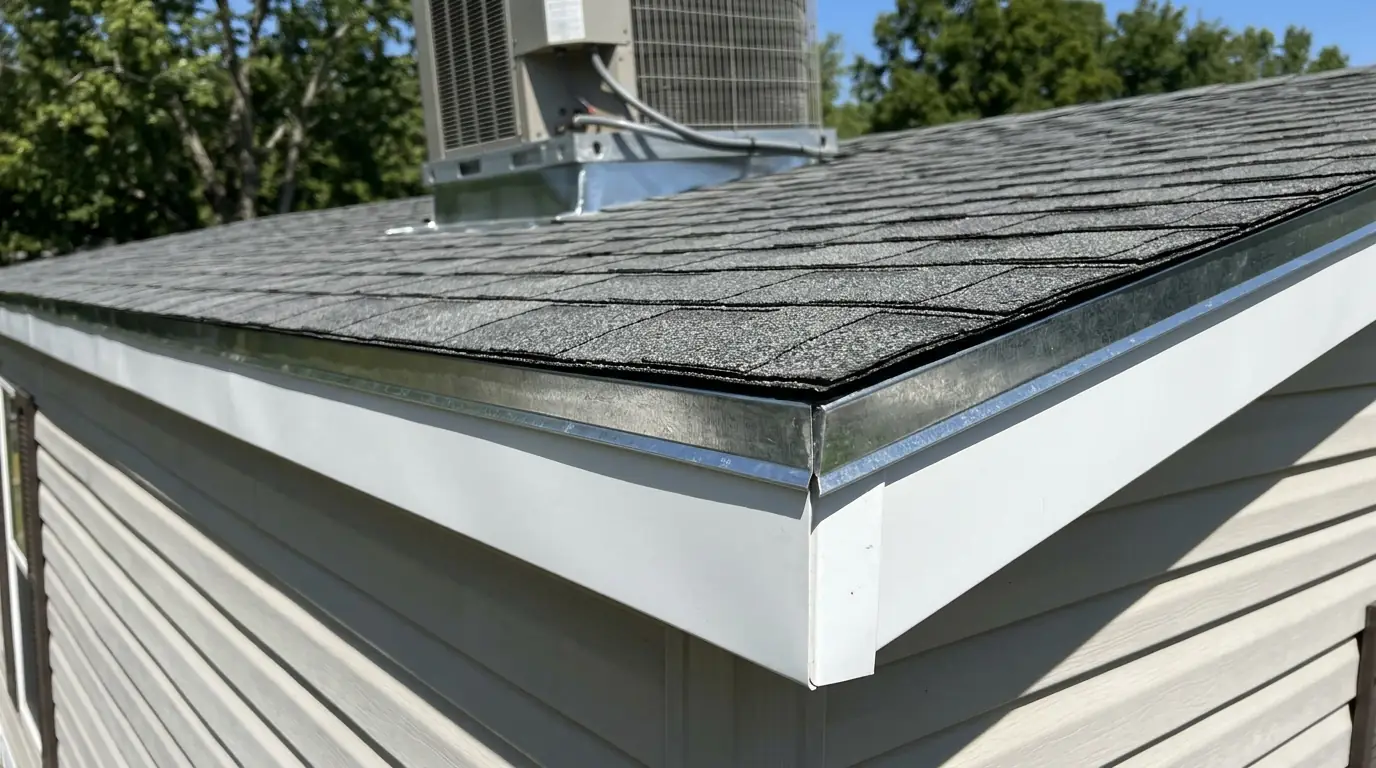
Finish options include asphalt shingle on a pitched frame, metal panels, or a single-ply membrane such as TPO on insulation board for the lowest profile. Weight and height both matter on a manufactured home, so we choose a system suited to the home's structure and any height limits set by the park or the home's original specifications.
- Insulation board or light framing to create slope
- Finish in shingle, metal panel or single-ply membrane
- New drip edge and trim at the roof perimeter
- Flashings around vents, AC units and plumbing stacks
- Gutters or edge details to direct water off the home
Coatings when the roof is still sound
If the existing roof is solid, with no soft spots and only minor rust, a coating can be the most cost-effective fix. We clean the roof, treat rust, tighten or replace loose fasteners, and seal seams with reinforcing fabric and sealant. Then we apply a reflective elastomeric coating in multiple coats.
A light-colored coating reflects much of the sun's heat back off the roof, which helps a lot on thin manufactured home roofs. Coatings wear over time and need recoating every several years depending on the product, so it is a maintenance path rather than a permanent one. Material warranties vary by product and manufacturer.
What goes wrong on manufactured home roofs
Metal roofs on manufactured homes expand and contract every day with the sun. Over the years, that movement loosens screws, opens seams and cracks old sealant. Water then finds its way along the roof and into the walls or ceiling, often showing up far from where it entered. Rust spreads at seams and around vents.
Shallow slope makes things worse. Water sits instead of running off, especially where the roof has sagged slightly. Rooftop air conditioners, vent stacks and additions such as carports or porches create more joints that need flashing. Many leaks we see come from those additions and the places where they meet the main roof.
When to call about mobile home roofing
Rumbling metal roof
A roof that pops and rumbles in wind or heat has loose fasteners and moving panels.
Rust at seams
Orange streaks along seams or around vents show the metal is corroding and the seal has failed.
Soft ceiling panels
Sagging or stained ceiling panels inside usually mean water is getting in above.
Very hot interior
A thin, uninsulated roof can make the home much hotter than outside on summer afternoons.
Peeling old coating
Coatings that are cracked, chalking or peeling no longer protect the roof below.
Leaks at additions
Water at carports, porch covers or rooftop AC units points to failed flashing at the joints.
Typical cost in Long Beach
What mobile home roofing usually costs
$4,600 to $11,800 for a typical roof-over
- Size of the home, single-wide or multi-section
- Roof-over system and finish material chosen
- Insulation thickness added under the new roof
- Number of AC units, vents and additions to flash
- Rust or structural repair before the work starts
Coating jobs are priced separately, and the real number comes after we look at your home's roof. See every price range.
Mobile home roofs in Long Beach and nearby parks
Long Beach and the surrounding cities have a number of manufactured home communities, from parks close to the coast to inland communities in the Gateway Cities. Many homes in those parks were placed decades ago and still carry original metal roofs or older coatings. Near the ocean, salt air speeds up rust on metal roofs and fasteners, and marine layer moisture keeps seams damp in the mornings. Inland, summer heat is the bigger problem, and a cool, insulated roof-over can make a real difference in comfort.
Work in a manufactured home community often has its own rules: work hours, where trucks and dumpsters can park, and sometimes guidelines on roof color or height. Some work also falls under state rules for manufactured housing rather than a city building department, and we check what applies before starting. Tight spacing between homes means careful debris control and protecting neighbors' cars and yards.
How the job runs
How our crew handles mobile home roofing
- 1
Inspect the home
We check the roof surface, structure, seams, fasteners, additions and inside ceilings for signs of water.
- 2
Check park rules
We review any community rules on roof appearance, height and work hours, and the permits that apply.
- 3
Recommend a system
We explain whether a coating or a roof-over fits your home, with options and prices for each.
- 4
Prepare and install
Our crew prepares the roof, then installs the roof-over or applies the coating system.
- 5
Flash and finish
We flash every vent, AC unit and addition, install edge trim and clean up the site.
FAQ
Mobile Home Roofing questions
What is a mobile home roof-over and how is it different from a coating?
A roof-over builds a new roof system on top of the existing roof, often with insulation and a slight slope. A coating seals and reflects heat on the existing roof surface without adding a new structure. Roof-overs cost more but last longer and solve drainage and heat problems more fully.
Can you do mobile home roofing work inside a park near Long Beach?
Yes. We work in manufactured home communities in and around Long Beach and follow each park's rules on hours, parking and appearance. We also check which permits apply to the work before we start.
How long does a mobile home roof coating last?
It depends on the product, the number of coats and how much sun and foot traffic the roof gets. Most reflective coatings need recoating every several years. Material warranties vary by product and manufacturer.
Will a roof-over make my manufactured home cooler inside?
In most cases, yes. Adding insulation and a reflective or light-colored finish reduces the heat coming through a thin metal roof. Homeowners often notice the difference in the first summer.
Is my mobile home roof strong enough for a roof-over?
Most manufactured homes can carry a lightweight roof-over, but we check the structure first. Soft spots, rot or rusted framing must be repaired before adding anything. We choose systems sized for the home's structure.
Where we do this work
Mobile Home Roofing around Long Beach
Our crews do this work across Long Beach and the cities around it. A few of the places we cover:
A leak, a quote, or a question about your roof?
Call Denco at (562) 414-1770. Someone answers 24 hours a day, and our crews work out of Long Beach and La Mirada.