Cool roof rules
When a cool-rated roof can apply to your re-roof
California's energy code can require cool-rated roofing on some re-roofs. Here is how that works in general terms, and why it rarely means a stark white roof.
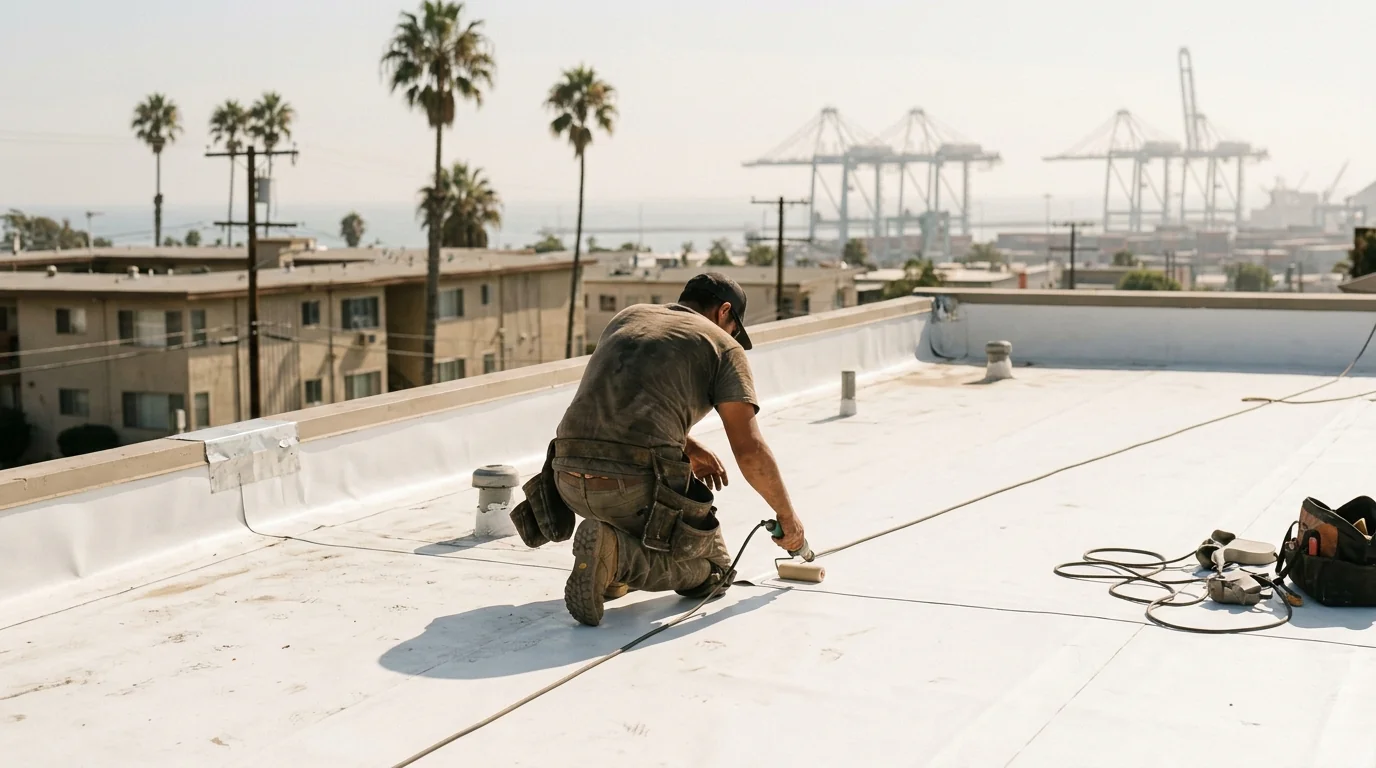
If you are replacing a roof in Long Beach, you may hear the term cool roof come up during planning. California's Title 24 energy code can require cool-rated roofing on some re-roofs, depending mainly on the roof's slope and the climate zone the house sits in. It is one of those rules that sounds technical but has a simple aim: roofs that reflect more sunlight keep attics and buildings cooler and cut the load on air conditioning.
This guide explains the idea in plain terms. We do not quote code sections here, because the details are specific and they change from one code cycle to the next. What we can tell you is how the decision usually works, which roofs it tends to affect, what cool-rated products look like and how we check what applies to your roof before ordering material.
What makes a roof cool-rated
A cool roof reflects more of the sun's energy and releases the heat it does absorb more quickly than a standard roof. Products are tested and rated on two main properties: how much sunlight they reflect, and how well they give off absorbed heat. A cool-rated product has test results that meet the levels the energy code sets for that type of roof.
This is why color alone does not decide it. Some light-colored products are not rated, and some medium grays and earth tones are, thanks to reflective granules or special pigments that bounce back infrared light you cannot see. The rating, not the look, is what counts for the code and for the inspector.
Cool-rated options exist across most roof types: white and light-colored single-ply membranes and coatings for flat roofs, cool-rated asphalt shingles, cool-rated concrete and clay tiles, and metal with reflective finishes.
When the requirement can apply
The energy code ties cool roof requirements mainly to two things: roof slope and climate zone. Low-slope roofs, the nearly flat roofs on mid-century homes, additions, garages, apartments and commercial buildings, are the ones most often affected. Steep-slope roofs can be affected too, depending on the climate zone and the scope of the work.
Scope matters. A full re-roof or replacing a large share of the roof is treated differently from a small repair. The code also has exceptions and alternatives in some cases, for example tradeoffs involving insulation. Because the answer depends on the specifics, we look up what applies to your roof before ordering, and we include that on the permit so the inspection goes smoothly.
Here are the details we pin down for each roof:
- The roof slope of each section, since one house can have both
- The climate zone for your address
- Whether the job is a full re-roof or a partial replacement
- Whether the building is a home, an apartment building or commercial
- Any insulation or other details that could change what applies
What it means for flat and low-slope roofs
Flat and low-slope roofs face the sun directly all day, and in a Long Beach summer a dark membrane gets extremely hot. That heat ages the roof itself, drying out asphalt-based membranes and sealants, and it pushes heat into the rooms below. On these roofs a cool surface often helps the roof last as well as meeting the code.
The common cool options on low-slope roofs are white or light-colored single-ply membranes such as TPO and PVC, cap sheets with reflective granules over torch-down or hot mop systems, and reflective coatings applied over a sound existing roof. Cool roof installation in Long Beach typically runs $6.20 to $12.80 per sq ft, and TPO roofing typically runs $7.10 to $12.40 per sq ft. The real price comes after we look at your roof, since the condition of the existing roof and the deck changes the scope.
Cliff May ranchos in Rancho Estates and other mid-century homes with flat or very low roofs are prime examples. A light membrane is barely visible from the street on many of these houses, so the look of the home stays the same.
Steep-slope roofs and the color question
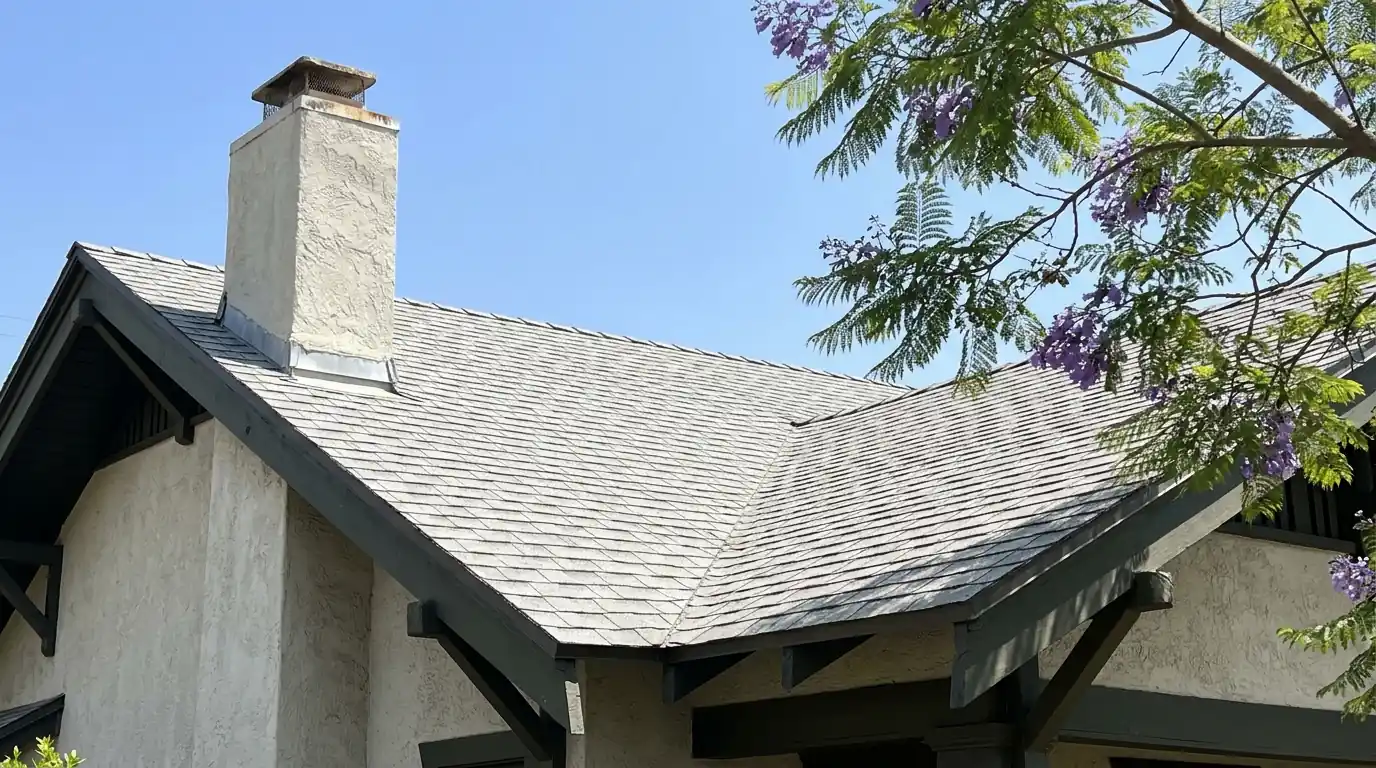
On pitched roofs, homeowners worry most about color. Nobody wants a white shingle roof on a Craftsman bungalow or a bright tile on a Spanish Revival cottage. The good news is that cool-rated shingles and tiles come in grays, browns, tans and terracotta tones, many of them close to traditional colors.
If you live in a historic district such as Bluff Park, Belmont Heights or California Heights, color and material choices can also need extra review before a visible change. A cool-rated product in a period-appropriate color can satisfy both concerns. We can bring samples so you see the color in daylight on your own house, since a swatch indoors rarely looks the same as a roof under Southern California sun.
Benefits beyond meeting the code
Meeting a rule is one thing, but a cool roof also has practical benefits in our climate. Long dry summers and strong UV are hard on roofing, and a cooler surface means less heat cycling and slower drying of the materials.
There are tradeoffs worth knowing. White and light surfaces show dirt and can look patchy over time, especially near the port, the 710 and other busy roads. Reflective coatings need periodic cleaning and recoating to keep working. We talk through upkeep before you choose.
- Cooler attic and upper rooms through the summer
- Less run time for air conditioning
- Slower aging of membranes, sealants and shingles
- Lower surface temperature for rooftop equipment and decks
How we check what applies before ordering
On every re-roof we measure each roof section, confirm its slope and look up what the current energy code asks for at your address. If cool-rated material is required, we choose products with ratings that meet it, and the product information goes with the permit so the inspector can confirm it. If it is not required, we still tell you about cool options so you can choose.
Cities outside Long Beach have their own building departments and may handle the paperwork differently, but the state energy code applies across California. Either way, the check happens before material is ordered, never after it is on the roof.
Key takeaways
- Title 24 can require cool-rated roofing on some re-roofs
- Slope and climate zone are the main factors
- Cool-rated products come in grays, tans and earth tones
- We confirm what applies before ordering material
About the author
Hubert Tisdale edits Roof Advice for Denco Roofing Company. The articles draw on what our roofers see on Long Beach roofs every week.
FAQ
Reader questions
Does a cool roof requirement apply if I am only patching part of my flat roof?
Small repairs are generally treated differently from a full re-roof or replacing a large share of the roof. Where the line falls depends on the scope and the current code. We check it for your roof before the work is priced.
Can a cool-rated roof still look dark enough for my Spanish Revival home?
Often, yes. Cool-rated clay and concrete tiles and some shingles come in terracotta, brown and gray tones that use reflective pigments rather than a light color. We bring samples so you can see them on your house in daylight before deciding.
Will a reflective roof coating keep its cool rating for years?
A coating stays reflective as long as it is kept clean and in good condition. Dirt, soot and wear reduce how much sunlight it reflects, so coated roofs need periodic cleaning and recoating. We explain the upkeep schedule that fits your roof.
A leak, a quote, or a question about your roof?
Call Denco at (562) 414-1770. Someone answers 24 hours a day, and our crews work out of Long Beach and La Mirada.