Built-up asphalt roofing
Hot mop roofing in Long Beach, CA
Your building has an old tar and gravel roof that has been mopped and patched for decades, and you want to know whether to rebuild it the same way or switch systems.
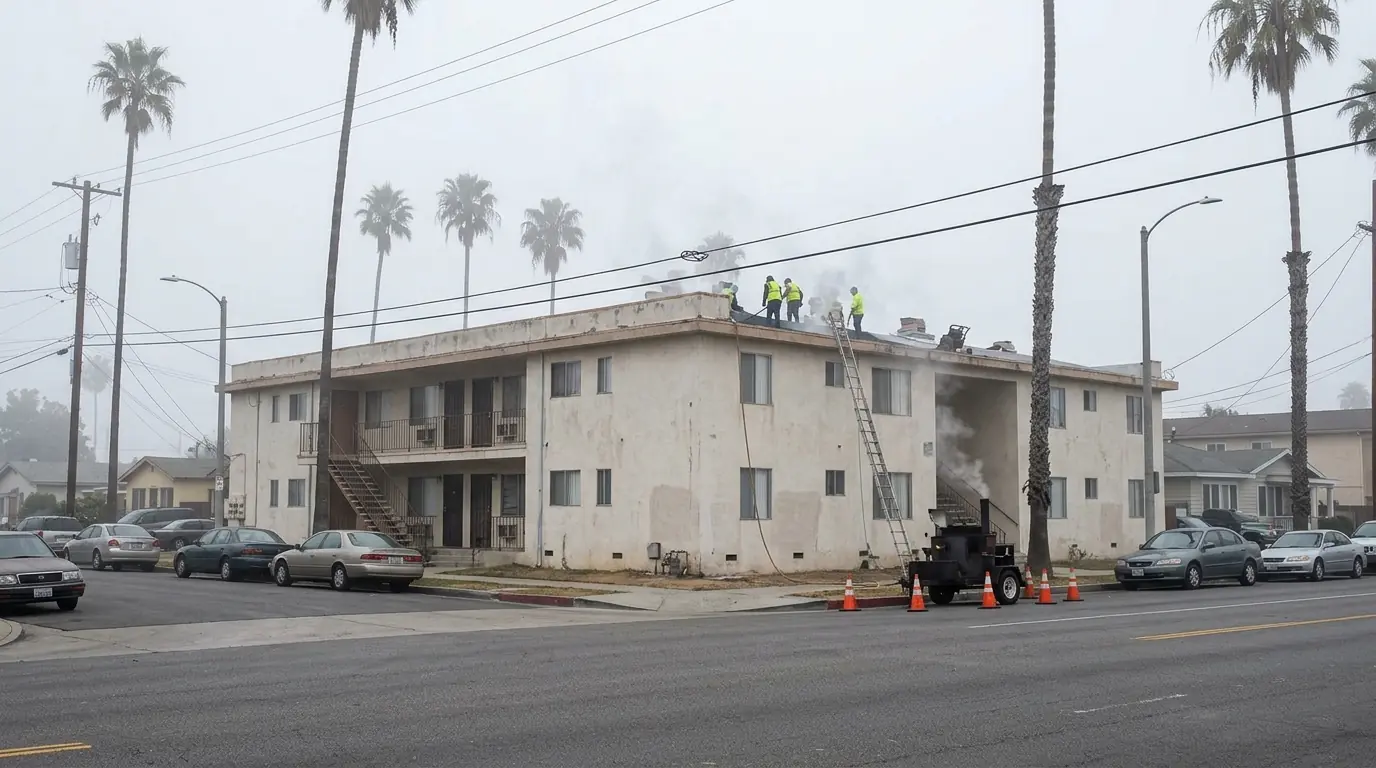
Hot mop roofing is a built-up roof made of several layers of roofing felt set in hot liquid asphalt, finished with a mineral cap sheet or gravel. It still makes sense on many older Long Beach flat roofs, apartments and garages where a thick, layered, repairable roof fits the building. In Long Beach it typically runs $5.90 to $9.60 per sq ft.
Before single-ply membranes, almost every flat roof in Long Beach was hot mop. A kettle on the ground heats asphalt until it is liquid, and roofers mop it onto the roof, roll felt into it, then mop again, layer after layer. The finished roof is several plies thick and either covered with a granulated cap sheet or embedded gravel that shields the asphalt from sun.
You will still find hot mop roofs on 1920s apartment courts, mid-century homes and older commercial buildings across the city. Our crews tear off, rebuild and repair them. This page explains how a built-up roof is layered, what the work looks like on site and how hot mop compares with newer systems for your building.
How a built-up roof is layered
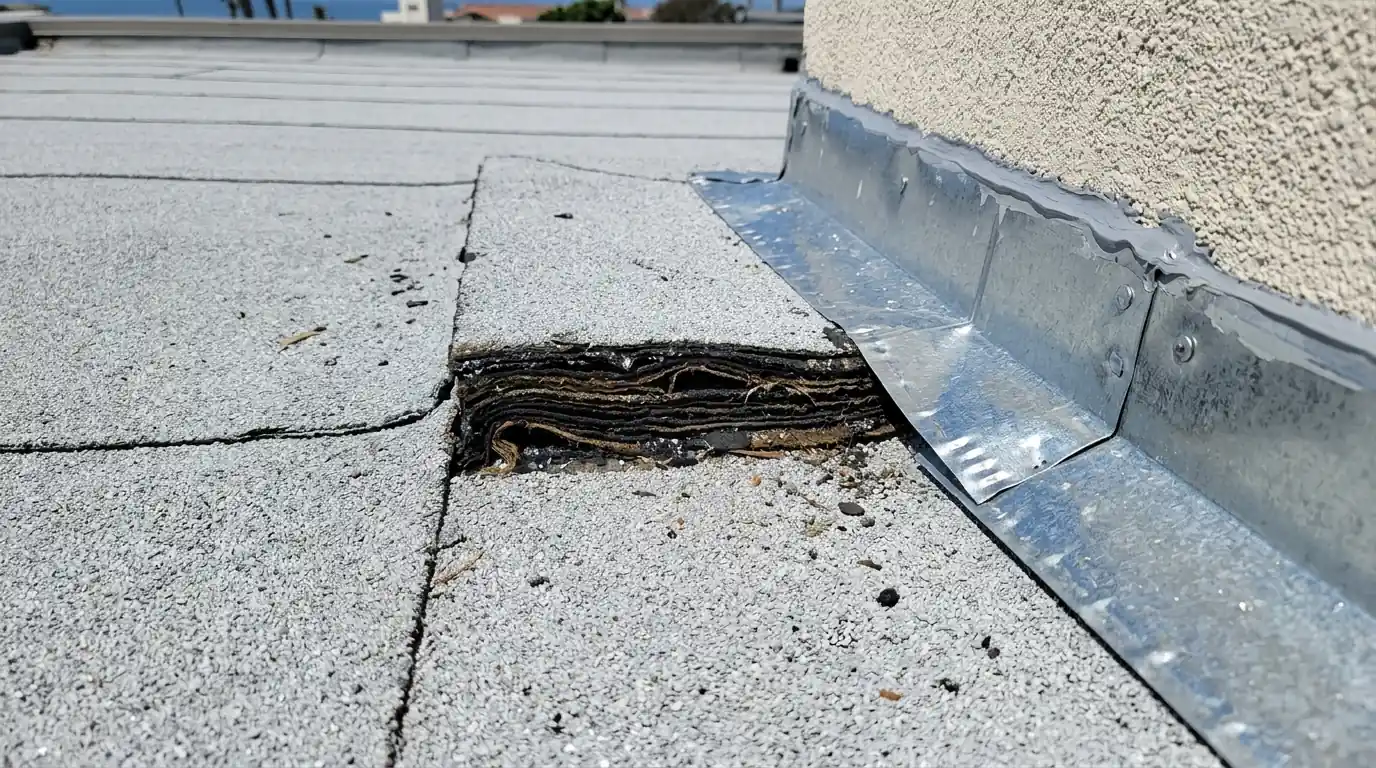
A typical hot mop roof starts with a base sheet nailed to the wood deck. Then two or three plies of fiberglass felt are each set in a full mopping of hot asphalt, staggered so laps never line up. The top is either a mineral-surfaced cap sheet mopped in place, or a flood coat of asphalt with gravel broadcast into it.
The strength of hot mop comes from redundancy. Water that gets past the top ply still has to get through several more. That is why a well-built hot mop roof with a few small failures often leaks less than its surface suggests.
- Nailed base sheet over the wood deck
- Two or three felt plies in hot asphalt
- Mineral cap sheet or gravel surface
- Metal edge and flashings set in asphalt and mastic
Cap sheet or gravel: choosing the surface
Gravel surfaces protect the asphalt well and were standard on older commercial roofs, but gravel hides problems, washes into drains and adds weight. Finding a leak under gravel means scraping it away first. Cap sheet surfaces are lighter and easier to inspect and repair, and white or light caps reflect more sun.
On most Long Beach homes and smaller apartment roofs we finish with a light-colored cap sheet. On large commercial roofs with good structure, we discuss gravel when the owner wants it. California's Title 24 energy code can require cool-rated roofing on some low-slope re-roofs, so we check what applies to your roof before ordering material.
What hot mop work looks like on your property
Hot mop is a process with a kettle, so it helps to know what to expect. The kettle sits on the driveway or street near the building, with asphalt heated to working temperature. There is a strong asphalt smell for the hours the kettle runs, which settles once the roof cools. We ask residents to close windows near the kettle and turn off air intakes facing it.
We place the kettle away from doors, cars and anything that could be stained, lay protection under it, and keep a crew member with it at all times. On apartment buildings we post notices for tenants a few days ahead with the work hours and parking changes.
Hot mop versus newer flat roof systems
Hot mop is not outdated so much as different. It costs less per square foot than PVC and many TPO jobs, it can be repaired with simple materials, and its thickness forgives small punctures. It is heavier, the installation smells, and its surface needs maintenance as the cap sheet ages.
If your building already has hot mop and its structure and drainage suit it, rebuilding the same way is often the most economical path. If you need a highly reflective roof, long-term ponding resistance or no-odor installation near occupied units, we compare TPO, PVC and torch-down with you on the same building.
When to call about hot mop roofing
Gravel bare spots
Gravel worn away in patches leaves the asphalt open to UV, which dries and cracks it.
Alligator cracking surface
A surface broken into small plates shows the asphalt has dried out and lost flexibility.
Mastic patches everywhere
Layers of black patching compound across the roof usually mean it has reached replacement age.
Buckled felt ridges
Long raised ridges in the roof follow felt that has wrinkled from moisture or deck movement.
Leaks at parapet base
Water inside at the top of walls often comes from cracked flashing where the roof meets the parapet.
Debris clogging scuppers
Gravel and loose granules piling up in scuppers and drains point to a worn surface and backed-up water.
Typical cost in Long Beach
What hot mop roofing usually costs
$5.90 to $9.60 per sq ft
- Number of plies in the new roof
- Cap sheet versus gravel surface
- Removing heavy gravel and multiple old layers
- Parapet flashing rebuilds
- Kettle placement and access on tight lots
These are typical Long Beach ranges, and the real number comes after we look at your roof and count its layers. See every price range.
Hot mop roofs in older Long Beach buildings
Long Beach is full of older buildings that were hot mopped from the start: bungalow courts and 1920s apartment buildings in Alamitos Beach and the East Village, flat-roofed shops along 4th Street and Anaheim Street, post-war homes with flat additions in North Long Beach and the Plaza, and warehouses near the port. Many have been mopped over more than once, so tear-off often reveals several roofs stacked up.
Dense blocks with narrow streets make kettle placement and parking a real part of planning, especially downtown and near the beach. The long dry season is the best time to rebuild a hot mop roof, before winter atmospheric-river storms arrive. The City of Long Beach requires a building permit for re-roofing, and buildings in historic districts may need extra review if any visible material changes.
How the job runs
How our crew handles hot mop roofing
- 1
Inspect and core test
We count layers, check for wet felt and look at the parapets, drains and deck.
- 2
Notify and set up
We post tenant notices if needed, protect the site and place the kettle away from doors and cars.
- 3
Tear off old roof
Old plies and gravel are stripped to the deck, and rotted boards are replaced.
- 4
Mop plies in place
The base sheet is nailed, then each felt ply is set in hot asphalt with staggered laps.
- 5
Surface and clean up
The cap sheet or gravel goes on, flashings are finished, and the site is cleaned and checked.
FAQ
Hot Mop Roofing questions
Is hot mop roofing still a good choice in Long Beach?
For many older flat roofs, yes. It is economical, thick and easy to repair. We compare it with TPO, PVC and torch-down on your building so you can choose with the full picture.
How bad is the smell during hot mop roofing?
There is a noticeable asphalt smell while the kettle runs, usually for the working hours of each day. It fades once the roof cools. We ask neighbors near the kettle to close windows and turn off intakes facing it.
Can my gravel hot mop roof be repaired instead of replaced?
Small leaks can be repaired by scraping the gravel back, patching the plies and re-embedding gravel. When the felt is dry and cracked across the roof or wet below, rebuilding is the better use of money.
Should I switch from gravel to a cap sheet on my hot mop roof?
Often yes on homes and small apartments, because cap sheets are lighter, easier to inspect and can reflect more sun. Gravel still suits some large commercial roofs where structure supports it.
How do you handle tenants during hot mop roofing on an apartment?
We post notices with dates, hours and parking changes a few days ahead. The kettle stays away from entrances with a crew member beside it. We keep walkways clear and tidy each evening.
Where we do this work
Hot Mop Roofing around Long Beach
Our crews do this work across Long Beach and the cities around it. A few of the places we cover:
A leak, a quote, or a question about your roof?
Call Denco at (562) 414-1770. Someone answers 24 hours a day, and our crews work out of Long Beach and La Mirada.