Tile underlayment
Tile roofs last. The underlayment under them does not
Most tile roof leaks in Long Beach start under the tile, not in it. Here is how the underlayment ages, what the warning signs look like and how a lift and relay works.
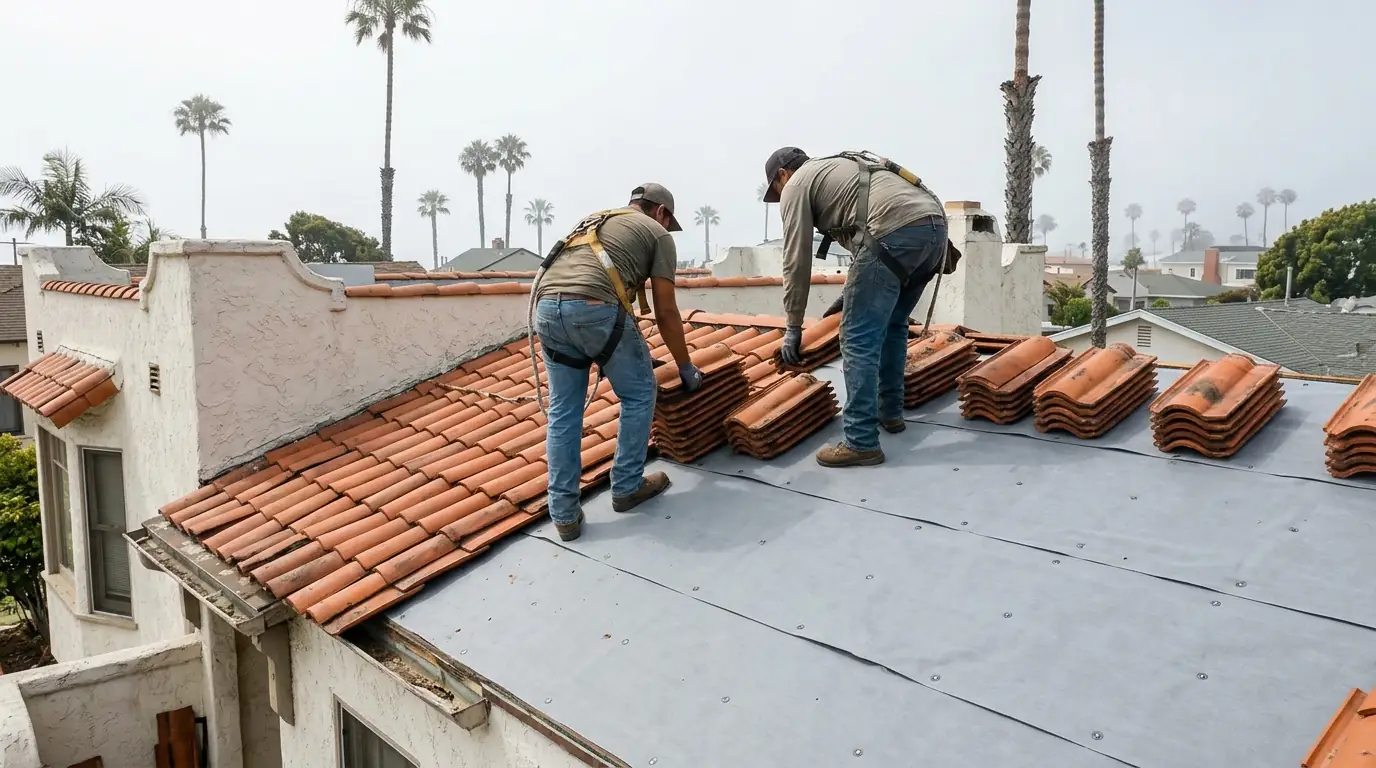
Walk through Bluff Park, Los Cerritos or Bixby Knolls and you see clay barrel tile and concrete S-tile roofs that have been on those houses for a long time. Many of the tiles still look good. That is the trap. A tile roof is really two roofs: the tile you see, which sheds most of the water and blocks the sun, and the underlayment beneath it, which is the actual waterproof layer. When the underlayment fails, water that slips past the tile has nothing left to stop it.
On older roofs the underlayment is usually felt paper, and it wears out long before the tile does. Across Long Beach, felt under tile often starts to fail somewhere after 20 to 30 years, and sooner on sunny south and west slopes. This guide covers how that happens, the signs to watch for, when to act and what a lift and relay involves, so you know what you are paying for before anyone climbs a ladder.
Why the felt fails before the tile
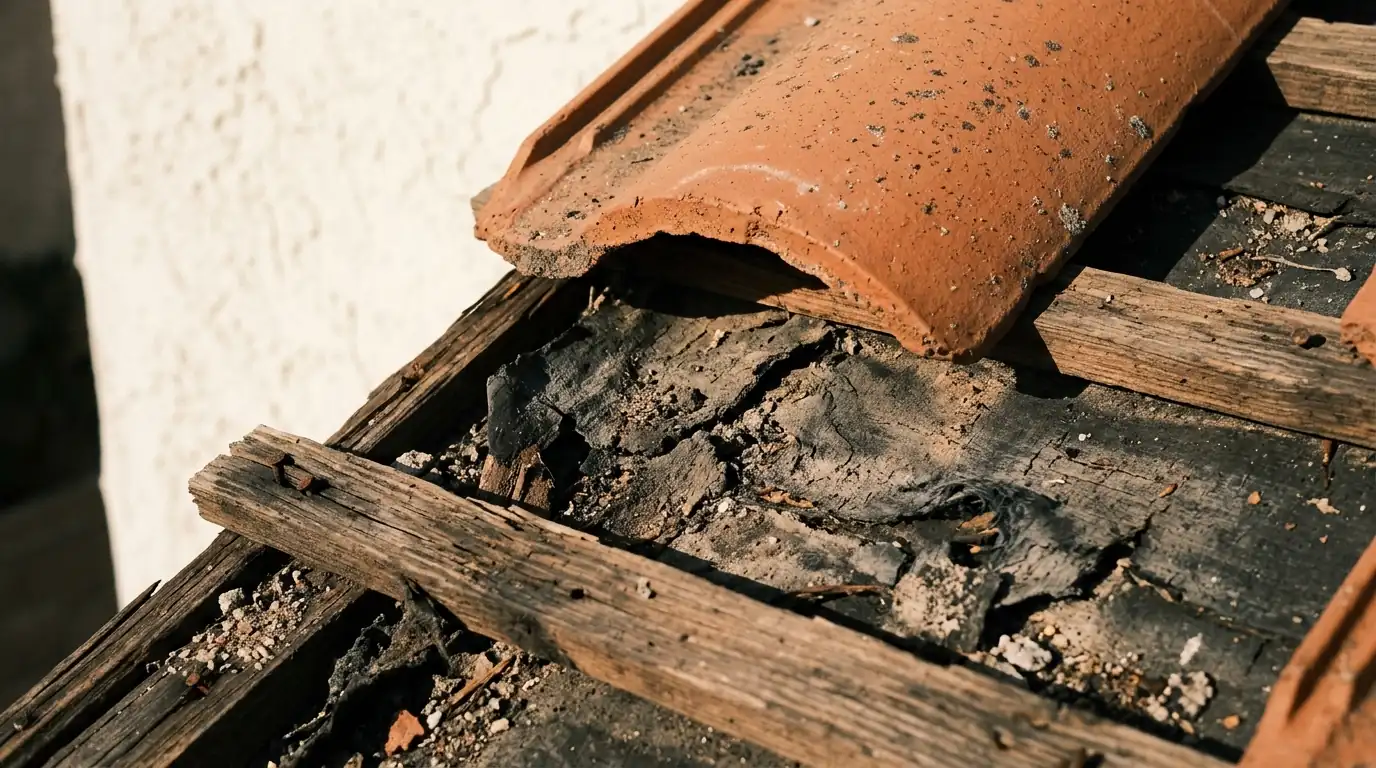
Clay and concrete tile are fired or cured masonry. Sun, salt air and decades of dry summers barely touch them. Felt underlayment is paper soaked in asphalt. Heat trapped under the tile slowly cooks the oils out of it, and once those oils are gone the felt turns brittle, shrinks and cracks along the battens and at every nail hole.
Long Beach adds its own stress. Attics under tile run hot through long summers, and strong UV reaches any felt left exposed at broken or slipped tiles. Near the coast, damp marine-layer mornings followed by dry afternoons make the felt swell and shrink over and over. Then there are small earthquakes and foot traffic from painters, cable installers and solar crews, each of which can crack a few tiles and leave the felt open to the sun.
None of this shows from the street. A tile roof can look tidy and still have felt that crumbles in your hand. Please do not walk on it to check: old tile cracks under foot, and binoculars plus a look in the attic tell you a lot.
Signs your tile underlayment is near the end
Because rain is rare most of the year, many homeowners only find out during the first big storm of the season. These are the signs we look for, and several of them you can check yourself from inside the house or from the yard.
One stain does not always mean the whole roof needs new underlayment. A single cracked tile or a failed pipe flashing can leak on its own, and that is a repair. When the felt is failing across several slopes, though, spot repairs turn into chasing leaks around the roof one storm at a time.
- Water stains on ceilings near outside walls or below valleys after heavy rain
- Damp or darkened roof sheathing seen from the attic, especially at the low edge
- Daylight showing through the roof deck from inside the attic
- Brittle black flakes of felt collecting in gutters or at the eave
- Tiles that have slipped, cracked or been replaced with mismatched pieces
- Rusted or lifted flashing at walls, chimneys and vent pipes
- A roof older than about 20 years that has never been relaid
Timing: why late summer and fall are the right window
The best time to replace tile underlayment is before the atmospheric-river storms arrive, which usually means booking in late summer or early fall. These storms bring heavy rain over a few days, mostly from November to March, and they find every weak point at once. A roof that is open for a relay is covered with new underlayment as the crew goes, but dry weather makes the work faster and keeps the schedule steady.
If you are already seeing leaks in the middle of winter, do not wait for spring. We can tarp the area or make a temporary repair to stop active water, then plan the relay for the next dry stretch. Waiting a full season usually means wet sheathing, and sheathing that stays wet can rot, which adds decking replacement to the job.
Other good moments to plan a relay: before solar panels go on, before you list the house for sale, and right after you buy an older home whose inspection noted aged underlayment.
What a lift and relay involves
Lift and relay is the standard fix when the tile is sound and the underlayment is not. Our crews remove the tiles by hand and stack them on the roof or on the ground, sorting the good pieces from the cracked ones. With the deck exposed, we strip the old felt and battens, check the sheathing and replace any rotted boards.
The roof then gets new underlayment, either a heavier felt system or a synthetic underlayment made for tile, laid in overlapping courses from the eave up. We replace the flashings while the tile is off: valley metal, wall and chimney flashing, pipe jacks and eave metal. On many older Long Beach roofs these metal parts are rusted through, so replacing them matters as much as the underlayment. Battens go back where the tile system calls for them, and the original tiles are reinstalled and fastened, with replacement tiles worked in where pieces broke.
Breakage is normal. Old clay tile in particular can crack when handled. We plan for a share of replacement pieces, and on older clay roofs we look for salvage tiles that match the color and profile so the patch does not stand out from the street.
- Remove, sort and stage the existing tile
- Strip the old felt and battens down to the deck
- Repair or replace rotted sheathing
- Install new underlayment and new flashings
- Reinstall and fasten the tile, adding matched replacements
What it costs and what changes the price
For Long Beach homes, tile underlayment replacement typically runs $9.40 to $15.80 per sq ft. That covers taking off and reinstalling the tile along with new underlayment and flashings. A small repair to one area is a different job: a typical tile roof repair runs $425 to $1,850. The real price for your roof comes after we look at it.
The City of Long Beach requires a building permit for re-roofing work, and homes in historic districts such as Bluff Park, Belmont Heights or California Heights can need extra review if visible materials change. Reinstalling the same tile usually keeps the roof looking as it did, but we check what applies to your address before work starts.
- Clay barrel tile takes longer to handle than flat or S-profile concrete tile
- Steep slopes, two-story eaves and tight side yards slow the work
- How many tiles break and whether matching tiles can be found
- How much sheathing has rotted under the old felt
- Chimneys, skylights, solar panels and other penetrations to flash
When relay is not the right call
Lift and relay only makes sense if the tiles are worth saving. Some older concrete tile has worn thin, turned porous or cracked in large numbers, and some roofs carry a patchwork of mismatched replacements from decades of small repairs. In those cases a full replacement with new tile, or a switch to a lighter material such as stone-coated steel, can be the better use of your money.
Structure matters too. Tile is heavy, and older framing that has sagged should be looked at before the tile goes back up. On roofs with heavy rot, the cost of new sheathing can push the job toward a full replacement. We walk you through the options with photos from your own roof so the choice is clear.
Key takeaways
- Tile often outlasts the felt under it by decades
- Felt under tile often fails after 20 to 30 years
- Plan a relay in late summer or fall, before the storms
- Lift and relay reuses good tile over new underlayment and flashing
About the author
Hubert Tisdale edits Roof Advice for Denco Roofing Company. The articles draw on what our roofers see on Long Beach roofs every week.
FAQ
Reader questions
Can new underlayment go under my existing tile without taking the tile off?
No. The underlayment sits on the roof deck beneath the battens and tile, so the tile has to come off to replace it. Coating or sealing over the tile does not fix failed felt and can trap water. Lift and relay is the method that actually renews the waterproof layer.
Is synthetic underlayment better than felt for a tile relay near the coast?
Synthetic underlayment made for tile roofs resists heat and tearing better than standard felt, and it holds up well if a tile breaks and lets sun reach it. Heavier felt systems are still used and work well when installed correctly. We go over the choices and what the tile manufacturer calls for before ordering.
How many of my old clay tiles will survive a lift and relay?
Most sound clay tiles come off and go back on, but some will crack, especially on very old roofs or tiles that were already damaged. The share depends on the tile's age and condition, which we judge on the roof before the job. We source matching salvage or new tiles for the pieces that break.
A leak, a quote, or a question about your roof?
Call Denco at (562) 414-1770. Someone answers 24 hours a day, and our crews work out of Long Beach and La Mirada.