Photo report included
Roof inspection in Long Beach, CA
Most roof problems in Long Beach stay hidden until the first heavy winter storm. An inspection finds the cracked tile, lifted shingle or split flashing while the weather is still dry and the fix is still small.
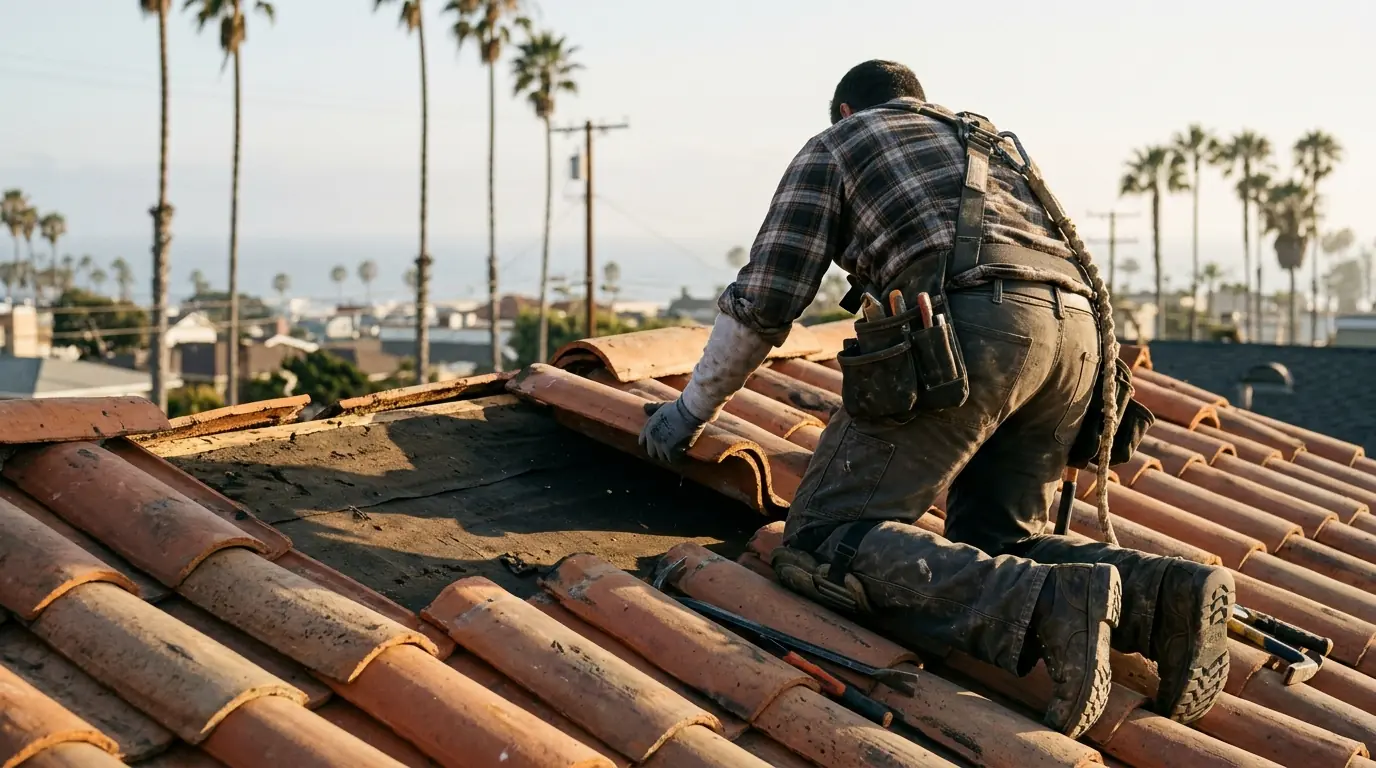
A roof inspection is a hands-on check of your roof surface, flashings, drainage, penetrations and attic, done by one of our roofers and written up with photos. It makes sense before you buy a home, after a Santa Ana windstorm, before the rainy season, or when an older roof has never been looked at. Most inspections run $185 to $385 per inspection, depending on roof size, pitch and access.
A roof can look fine from the sidewalk and still be close to its first leak. Underlayment dries out under tile, sealant around vents shrinks in the sun, and a nail head works loose on a ridge cap. None of that shows from the ground, and in a city where it barely rains from April to October, a weak spot can sit quietly for months.
Our inspection puts a roofer on the roof and, where we can reach it, in the attic. We walk the whole surface, check every place where the roof is cut or joined, and photograph what we find. You get a written list that separates what needs attention now from what can wait, with a rough cost for each item.
What our roofers check, from ridge to gutter
We start at the edges and work up. Gutters and drip edge tell us how water leaves the roof. Field tiles or shingles tell us about age and wear. Then we spend most of our time on the details, because that is where roofs actually leak: the valleys, the flashings at walls and chimneys, the boots around plumbing vents, the skylight curbs and the low spots on flat sections.
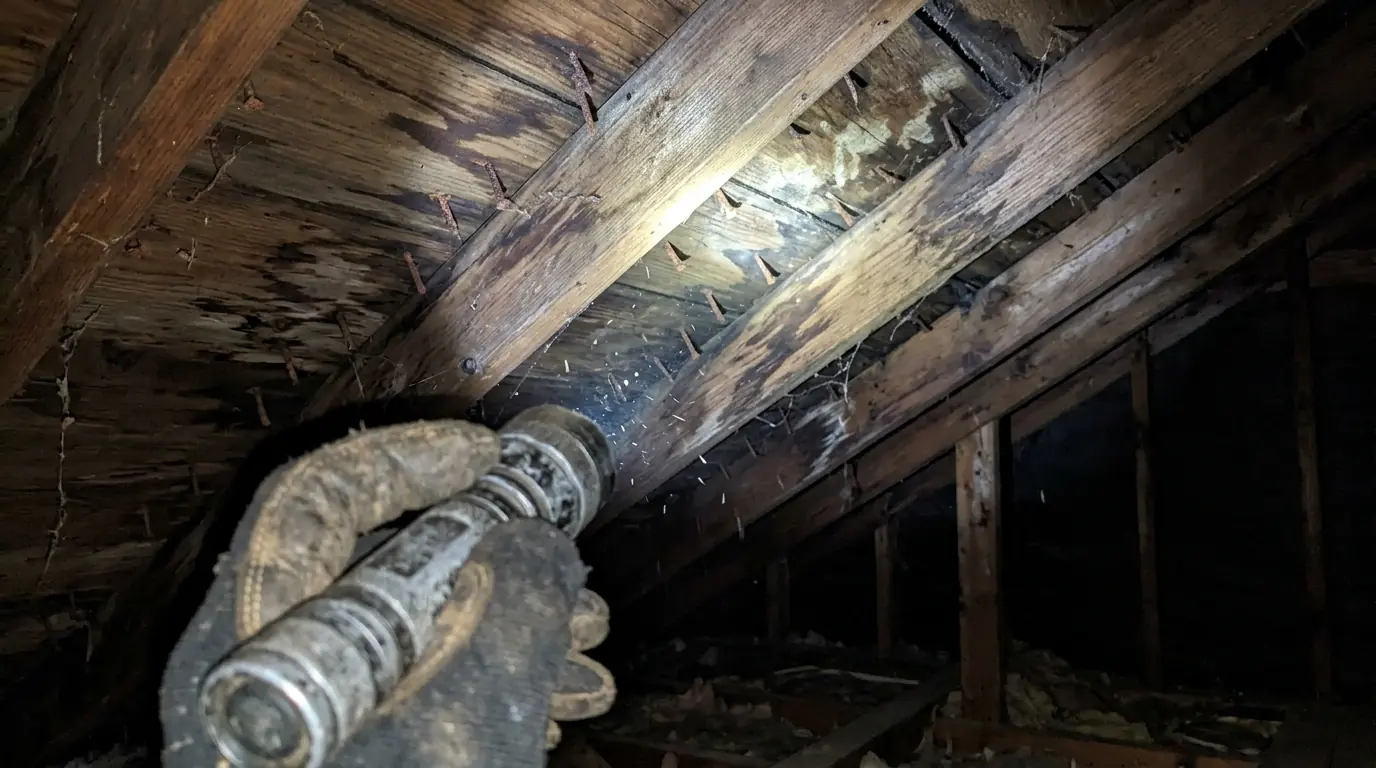
Inside the attic we look at the underside of the decking with a flashlight. Dark rings, old water trails, rusted nail tips and daylight at the wrong places all point to a problem above. We also note the ventilation, because a hot, stale attic shortens the life of shingles and underlayment.
- Surface: cracked, slipped or missing tiles, curled or bare shingles, blistered or split flat-roof membrane
- Flashings: walls, chimneys, skylights, valleys and roof-to-wall transitions
- Penetrations: plumbing vents, exhaust caps, satellite and solar mounts
- Drainage: gutters, downspouts, scuppers and ponding on low-slope areas
- Attic: stains, dry rot, rusted fasteners and airflow
How a tile roof inspection differs from a shingle or flat roof
On clay and concrete tile, the tile is rarely the weak part. The felt underneath is. We lift a few tiles at key spots, usually near valleys and the eaves, to see whether the underlayment is still flexible or has turned brittle and torn. We walk tile carefully on the lower edge of each piece, because a careless inspection can break more tile than a storm.
On asphalt shingle we look for lost granules, cracked tabs, exposed nails and soft decking underfoot. On flat and low-slope roofs we probe seams, check for blisters and alligatoring in older hot mop, look at how torch-down laps are bonding, and mark any spot where water sits more than a day or two after rain.
Reading the report: repair now, plan for later, or leave alone
A good report should help you decide, not scare you. We sort every finding into three groups. Items that can let water in this winter go first. Items that will need work in the next few years go second, so you can budget. Normal wear that does not need anything yet is listed so you know we saw it.
When to call about roof inspection
Buying an older home
A seller's disclosure rarely tells you how much life is left in the roof. An inspection gives you facts before escrow closes.
After Santa Ana winds
Strong offshore gusts lift shingle tabs and shift ridge tiles. A quick check after a wind event catches damage before the rain arrives.
Before the rainy season
Fall is the best time to find a weak spot, since most leaks in Long Beach show up in the first big storm of winter.
Stains on a ceiling
A faded ring or bubbled paint can mean an old leak or a new one. We trace it from the attic and the roof to find the real source.
Roof age unknown
If you do not know when the roof was last replaced, an inspection tells you what you have and how much time it likely has left.
Work done by others
After a solar install, a cable dish or new vents, it is worth having a roofer confirm that every hole was flashed and sealed.
Typical cost in Long Beach
What roof inspection usually costs
$185 to $385 per inspection
- Size of the roof and number of separate roof sections
- Pitch and height, including two-story and steep roofs
- Roof type, since tile takes more time to walk safely
- Attic access and how much of it can be reached
- Whether you need a report written for a home purchase
These are typical Long Beach ranges; we confirm the price when you call and tell us about the home. See every price range.
Inspecting Long Beach roofs, from Bluff Park bungalows to Los Altos ranch homes
Long Beach has a wide spread of roof ages and styles, and each part of town has its own weak points. Craftsman and Spanish Revival homes in Bluff Park, California Heights and Belmont Heights often carry clay tile over felt that has been in place for decades. The 1950s ranch tracts in Los Altos, the Plaza and North Long Beach usually have shingle roofs on their second or third layer cycle, sometimes with low-slope additions tacked on later. Rancho Estates homes have long flat sections where ponding and seam wear are the main concerns.
Distance from the water matters too. Within a mile or two of the beach, in Belmont Shore, Naples and along Ocean Blvd, salt air rusts nails, flashing and metal vents faster than it does inland, so we look closely at every metal part. Inland, strong summer sun is the bigger factor, drying out sealants and membrane surfaces.
How the job runs
How our crew handles roof inspection
- 1
Phone call and booking
You call (562) 414-1770, tell us about the home and any concern, and we set a time that works for you.
- 2
Ground and gutter check
We walk the outside of the home first, looking at the roof lines, gutters, fascia and any visible sag or staining.
- 3
On-roof walk
A roofer walks the full surface, checks every flashing and penetration, and photographs each item of concern.
- 4
Attic look
Where there is safe access, we check the underside of the decking for stains, rot and ventilation problems.
- 5
Written photo report
You receive a clear list of findings sorted by urgency, with photos and typical price ranges for any repairs.
FAQ
Roof Inspection questions
How long does a roof inspection take on a typical Long Beach home?
Most single-story homes take about an hour on the roof and in the attic. Larger homes, two-story roofs and tile roofs take longer because every piece has to be walked with care. The written report follows after the visit.
Do I need to be home for the roof inspection?
Not for the roof itself, as long as we can reach the side yard safely. If you want us to check the attic, someone needs to let us in. Many homeowners like to be there so we can show them photos on the spot.
Can a roof inspection find a leak that only shows in heavy rain?
Often, yes. Most leaks leave clues even when the roof is dry, such as stains on decking, rusted nail tips, cracked sealant or torn underlayment under a tile. When the clues are unclear, we may suggest a controlled water test on the suspect area.
Is a roof inspection the same as a home inspector's roof check?
No. A general home inspector often looks at the roof from a ladder or the ground and covers the whole house in one visit. Our inspection is done by a roofer who walks the surface, lifts tiles where needed, checks the attic and prices any repairs.
How often should a roof inspection be done in coastal Long Beach?
For most homes, once every year or two is plenty, ideally in the fall before the rains. Homes close to the water, older tile roofs and flat roofs benefit from a yearly check. An extra visit after a strong windstorm is worth it if you see debris or loose pieces.
Where we do this work
Roof Inspection around Long Beach
Our crews do this work across Long Beach and the cities around it. A few of the places we cover:
A leak, a quote, or a question about your roof?
Call Denco at (562) 414-1770. Someone answers 24 hours a day, and our crews work out of Long Beach and La Mirada.