Modified bitumen roofing
Torch-down roofing in Long Beach, CA
Your flat roof gets walked on, sits next to a deck door, or wraps around odd corners, and thin patches keep splitting under foot and sun.
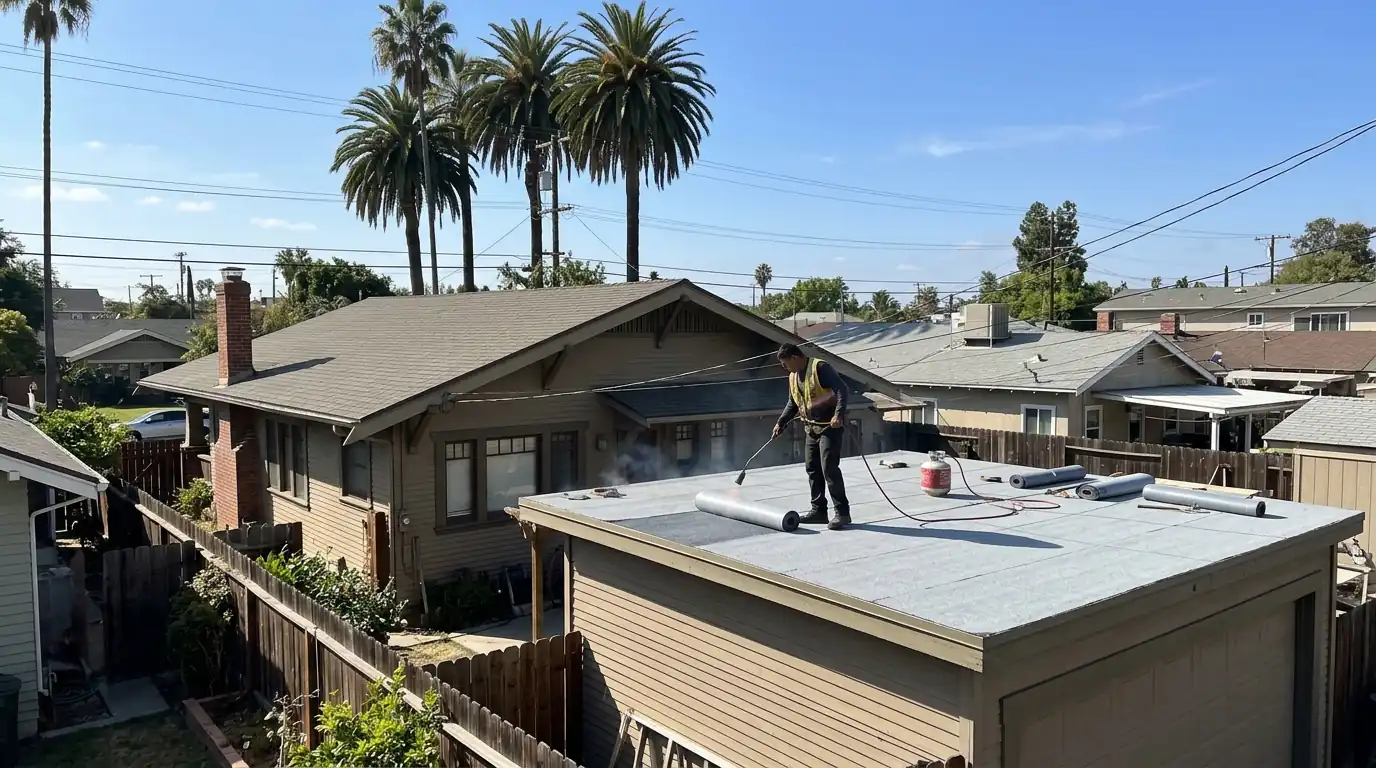
Torch-down roofing is modified bitumen sheet whose underside is melted with a propane torch so it fuses to the layer below, usually in a two-ply system with a granulated cap sheet. It is a strong choice for flat roofs that see foot traffic or have many corners and wall transitions. In Long Beach it typically runs $6.40 to $10.80 per sq ft.
Modified bitumen is asphalt blended with rubber-like polymers and built onto a reinforcing mat. The polymer makes the asphalt stretch and recover instead of cracking. In a torch-down system, the roofer heats the back of each roll until the bitumen flows, then rolls the sheet into place so it fuses to the base layer. The result is a thick, multi-layer roof with lapped seams that are melted together.
Our crews install torch-down on Long Beach flat roofs, carports, garages and roof decks because it takes abuse well. This page covers how a torch-down system is built in layers, the fire safety steps we follow on every job and how to tell if your existing torch-down roof can be repaired.
Base sheet, cap sheet and why two plies matter
A proper torch-down roof is built in at least two layers. The base sheet goes down first, either nailed to the wood deck or torched over a compatible base. The cap sheet is torched over it with staggered seams, so no seam in the top layer sits over a seam below. The cap carries mineral granules that shield the bitumen from UV.
Some low-cost jobs use a single cap sheet over bare decking. That saves a day of work but leaves only one layer between the house and the next storm. We build two plies on homes and add a third on heavily used areas.
- Base sheet: nailed or torched, the hidden waterproof layer
- Cap sheet: granulated top ply with staggered seams
- Granule color: white or light gray caps reflect more sun
- Bleed-out: a thin bead of melted bitumen at each lap shows proper fusion
Fire safety on every torch-down job
Torch-down uses an open flame, and we treat that seriously on every roof. Wood siding, eaves and old dry framing near the roof edge can catch if a torch is pointed carelessly. Our roofers never torch directly against combustible wood. At wood walls and edges, we use self-adhered or cold-applied membrane pieces instead of flame.
A crew member with a charged extinguisher stays on the roof while torching. We stop torching well before the end of the day and run a fire watch, checking the roof, eaves and attic vents for smoldering material before we leave.
- No flame against wood siding, fascia or open eaves
- Self-adhered membrane at combustible edges
- Extinguisher on the roof during all torch work
- Fire watch after the last torch is shut off
Repair or replace an existing torch-down roof
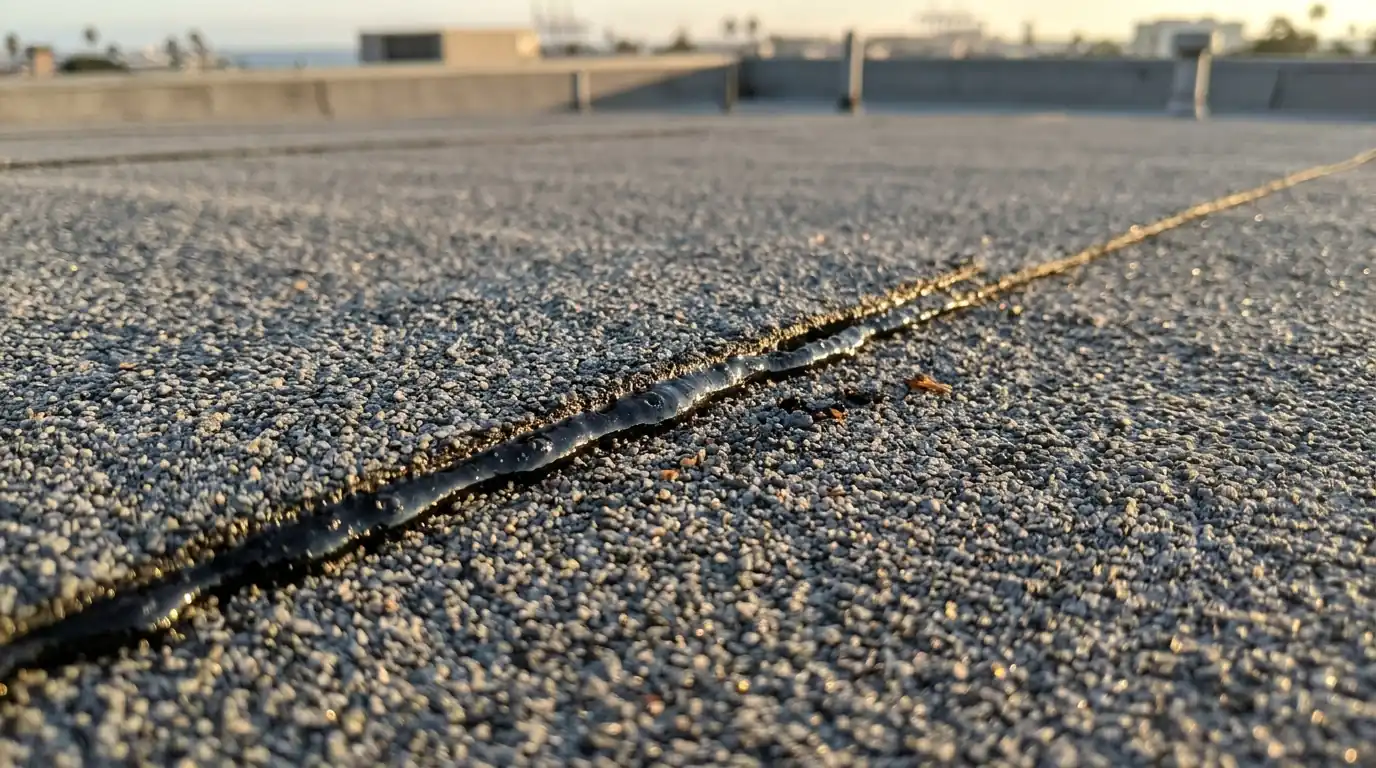
Torch-down ages in a predictable way. Granules wash off and the black bitumen underneath starts to craze in the sun. Laps open at the edges, often at parapet corners and around pipe flashings. Blisters rise where moisture got trapped during installation. Small open laps and isolated blisters can be cut out and re-torched with a patch.
When granule loss covers most of the roof, or blisters and soft spots are spread across it, the cap has reached the end. If the base sheet is still sound and dry, a new cap sheet can sometimes go over it. We check by cutting test samples before quoting either path.
When to call about torch-down roofing
Granules gone bare
Shiny black bitumen showing through where gray or white granules used to be means the cap is losing UV protection.
Laps peeling at corners
Seams lifting at parapet corners or along edges let water travel under the cap sheet.
Blisters on the surface
Raised bubbles that press down and spring back point to trapped moisture between plies.
Cracks along deck door
Splits near a balcony or deck door show the roof is flexing under foot traffic.
Single-ply job failing
A roof built with only one cap layer often leaks early once that layer is worn.
Garage roof stains
Water marks inside a garage after storms often trace back to an aging torch-down roof.
Typical cost in Long Beach
What torch-down roofing usually costs
$6.40 to $10.80 per sq ft
- Two-ply or three-ply build
- Tear-off of old layers and dump fees
- Rotted decking to replace
- Wood walls and edges needing self-adhered details
- Cap sheet color and reflectivity
These are typical Long Beach ranges, and the real number comes after we look at your roof. See every price range.
Torch-down on Long Beach homes, carports and roof decks
Torch-down is common on Long Beach mid-century homes with flat sections, on detached garages behind Craftsman bungalows in Bluff Heights and Wrigley, and on roof decks over living space near the beach. It is also the roof on many carports and covered parking behind apartment buildings in Alamitos Beach and downtown. Its toughness under foot makes it a good match for roofs people actually use.
Long dry summers wear the granules down, so a light-colored cap helps. Title 24 can require cool-rated roofing on some low-slope re-roofs, so we check what applies before ordering a cap sheet. In historic districts such as California Heights and Bluff Park, flat roof work is usually hidden behind parapets, but we confirm whether any review applies. The City of Long Beach requires a building permit for re-roofing.
How the job runs
How our crew handles torch-down roofing
- 1
Cut test and measure
We cut small samples to see how many plies exist and whether the base is dry.
- 2
Strip and repair deck
Old roofing comes off, rotted boards are replaced and edges are prepared.
- 3
Install base sheet
The base ply is nailed or torched down, with laps running to shed water toward drains.
- 4
Torch the cap sheet
The granulated cap is fused over the base with staggered seams and proper bleed-out at every lap.
- 5
Fire watch and inspect
We run a fire watch, check every seam and flashing, then walk the roof with you.
FAQ
Torch-Down Roofing questions
Is torch-down roofing safe on an older wood house?
It is when the crew follows strict fire rules. We never put flame against wood siding or open eaves, we use self-adhered membrane at combustible edges, and we run a fire watch after torching ends. Those steps are part of every torch-down job we do.
How long does a torch-down roof last in Long Beach?
A two-ply torch-down roof with a good cap commonly lasts many years. Sun exposure, drainage and foot traffic all affect life. Keeping granules intact and drains clear makes the biggest difference.
Can I walk on a torch-down roof deck?
Yes, torch-down handles foot traffic better than many flat roof membranes. For decks with furniture or heavy use, we suggest walkway pads or a separate deck surface over the roof to protect the cap sheet.
Can you put a new torch-down cap sheet over my old one?
Sometimes, if the old roof is dry and has only one or two plies. We cut test samples first. Wet or blistered roofs need full tear-off so moisture is not sealed in.
What color torch-down cap sheet should I choose?
White or light gray caps reflect more sun and keep the space below cooler, which matters in Long Beach summers. Some re-roofs need a cool-rated cap under Title 24, which we check before ordering.
Where we do this work
Torch-Down Roofing around Long Beach
Our crews do this work across Long Beach and the cities around it. A few of the places we cover:
A leak, a quote, or a question about your roof?
Call Denco at (562) 414-1770. Someone answers 24 hours a day, and our crews work out of Long Beach and La Mirada.