Repair vs replace
Repair or replace your roof: how to decide
Not every leak means a new roof, and not every repair is money well spent. Use these questions to decide which one your Long Beach home needs.
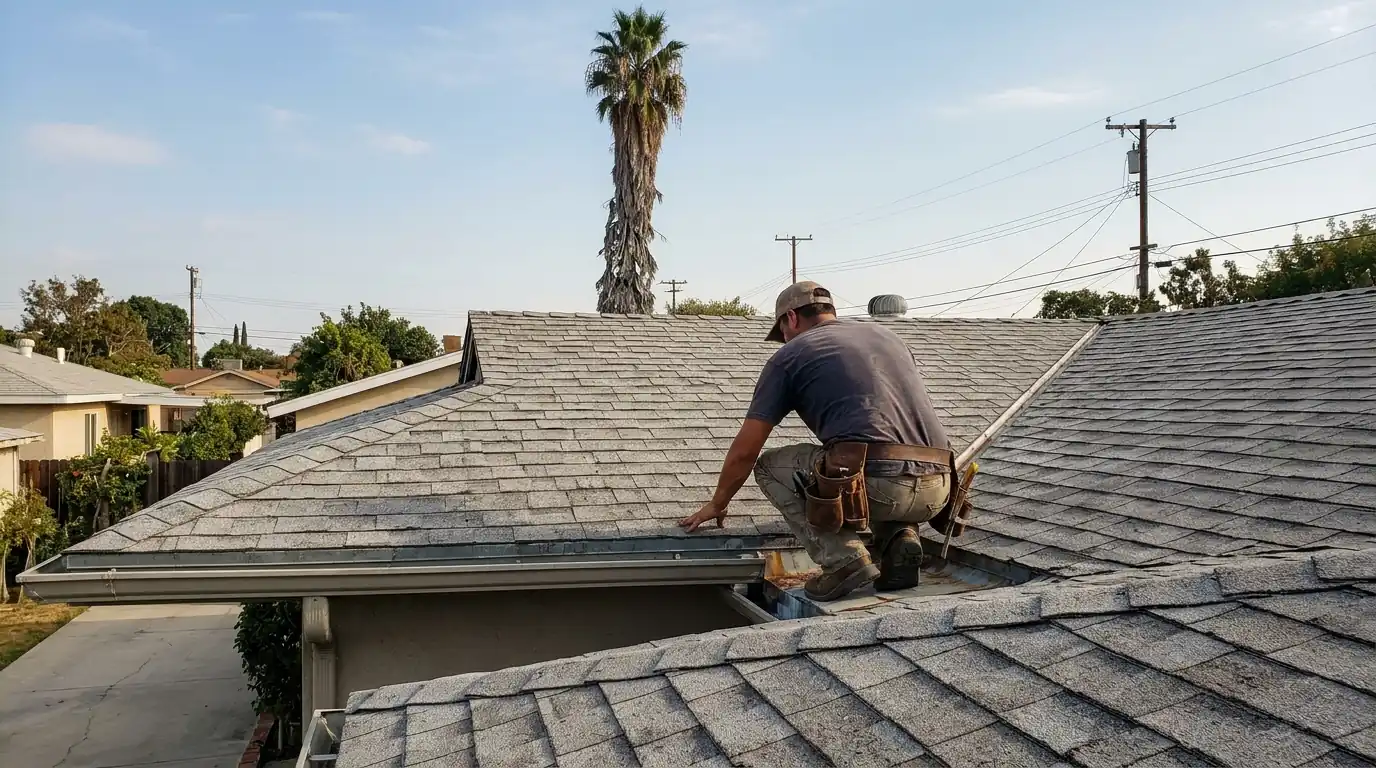
It is the question most homeowners ask after the first winter storm finds a leak: fix it, or start over? The honest answer depends on the roof's material, its age, how much of it is failing and what you plan to do with the house. A cracked pipe flashing on a sound roof is a repair. A roof that leaks in three places every winter is telling you something else.
Long Beach makes the question more interesting than in many places. The housing runs from 1910s Craftsman bungalows to 1950s ranch tracts to newer tile homes, and each roof type ages differently. Tile roofs even add a middle option between repair and replacement. Here is how we think it through with homeowners, step by step.
Start with the material and its age
Asphalt composition shingle roofs on ranch and Craftsman homes age fastest in our climate. Strong UV and long dry summers bake the shingles, the granules wash off in the first rains, and the mat underneath turns brittle. Once a shingle roof is near the end of its expected life, a repair buys a season or two, not a decade.
Clay and concrete tile behave differently. The tile often lasts many decades, while the felt underlayment under it fails sooner, often after 20 to 30 years. That opens a third path, lift and relay, where we remove the tile, replace the underlayment and flashings and reinstall the good tiles.
Flat and low-slope roofs on mid-century homes, additions, garages and apartments fall somewhere in between. Hot mop, torch-down and single-ply membranes can often be repaired or recoated for a while, until the membrane itself is cracked, blistered or holding water across wide areas.
Questions that point toward a repair
A repair is usually the right call when the problem is local and the rest of the roof is sound. Ask yourself these questions before assuming the worst.
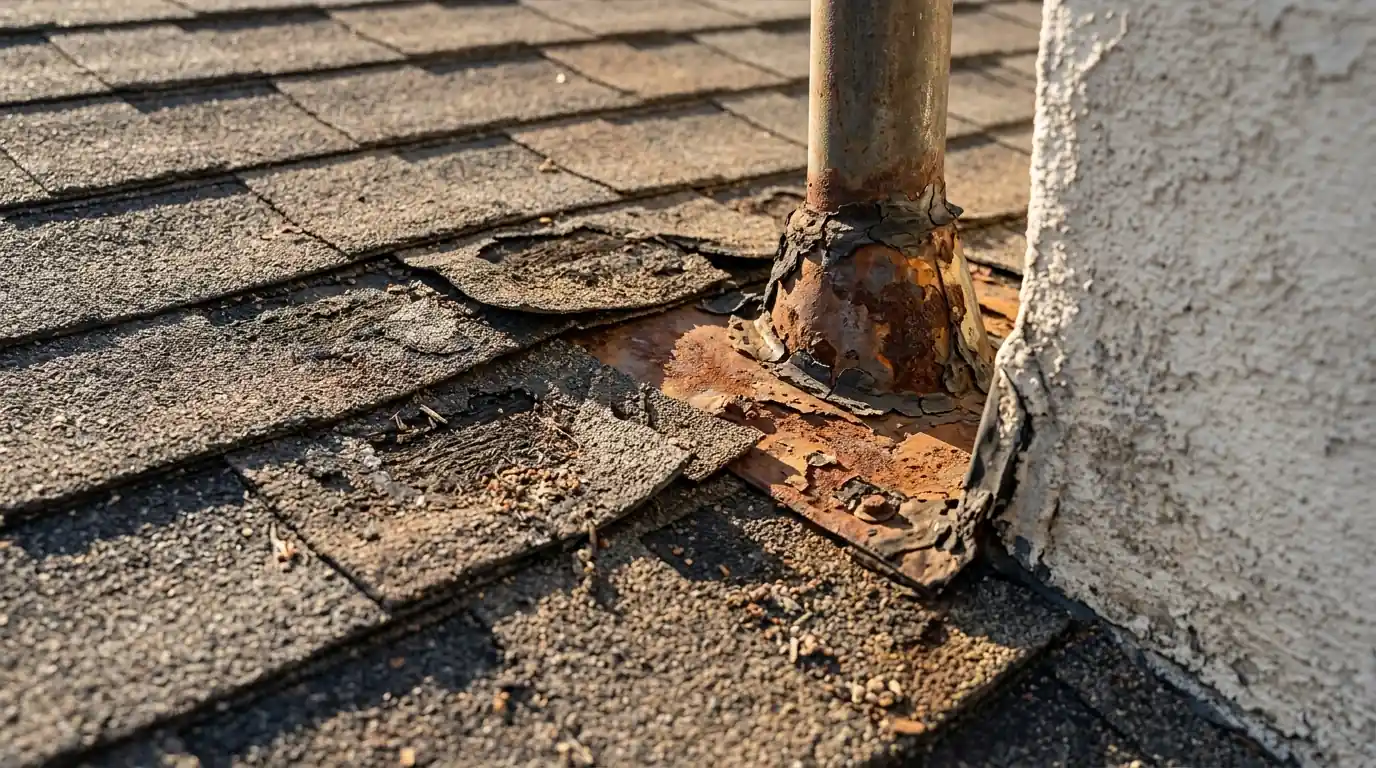
Most leaks we trace come from flashings and penetrations, not from the open field of the roof. A rusted pipe jack, cracked mortar at a ridge, a lifted step flashing at a wall or a clogged valley can each cause a stain that looks alarming from inside. Fixing that one detail can add years to a roof. A typical roof repair visit in Long Beach runs $385 to $1,450, and the real number comes after we look at the roof.
- Is the leak in one spot, such as a pipe flashing, chimney or skylight?
- Did a single event cause it, such as a Santa Ana gust or a falling limb?
- Are the shingles or tiles around the damage still in good shape?
- Is the roof deck dry and solid when checked from the attic?
- Has the roof given you few problems until now?
Signs a replacement is the better investment
Replacement makes sense when the roof as a whole is worn out and repairs keep adding up. Any two or three of these together are a strong signal.
A useful test: add up what you have spent on roof repairs over the last few years and what the next repair will cost. If that total is a meaningful share of a new roof, and the roof is near the end of its life anyway, the repair money is better put toward the replacement. Spending on a roof that is about to fail rarely pays back.
- Leaks in several places, or new leaks every rainy season
- Shingles that are curled, cracked or bare of granules across whole slopes
- Soft or sagging spots that suggest rotted decking
- More than one layer of old roofing already on the house
- Flat roof membrane that is blistered, split or ponding over large areas
- Patches on top of patches, with mismatched material across the roof
The middle ground on tile roofs
For Spanish Revival homes in Bluff Park, California Heights and Los Cerritos, and for newer concrete tile homes across East Long Beach, the choice is rarely just repair or replace. If the tile is sound but the underlayment is failing, lift and relay renews the waterproof layer and the flashings while keeping the tiles you already own. Tile underlayment replacement typically runs $9.40 to $15.80 per sq ft in Long Beach, well below the cost of all new clay tile.
If the tile itself is worn, porous or heavily broken, then full replacement is on the table, either with new tile or a lighter material. We judge tile condition by handling pieces on the roof, not by looking from the street, because a tile roof can look fine from the sidewalk and still have soft, cracked tile under the visible course.
How your plans for the house change the answer
Your timeline matters as much as the roof. If you plan to add solar, a roof with only a few years left should be replaced first, because taking panels off and putting them back later adds real cost. If you plan to sell within a year or two, the buyer's inspector and an escrow roof inspection will look closely at the roof, and a well-documented repair may be enough. If you plan to stay a long time, a new roof often costs less over the years than a string of repairs.
Historic districts can shape the choice as well. In areas like Belmont Heights, Bluff Heights and Rose Park, changing a visible roof material can need extra review. Repairing or relaying the existing tile usually avoids that question. Any full replacement needs a City of Long Beach building permit, and we handle that as part of the job.
What replacement costs compared with repair
Roof replacement in Long Beach typically runs $5.60 to $27.40 per sq ft depending on material, with asphalt shingle at the low end and clay tile at the top. On a typical home that puts a replacement at many times the price of a repair, which is why getting the diagnosis right matters so much. A repair visit, by comparison, typically runs $385 to $1,450.
The real price for your roof comes after we look at it. We go up, check the deck from the attic where we can reach it and show you photos of what we found. If a repair will do the job, we tell you so plainly, and if the roof is past saving, we explain why with the evidence in front of you.
Key takeaways
- A local leak on a sound roof usually calls for a repair
- Repeated leaks and worn material point to replacement
- Tile roofs have a middle option: lift and relay
- Replace before adding solar or settling in for the long term
About the author
Hubert Tisdale edits Roof Advice for Denco Roofing Company. The articles draw on what our roofers see on Long Beach roofs every week.
FAQ
Reader questions
Can I replace just one slope of my roof instead of the whole thing?
Sometimes. A single worn or damaged slope can be replaced if the rest of the roof is sound and the material can be matched. On shingle roofs the new section will look different from the aged slopes for a while, and the joint between old and new needs careful flashing. We tell you honestly when a partial replacement makes sense.
Does a leak in the first big storm of the season mean my whole roof is failing?
Not necessarily. Many Long Beach leaks show up in the first heavy rain simply because the roof has been dry for months and a small flashing or sealant failure went unnoticed. One leak at one detail is usually a repair. A roof that leaks in several places during the same storm is a different story.
Should I lay new shingles over the old ones to avoid a tear-off?
An overlay skips the tear-off, but it hides the deck, adds weight and can shorten the life of the new shingles. If the house already has more than one layer, a full tear-off is needed. We generally recommend tearing off so the deck and flashings can be checked and replaced where needed.
A leak, a quote, or a question about your roof?
Call Denco at (562) 414-1770. Someone answers 24 hours a day, and our crews work out of Long Beach and La Mirada.