SPF roof systems
Spray foam roofing in Long Beach, CA
Your flat roof has low spots, dozens of pipes and units poking through it, and almost no insulation, and every patch around those penetrations eventually opens up.
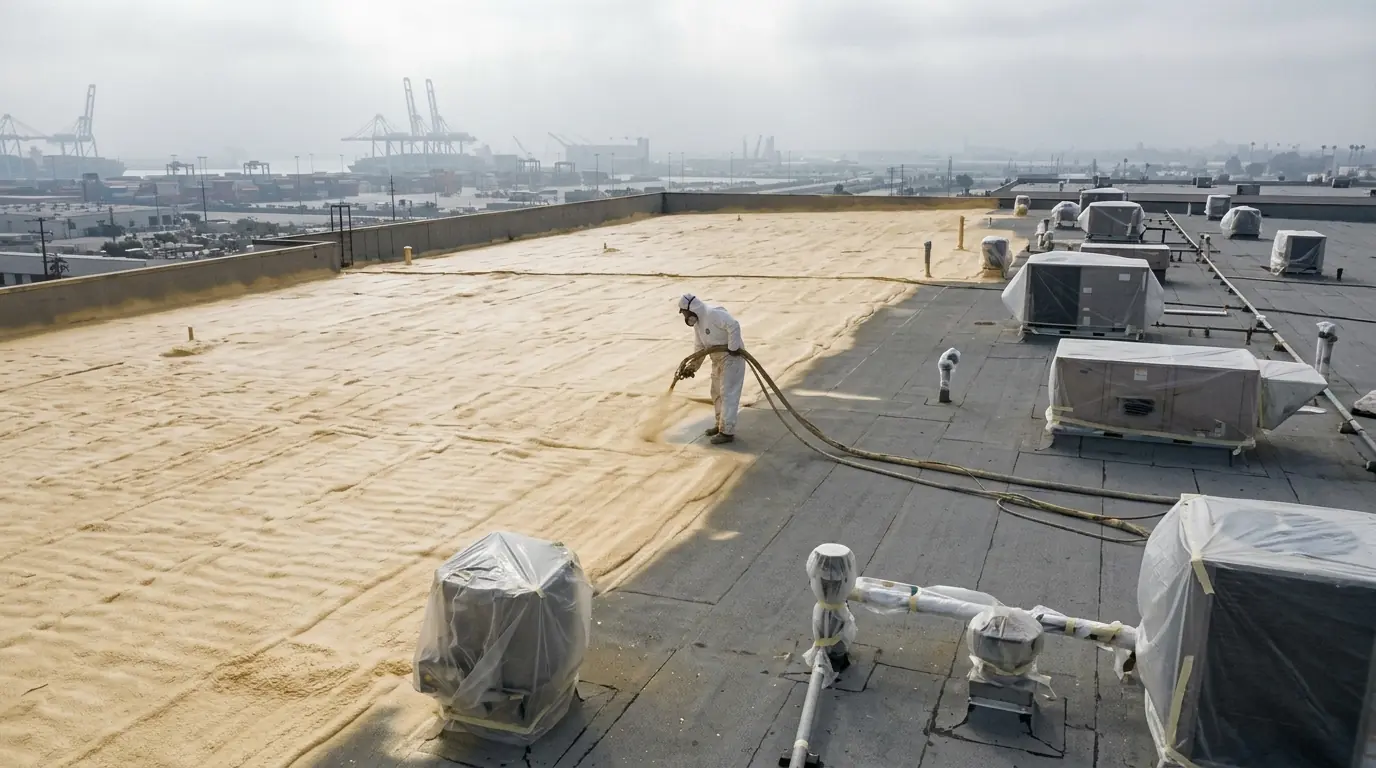
Spray foam roofing, or SPF, is a two-part polyurethane foam sprayed onto the roof where it expands into a solid, insulating layer, then covered with a protective coating. It suits flat roofs with many penetrations, poor insulation or low spots that need building up. In Long Beach it typically runs $5.80 to $9.90 per sq ft.
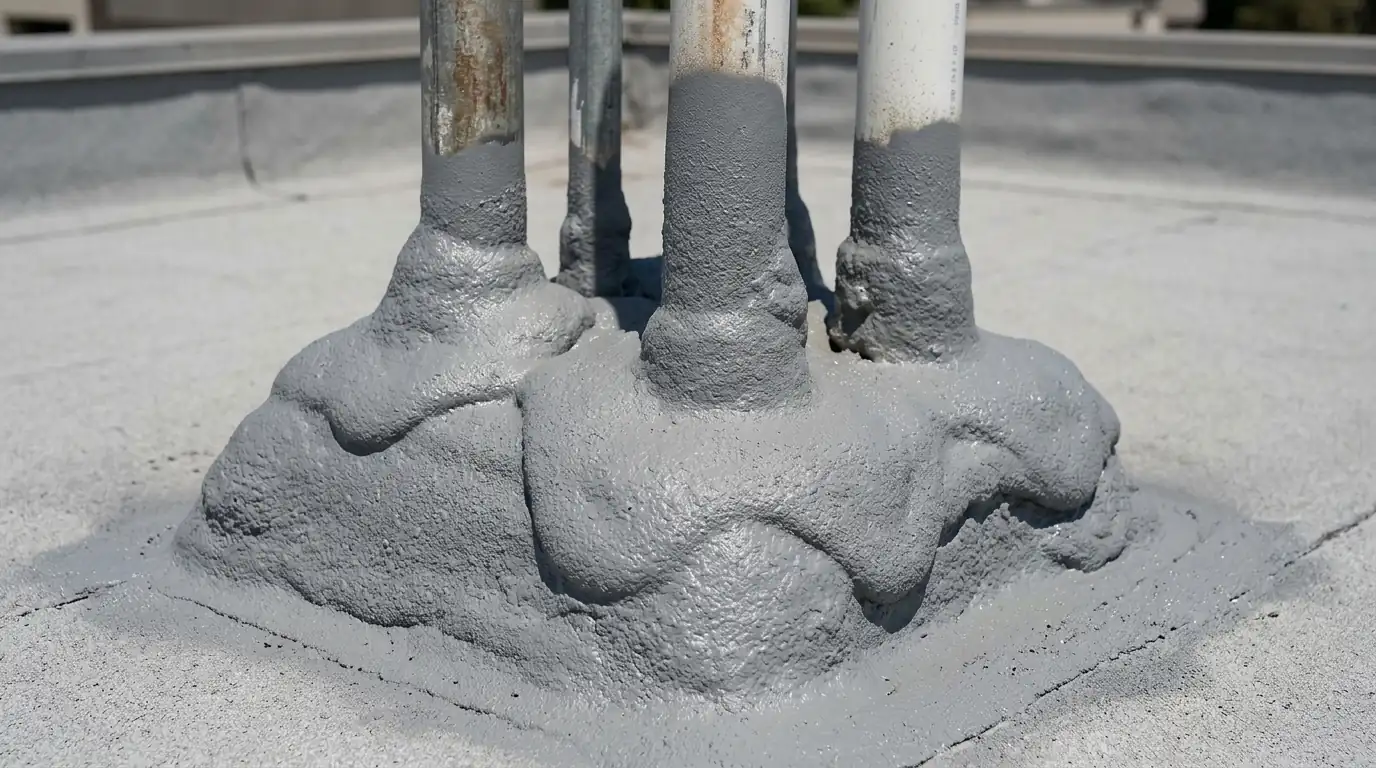
Spray foam is applied as a liquid from a heated spray rig. Two components mix at the gun and expand many times over within seconds, hardening into a closed-cell foam that bonds to the surface below. Because it goes on as a liquid, it wraps around pipes, curbs and conduit without seams. Because it can be built thicker in some areas than others, it can be shaped to push water toward drains.
Our crews apply spray foam on Long Beach commercial buildings, apartment roofs and some flat-roofed homes. This page covers how foam is built and coated, the conditions it needs during application, and the ongoing care that keeps a foam roof working for a long time.
How foam builds slope and insulation at once
The foam itself is the waterproofing body and the insulation. Each pass adds thickness, so the applicator can build up low areas and thin out near drains, adding slope where the old roof sagged. Closed-cell foam resists water and adds insulating value to roofs that often had little or none.
Foam alone cannot handle sunlight. UV breaks down the surface within weeks if left bare, so every foam roof gets an elastomeric coating, often silicone or acrylic, sometimes with granules broadcast into it for traffic areas.
- Fills ponding areas and adds positive slope
- Wraps penetrations with no seams to fail
- Adds insulation to uninsulated roofs
- Lightweight compared with tearing off and rebuilding
Weather and site conditions for spraying
Spray foam is sensitive to conditions. The roof surface must be dry, clean and within the temperature range the foam calls for. Wind carries overspray, so we stop spraying when gusts pick up and mask nearby cars, walls, windows and equipment before starting. Santa Ana wind days and marine layer mornings both affect our schedule.
On occupied buildings, we shut down rooftop air intakes during spraying and plan with tenants and owners so no fresh air is pulled in near the work. Overspray control is planned before the rig ever starts.
Coating thickness and inspection
The coating is the part of the system that wears. It must be applied at the specified thickness, usually in two coats of contrasting colors so we can see full coverage. Thin coating is a common cause of early foam roof failure.
We take small samples of the cured foam and coating to check thickness, then patch the sample spots. We also look for surface texture, because a rough, popcorn-like foam surface is harder to coat evenly than a smooth orange-peel finish.
Recoating and long-term care
A foam roof can last a long time if the coating is renewed before the foam is exposed. We suggest a yearly inspection to look for bird pecks, impact damage, cracked coating and clogged drains. Small damage is repaired by cutting out the spot, refilling with foam and recoating.
When the coating has worn thin across the roof, the roof is cleaned and recoated, which usually costs far less than replacing the roof.
When to call about spray foam roofing
Many rooftop penetrations
Roofs crowded with pipes, conduits and curbs are hard to seal with sheets and suit foam, which goes on in one piece.
Persistent low spots
Areas that hold water after every storm can be built up with foam to drain.
Little or no insulation
Top floors that swing hot and cold with the weather often sit under an uninsulated roof.
Old roof too heavy
When a tear-off would expose a deck that is hard to work on, foam over a sound, dry roof can be an option.
Bare foam showing
Yellow or brown crumbling foam on an existing SPF roof means the coating has worn through.
Bird or impact damage
Small pecked holes or dents in an existing foam roof should be patched before water gets in.
Typical cost in Long Beach
What spray foam roofing usually costs
$5.80 to $9.90 per sq ft
- Foam thickness and insulation goal
- Removal of wet or loose existing roofing
- Coating type and total thickness
- Masking and overspray protection on tight sites
- Number of penetrations and units
These are typical Long Beach ranges, and the real number comes after we test your roof and plan the foam thickness. See every price range.
Spray foam on Long Beach commercial and apartment roofs
Foam is a good fit for many Long Beach warehouse and light industrial roofs near the port, Westside and along Cherry Avenue, where roofs carry lots of equipment and conduit. It also suits apartment buildings with crowded rooftop mechanicals downtown and in Alamitos Beach. On homes, foam is usually a choice for mid-century flat roofs with poor insulation.
Our dry season gives long windows for spraying, while marine layer mornings near the coast and Santa Ana wind days can shift start times. Dense blocks with cars parked close to the building make overspray control a serious part of planning. The City of Long Beach requires a building permit for re-roofing, and we confirm Title 24 cool roof needs for the coating before ordering material.
How the job runs
How our crew handles spray foam roofing
- 1
Survey and moisture check
We confirm the existing roof is dry and firmly attached, or plan removal where it is not.
- 2
Prepare and mask
The roof is cleaned and dried, and nearby walls, cars and equipment are masked against overspray.
- 3
Spray foam layers
Foam is sprayed in passes to the planned thickness, building slope toward drains.
- 4
Apply coating system
Two coats of elastomeric coating go on at the specified thickness, with granules at traffic areas.
- 5
Sample and verify
We cut small samples to check foam and coating thickness, patch them, and walk the roof with you.
FAQ
Spray Foam Roofing questions
How long does a spray foam roof last?
A foam roof can last a long time when its coating is kept up and recoated before the foam is exposed. The coating is the wear layer, so its thickness and upkeep decide life. A yearly inspection catches damage early.
Can spray foam roofing go over my existing roof?
Often yes, if the existing roof is dry and firmly attached. Wet or loose areas are removed first. We test for moisture before recommending foam over an existing roof.
Is spray foam roofing safe to apply on an occupied building?
Yes, with planning. We shut down rooftop air intakes during spraying, mask the area and coordinate timing with tenants or staff. We stop spraying in strong wind to control overspray.
Will spray foam roofing lower my cooling costs?
Closed-cell foam adds insulation, and a white coating reflects sun, so most buildings run cooler on top floors. The amount depends on the foam thickness and what insulation was there before.
What happens if birds peck my spray foam roof?
Small pecks are patched by cleaning the spot, filling it with foam sealant and recoating. Left alone, they let water reach the foam. We check for this during maintenance visits.
Where we do this work
Spray Foam Roofing around Long Beach
Our crews do this work across Long Beach and the cities around it. A few of the places we cover:
A leak, a quote, or a question about your roof?
Call Denco at (562) 414-1770. Someone answers 24 hours a day, and our crews work out of Long Beach and La Mirada.