Restore and reflect
Roof coatings in Long Beach, CA
Your flat roof is still dry inside but the surface is chalky, cracked and hot, and you would rather extend it now than pay for a full replacement too soon.
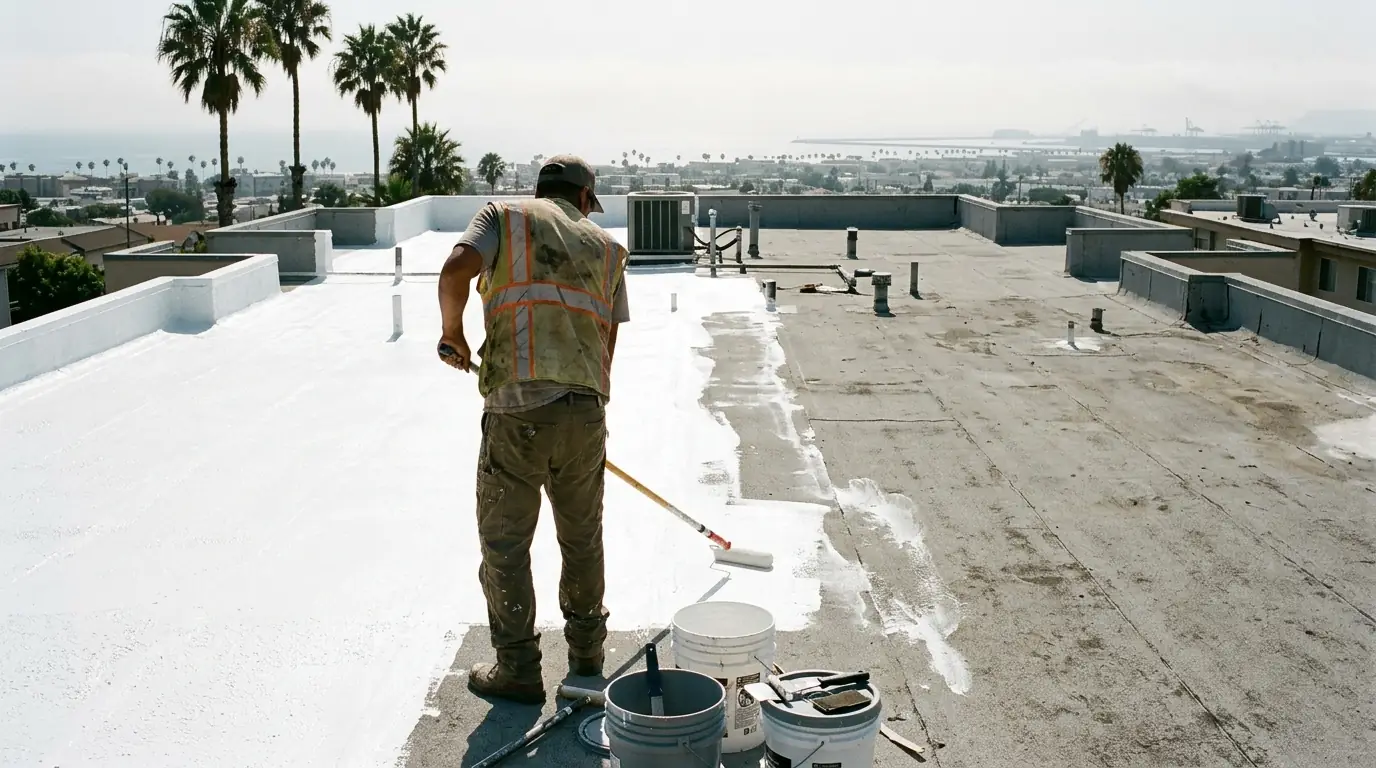
A roof coating is a fluid-applied layer, usually silicone, acrylic or another elastomeric product, rolled or sprayed over a sound existing roof to seal small cracks and reflect sunlight. It works best on flat and low-slope roofs that are aged on the surface but still dry and firmly attached underneath. In Long Beach it typically runs $3.20 to $6.10 per sq ft.
A coating is not a cure for a failing roof, and we say that up front. It is a way to add years to a roof that is still structurally sound. The coating creates a continuous rubbery skin over the old surface, bridging hairline cracks and covering seams, and a white coating reflects much of the sun's heat that would otherwise cook the roof and the rooms below.
Our crews coat flat and low-slope roofs on Long Beach homes, apartment buildings and commercial properties. The key to a coating that lasts is not the product as much as what happens before it goes on: moisture testing, cleaning, repairs and primer. This page explains each of those steps and how we choose a coating chemistry.
Is your roof a good candidate for a coating?
Coatings bond to the surface below them. If that surface is wet, blistered or loose, the coating fails with it. Before we recommend a coating, we walk the roof, probe the seams and take core samples or moisture readings to confirm the layers below are dry. If more than a small portion of the roof is wet, we recommend repair of those areas first or replacement instead.
Good candidates are roofs whose problems are mostly on the surface: chalking, granule loss, hairline cracking, aging seams and a hot dark color.
- Dry insulation and decking confirmed by testing
- Membrane still firmly attached, without widespread blisters
- Drainage that clears water within a reasonable time
- Metal, single-ply, modified bitumen or built-up roofs in fair shape
Silicone, acrylic and other coating chemistry
Silicone coatings hold up well where water ponds after rain and resist UV for a long time. They attract dust, so they lose some brightness over time, and new silicone sticks well only to silicone when the roof is recoated later. Acrylic coatings are water-based, bright white and easy to recoat, but they do not like standing water and need a dry stretch to cure.
Other elastomeric products such as urethane are tougher under foot traffic and are often used as a base or on walkways. We pick the coating by matching it to your roof's drainage, traffic and existing surface, not by habit.
- Silicone: tolerates ponding, strong UV resistance
- Acrylic: bright, easy to recoat, needs good drainage
- Urethane: tough under traffic, often used at walkways
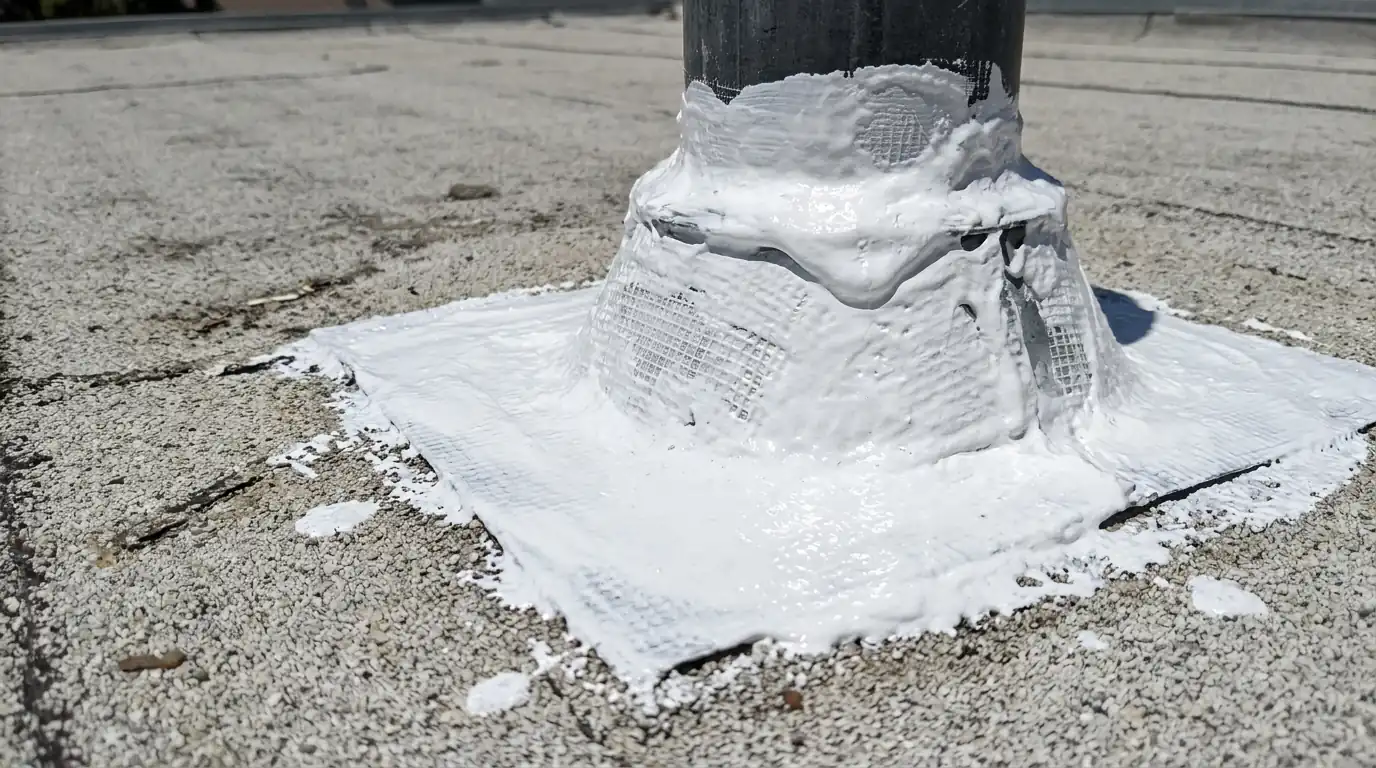
Prep work that decides how long a coating lasts
Most coating failures we are called to fix were caused by poor preparation, not bad product. Coatings peel off dirty roofs, crack over open seams and blister over trapped water. That is why prep is the bulk of our labor on a coating job.
We power wash the roof and let it dry fully, then repair blisters, reseal open seams with reinforcing fabric, rebuild flashings and clear drains. Some surfaces need a primer for adhesion. Only then does the coating go on, applied in at least two coats to a measured thickness rather than a thin layer spread to save material.
When to call about roof coatings
Chalky, faded surface
A surface that leaves white or gray dust on your hand has lost its top layer to the sun.
Hairline surface cracking
Fine cracks across the surface without leaks inside are a good stage to coat before they open.
Hot top-floor rooms
Rooms under a dark flat roof that bake all summer can cool down noticeably with a reflective coat.
Aging metal roof seams
Rusting fasteners and loose seams on a metal roof can be sealed with a coating system after prep.
Roof dry but worn
When testing shows the layers are dry but the surface is tired, a coating can extend it.
Previous coating peeling
An older coating lifting in sheets needs removal and proper prep before recoating.
Typical cost in Long Beach
What roof coatings usually costs
$3.20 to $6.10 per sq ft
- Coating chemistry: silicone, acrylic or urethane
- Amount of seam and blister repair before coating
- Primer needed for the existing surface
- Specified dry thickness and number of coats
- Removal of old peeling coatings
These are typical Long Beach ranges, and the real number comes after we test your roof for moisture. See every price range.
Coatings for Long Beach sun, salt air and winter storms
Long Beach roofs face months of dry sun with very little rain, and that UV is what wears flat roof surfaces down. A reflective coating takes much of that load. On apartment buildings along Ocean Blvd and in Alamitos Beach, and on commercial roofs along Long Beach Blvd and near the airport, coatings can extend roofs that are tired on top but sound below.
Timing matters here. Acrylic coatings need dry weather to cure, so we schedule them between late spring and early fall, well before winter atmospheric-river storms. Near the beach, marine layer mornings leave dew on the roof, so we start once the surface is dry. Salt film is washed off before coating so it does not weaken adhesion.
How the job runs
How our crew handles roof coatings
- 1
Moisture testing
We take cores or readings to confirm the roof below is dry enough to coat.
- 2
Clean and dry
The roof is power washed to remove dirt, salt film and loose material, then left to dry.
- 3
Repair and reinforce
Blisters are cut out, seams and flashings are sealed with fabric, and drains are cleared.
- 4
Prime where needed
Surfaces that need help with adhesion get the primer the coating system calls for.
- 5
Apply measured coats
We apply two or more coats to the specified thickness and check coverage before signing off.
FAQ
Roof Coatings questions
How long does a roof coating last on a Long Beach flat roof?
A properly prepped coating applied at the right thickness commonly lasts a number of years, and it can be recoated to extend its life. Sun exposure, ponding and foot traffic affect how long it holds. Material warranties vary by product and manufacturer.
Can a roof coating stop an active leak?
A coating alone is not a leak repair. We find and repair the leak source first, such as a split seam or failed flashing, then coat. If the roof has trapped water, we fix or replace those areas before coating.
Should I choose silicone or acrylic roof coating?
Silicone is the better pick for roofs that hold some water after rain. Acrylic suits roofs that drain well and where you want easy recoating later. We check your drainage before recommending either.
Will a roof coating lower the heat in my top-floor rooms?
A white coating reflects much of the sun that a dark roof absorbs, which usually reduces heat in the rooms below. The difference depends on insulation and the roof's current color. Keeping the coating clean helps it stay reflective.
Can you coat over an old coating that is peeling?
Not directly. Loose coating has to be scraped and washed off, and the edges feathered, before new coating is applied. Silicone usually needs silicone on top, so we identify the old product first.
Where we do this work
Roof Coatings around Long Beach
Our crews do this work across Long Beach and the cities around it. A few of the places we cover:
A leak, a quote, or a question about your roof?
Call Denco at (562) 414-1770. Someone answers 24 hours a day, and our crews work out of Long Beach and La Mirada.