Roof first, panels second
Solar-ready re-roofing in Long Beach, CA
You want solar, or you already have it, and the roof under it is getting old. Putting a 25-year system on a roof with 8 years left means paying to move the panels again soon.
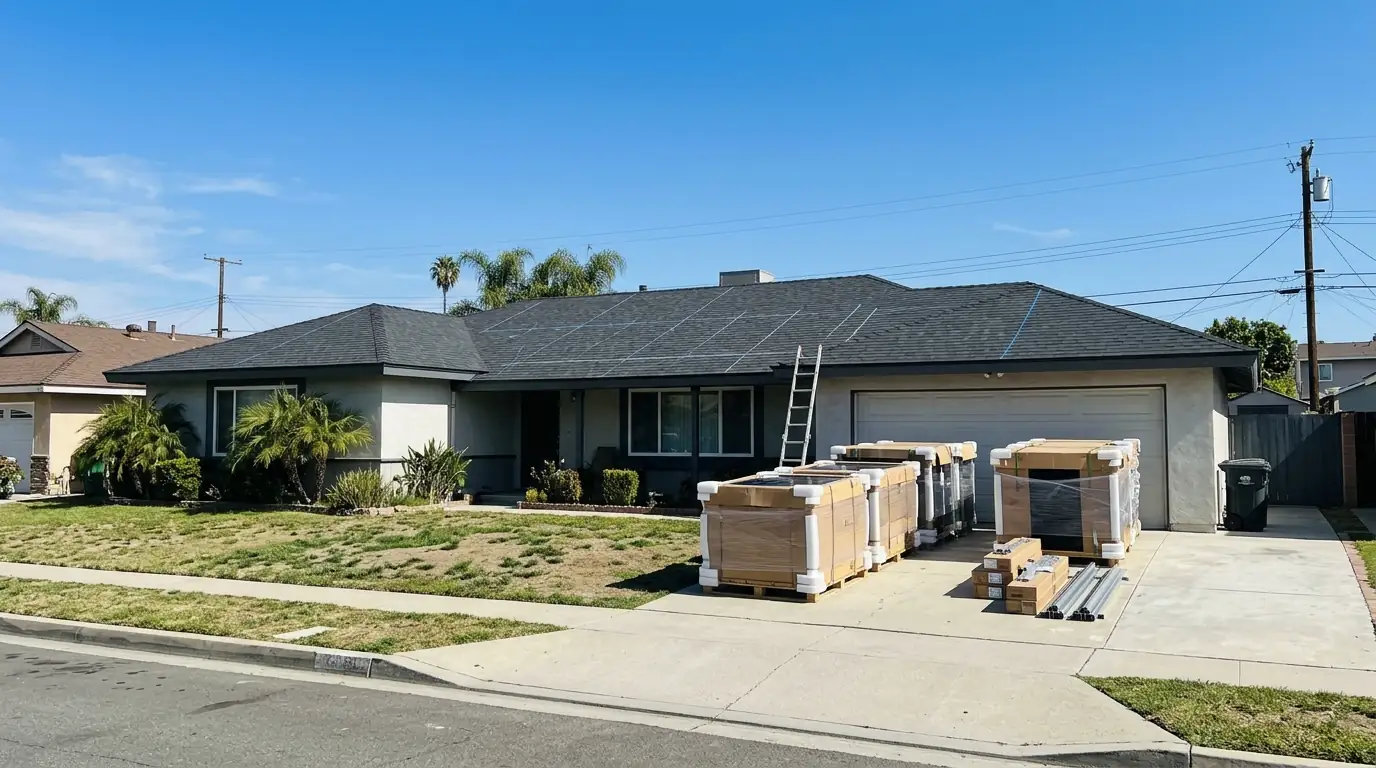
Solar-ready re-roofing is a roof replacement planned so solar panels can go on, or go back on, a fresh roof with properly located and flashed attachments. It makes sense when your roof is past its midlife and solar is on it or coming soon. It typically runs $6.10 to $11.90 per sq ft plus panel removal and reinstall, depending on material and roof complexity.
Solar panels are built to sit on a roof for decades. Asphalt shingles and the felt under tile usually do not last that long, especially under Long Beach sun. When the roof wears out before the panels do, the whole system has to come off for the roof to be replaced, and that removal costs real money. Doing the roof first, before solar or during a planned panel removal, avoids paying for that twice.
A solar-ready roof is more than a new roof under panels. We plan the layout so rafters are mapped, the roof surface is suited to mounts, flashings are installed as part of the roofing rather than added later, and vents and pipes are moved, where practical, out of the array area. The result is a roof that is ready to carry panels for as long as they last.
Choosing a roof material that fits solar
Composition shingle is the simplest base for solar. Mounts flash cleanly under the shingle course above, the material is affordable, and the roof is easy to work on later. Most ranch and Craftsman homes in Long Beach go this way. Standing seam metal is another strong option, since panels can clamp to the seams without any holes through the roof at all.
Tile is common here, and it can carry solar, but it takes more care. Many owners keep tile for the look of their Spanish home and use tile-replacement mounts in the array area. Some choose a flat, lower-profile concrete tile that makes mounting easier. On low-slope roofs, a new TPO or similar membrane with membrane-compatible mounts works well and can also meet cool roof goals.
- Composition shingle: simple, affordable, easy flashed mounts
- Standing seam metal: clamp-on mounts with no roof holes
- Clay or concrete tile: keeps the look, needs tile mounts
- TPO and other membranes: for low-slope and flat roofs
- Cool-rated options where the energy code applies
Planning the array area before the roof goes on
Before we install the new roof, we talk with you, and ideally your solar company, about where the panels will sit. That lets us mark rafter locations, add blocking where needed, and decide whether any plumbing vents, exhaust caps or attic vents can be moved out of the array footprint. Every pipe that sits under a panel is a spot that is hard to reach for repairs later.
We also look at the decking. If plywood is soft, delaminated or rotted, it gets replaced now, because nothing is harder to fix than rotted decking under a full solar array.
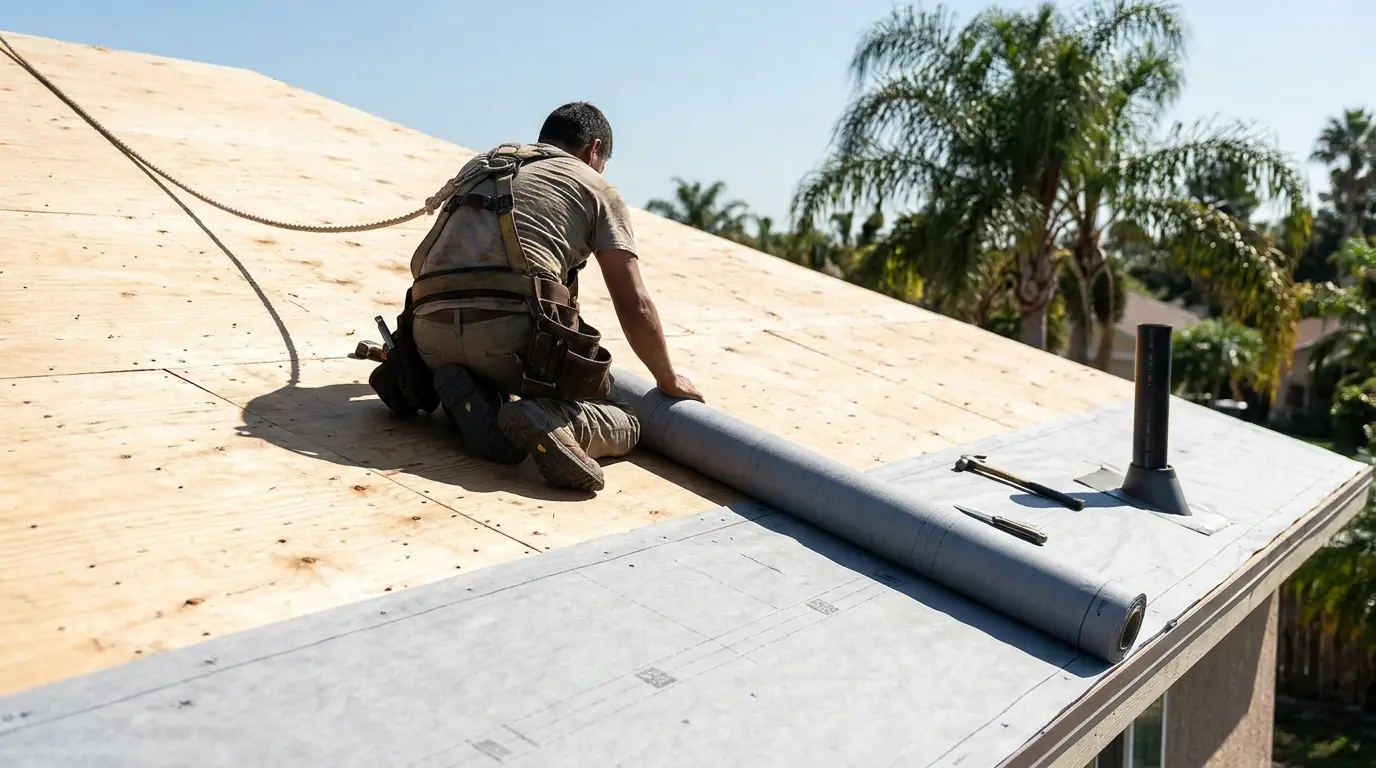
Underlayment and flashing upgrades under the panels
The roof under solar gets less sun and less wind, but it also gets less attention. We use a quality synthetic underlayment, and in many cases a self-adhering membrane in the array zone and valleys, so a single failed mount cannot easily let water reach the decking. Flashings for mounts are integrated as the roofing goes on, lapped the right way so water always runs over them.
If panels are going back on immediately, we coordinate the mount layout with the panel layout from the old array or from the new design. If solar comes later, we can mark rafter lines and leave notes so the solar installer knows where the solid attachment points are.
When to call about solar-ready re-roofing
Roof older than 15 years
If a shingle roof is past its midlife, it will likely need replacement before a new solar system reaches its middle years.
Solar quote in hand
If you are getting solar quotes, have the roof checked first. Several installers will recommend a re-roof before they mount.
Leaks under the array
Repeated leaks under existing panels often mean the roof below has aged out, not just a single mount.
Tile felt failing
Brittle underlayment under tile and a solar plan are a good moment to lift and relay or switch materials.
Mixed roof materials
Homes with a shingle main roof and a flat addition benefit from planning both sections together for solar.
Vents in the way
Plumbing vents and attic vents spread across the best solar slope can be rerouted during a re-roof.
Typical cost in Long Beach
What solar-ready re-roofing usually costs
$6.10 to $11.90 per sq ft plus panel removal and reinstall
- Roof material chosen and the size of the roof
- Decking repairs or replacing skip sheathing
- Number of vents or pipes moved out of the array area
- Roof pitch, height and number of slopes
- Number of panels removed and reinstalled
These are typical Long Beach ranges, and the real price comes after we look at your roof and any existing array. See every price range.
Getting Long Beach roofs ready for decades of solar
Long Beach gets strong sun most of the year, which is good for solar and hard on roofs. Ranch homes from the 1950s in the Plaza, Los Altos and El Dorado Park Estates often have wide, simple south and west slopes that suit panels well, and many of those roofs are on aging shingle. Craftsman bungalows in Bluff Heights and Wrigley have steeper, smaller slopes with more vents and chimneys to plan around. Mid-century homes with low-slope roofs can host panels on a new membrane roof that also reflects heat.
Every re-roof in Long Beach needs a building permit, and California's Title 24 energy code can require a cool-rated roof on some re-roofs depending on slope and climate zone. We check what applies to your roof before ordering material. Homes in historic districts such as California Heights and Rose Park can need extra review before visible changes, which matters if you are considering switching from tile.
How the job runs
How our crew handles solar-ready re-roofing
- 1
Roof and array review
We inspect the roof, decking and attic, and look at where the panels sit now or will sit in the future.
- 2
Material and layout plan
We help you pick a material, map rafters, and plan vent and pipe locations around the array footprint.
- 3
Permit and panel removal
We pull the re-roof permit and, if panels are already on the roof, remove and store them safely.
- 4
New roof installation
Our crew strips the old roof, repairs decking, installs underlayment and the new roof with mount flashings.
- 5
Panels back on
Panels are reinstalled on the new mounts, or the roof is left marked and ready for your solar installer.
FAQ
Solar-Ready Re-Roofing questions
What does solar-ready re-roofing add compared to a normal roof replacement?
It adds planning: mapping rafters, moving vents out of the array area where practical, upgrading underlayment in the panel zone and installing mount flashings as part of the roof. The roofing material itself can be the same. The goal is a roof that does not need to come apart again during the life of the panels.
Should I re-roof before getting solar on a 15-year-old shingle roof?
In most cases it is worth considering, because the panels will likely outlast that roof by many years. Replacing the roof first avoids paying for panel removal and reinstall later. We can inspect the roof and tell you how much life it likely has left.
Can I keep my clay tile roof and still have a solar-ready roof?
Yes. We can lift and relay the tile over new underlayment and use tile-replacement mounts in the array area. It costs more than shingle, but it keeps the look of a Spanish style home.
Do I need a cool roof for a solar-ready re-roof in Long Beach?
It depends on the roof slope and the energy code rules for your climate zone. Some low-slope re-roofs require a cool-rated surface, and some steep roofs do too in certain cases. We check what applies before we order material.
Who coordinates with my solar company during solar-ready re-roofing?
We are happy to talk with your solar company about layout and timing, either directly or through you. Your solar company remains responsible for the electrical side and the system's own warranty. We handle the roof and the physical mounts we install.
Where we do this work
Solar-Ready Re-Roofing around Long Beach
Our crews do this work across Long Beach and the cities around it. A few of the places we cover:
A leak, a quote, or a question about your roof?
Call Denco at (562) 414-1770. Someone answers 24 hours a day, and our crews work out of Long Beach and La Mirada.