Intake, exhaust, balance
Attic ventilation in Long Beach, CA
Your upstairs rooms bake in August, and the shingles on the sunny side look older than the rest of the roof. A hot, stale attic is often the reason.
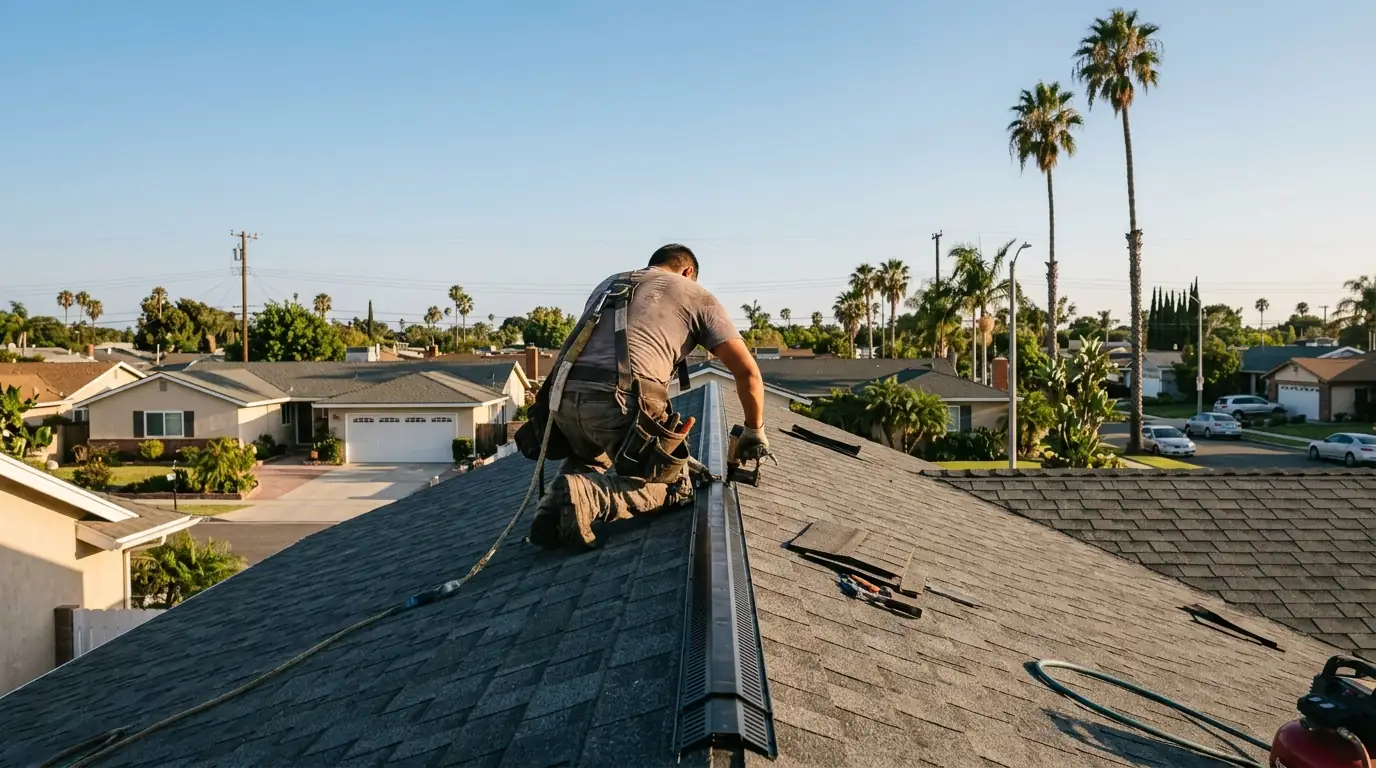
Attic ventilation is the set of intake and exhaust vents that lets outside air move through the attic, carrying away heat and moisture. You need it fixed when the attic runs very hot, shingles age early, or vents are blocked, missing or mixed in ways that work against each other. Typical projects run $460 to $1,980, depending on the number and type of vents.
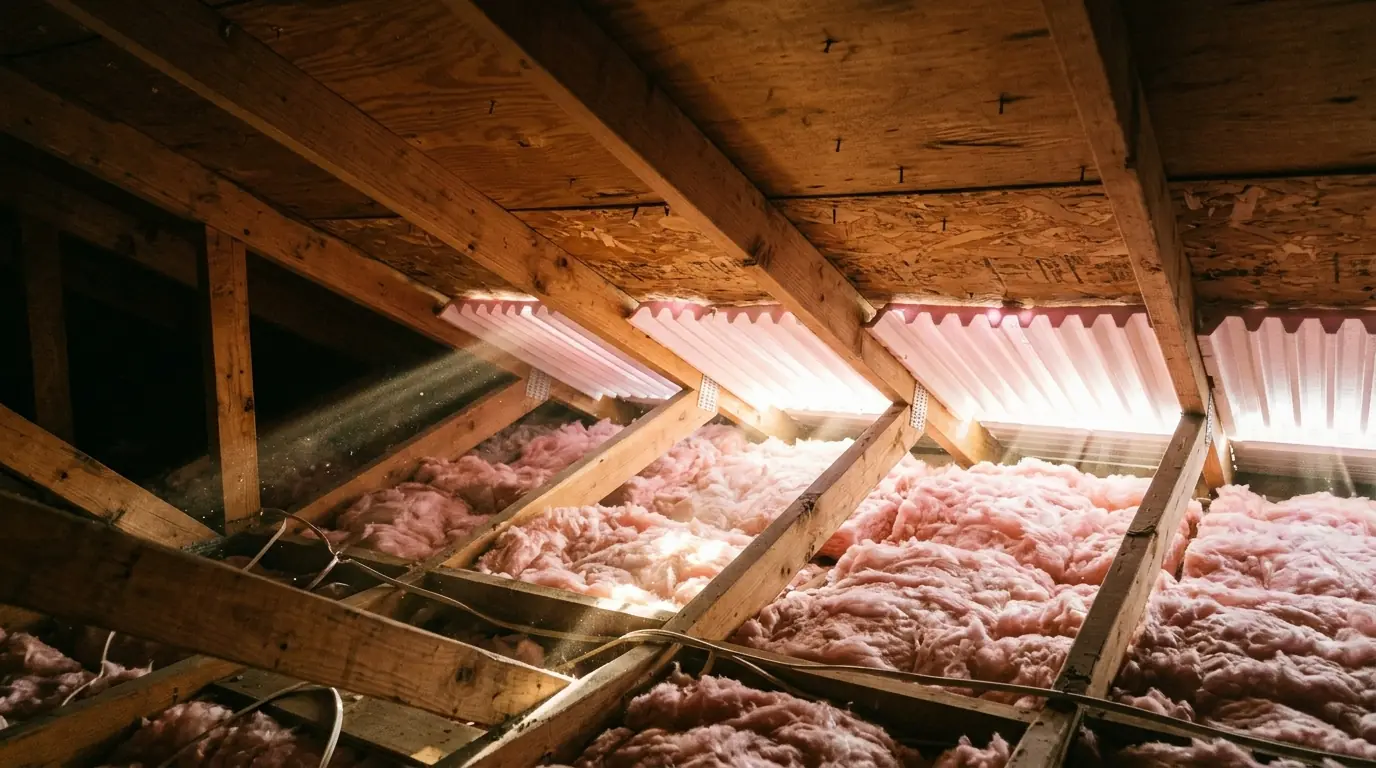
An attic is supposed to breathe. Cooler air comes in low, at the eaves, and warmer air leaves high, at the ridge or near it. When that flow works, the underside of the roof stays closer to outdoor temperature, moisture from the house has a way out, and the roofing above lasts longer. When it does not, heat builds up under the decking all summer, and shingles and underlayment age faster.
Many Long Beach homes have ventilation that was never designed as a system. A 1950s ranch might have a few small gable vents, eave vents painted shut over the decades, and a couple of box vents added during a later re-roof. Our job is to look at what you have, measure the attic, and set up a balanced layout of intake and exhaust that actually moves air.
Intake and exhaust: how a balanced attic works
Ventilation depends on a path. Air enters through soffit or eave vents, travels up along the underside of the roof deck, and exits through ridge vents, box vents or gable vents. Without enough intake, exhaust vents pull air from the house instead, including conditioned air. Without enough exhaust, hot air sits trapped at the top of the attic.
Mixing exhaust types can also cause trouble. A powered fan or a set of box vents near a ridge vent can short-circuit the airflow, pulling air in through the ridge instead of through the eaves. We plan one exhaust type per roof area where we can, sized to the attic, and make sure intake matches it.
- Intake: eave vents, soffit vents and vented blocking between rafters
- Exhaust: continuous ridge vent, low-profile box vents, gable vents
- Baffles to keep insulation from blocking eave airflow
- Screens on every opening to keep birds and rodents out
- Flashing and sealing on every new roof penetration
Vent options for tile, shingle and low-slope roofs
On composition shingle, a continuous ridge vent with a shingle cap is the cleanest exhaust, paired with vented eave blocking or soffit vents. On clay and concrete tile, we use tile-specific off-ridge vents or ridge ventilation systems that sit under the ridge tile, so the vent is hidden and the roof keeps its look. Some tile roofs use vented eave closures for intake.
Low-slope and flat roofs over cathedral ceilings or shallow attics are harder. There may be little or no air space. In those cases we look at low-profile roof vents, vented edge details, or a combination with insulation changes, and we explain plainly what is and is not practical for that roof.
What a poorly vented attic does to a roof
Heat is the main problem here. A sealed-up attic on a sunny afternoon can get far hotter than the outside air, and that heat cooks shingles and the felt under tile from below while the sun works on them from above. Shingles curl and crack early, sealants fail, and the underlayment turns brittle sooner than it should.
Moisture is the other problem. Cooking, showers and laundry put water vapor into the house, and some of it ends up in the attic. In the marine layer months, damp air near the coast adds more. Without airflow, that moisture can collect on cool nails and decking, leading to rusted nail tips, stained plywood and mildew smells.
When to call about attic ventilation
Very hot upstairs rooms
Bedrooms under the roof that stay hot into the evening can point to heat trapped in the attic.
Shingles aging unevenly
Curling, cracking or granule loss that is worse on one slope often lines up with poor ventilation on that side.
Rusty nail tips in attic
Rust or drips on the nail points poking through the decking show moisture collecting in a stale attic.
Painted-over eave vents
Older homes often have eave vents painted shut or blocked by insulation, cutting off the intake side.
Mixed vent types
A ridge vent, box vents and a gable fan on the same roof can fight each other instead of moving air.
Musty attic smell
A damp or mildew smell when you open the attic hatch usually means moisture has no way out.
Typical cost in Long Beach
What attic ventilation usually costs
$460 to $1,980
- Number and type of vents installed or replaced
- Roof material, since tile vents take more work
- Whether intake vents must be cut into eaves or soffits
- Baffle installation and insulation that must be moved
- Closing off old vents and patching the roof
These are typical Long Beach ranges, and the real price comes after we check your attic and roof. See every price range.
Ventilating Long Beach attics, from coastal cottages to inland ranch homes
Long Beach homes vary a lot in attic design. Craftsman bungalows in Bluff Heights and Wrigley often have steep roofs with gable vents and open eaves that have been closed in over time. Post-war ranch homes in Los Altos, Lakewood Village and North Long Beach usually have low, wide attics where a ridge vent paired with eave intake works well. Cliff May style homes in Rancho Estates have shallow spaces or open beam ceilings with little room for airflow, which calls for a different approach.
Near the coast, in Belmont Shore, Naples and along Ocean Blvd, the marine layer brings damp air most mornings, and moisture control matters as much as heat. Inland, summer heat is the bigger concern. Vent screens and flashings near the ocean should be corrosion-resistant, since salt air eats cheap metal quickly. Ventilation work done with a re-roof falls under that roof's permit, and we check requirements for stand-alone vent work.
How the job runs
How our crew handles attic ventilation
- 1
Attic and roof check
We look at existing vents, insulation, decking condition and signs of heat or moisture damage.
- 2
Measure and plan
We measure the attic, work out intake and exhaust needs, and pick vent types that suit the roof.
- 3
Clear the intake path
We open blocked eave vents, add baffles where insulation is in the way and install new intake if needed.
- 4
Install exhaust
Our crew installs ridge, box or tile vents with proper flashing, and closes off vents that work against the plan.
- 5
Final check
We confirm airflow paths, screens and seals, and show you photos of the finished work inside and out.
FAQ
Attic Ventilation questions
How do I know if my Long Beach attic ventilation is not enough?
Common clues are very hot upstairs rooms, shingles aging faster on one side, rusty nail tips in the attic and musty smells. We can measure the attic and count the vent area to see whether intake and exhaust are adequate. It takes about an hour on a typical home.
Is a ridge vent better than box vents for attic ventilation?
On many shingle roofs, a continuous ridge vent paired with good eave intake moves air more evenly than a few box vents. On some roofs, such as hips with short ridges or tile roofs, box or tile vents make more sense. The right choice depends on the roof shape and attic size.
Can attic ventilation be added to a clay tile roof without changing its look?
Yes. Tile vents and under-ridge ventilation systems sit below or among the tiles and are hard to see from the street. That matters in historic districts where visible changes can need review.
Should attic ventilation be upgraded during a re-roof?
It is the best time, because the roof is open and new vents can be installed and flashed cleanly. Correct ventilation also helps the new roofing last. We include a ventilation check in every re-roof plan.
Do solar-powered attic fans work well for attic ventilation?
They can help in some attics, but a fan that pulls harder than the intake can supply will draw air from the house. Fans can also fight ridge vents nearby. We look at the whole layout before recommending one.
Where we do this work
Attic Ventilation around Long Beach
Our crews do this work across Long Beach and the cities around it. A few of the places we cover:
A leak, a quote, or a question about your roof?
Call Denco at (562) 414-1770. Someone answers 24 hours a day, and our crews work out of Long Beach and La Mirada.