Walkable waterproof decks
Deck and balcony waterproofing in Long Beach, CA
Water is staining the ceiling under your balcony, the deck surface is cracking, or the stucco below the edge is bubbling, and you need the deck sealed before the next storm.
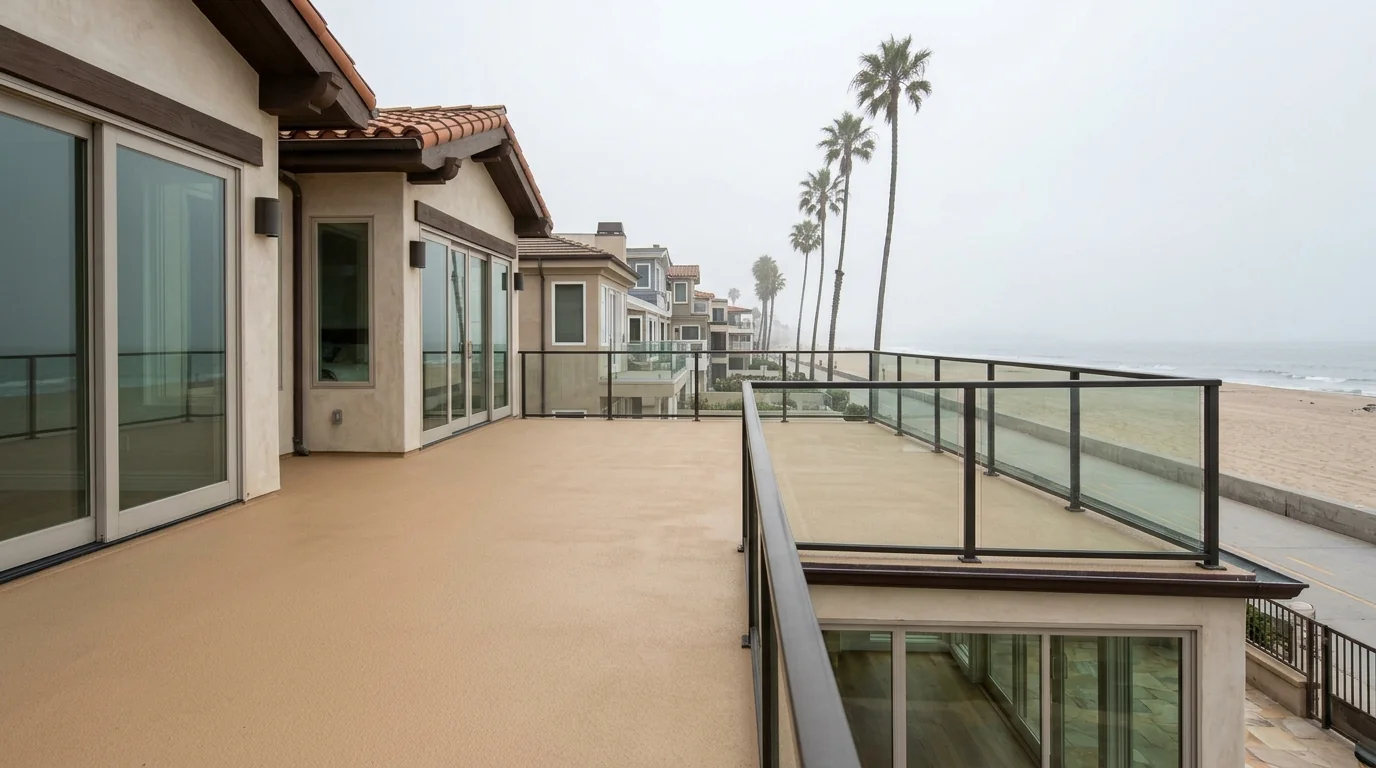
Deck and balcony waterproofing installs a walkable waterproof membrane, such as a urethane or cementitious traffic coating, a vinyl deck membrane, or a membrane under tile, over a deck that sits above living space or framing. You need it when water reaches the framing or rooms below, or when an old deck surface is cracked and worn. In Long Beach it typically runs $9.80 to $21.60 per sq ft.
A deck over a bedroom or a balcony on a condo is a small flat roof that people walk on, put furniture on and wash down. Most of the leaks we trace on these decks do not start in the middle of the surface. They start where the deck meets the wall, at the door threshold, around railing posts and at the edge where water should drip clear of the stucco but does not.
Our crews waterproof decks, balconies, exterior walkways and stair landings on Long Beach homes, condos and apartment buildings. This page covers the deck systems we install, the flashing details that stop most leaks, and what happens when we open a deck and find rotted framing.
Deck membrane systems and how each one wears
The right system depends on what you want to walk on and how much the deck flexes. Fluid-applied urethane traffic coatings are built in layers over plywood or concrete with a textured top that resists slipping. Cementitious coatings with a lath base give a harder, stucco-like surface often seen on older Southern California balconies. Vinyl deck membranes are heat-welded sheets that come in patterns and handle foot traffic well.
When you want tile or pavers, the waterproofing goes underneath, with a sloped mortar bed or pedestals and a membrane that drains to the edge. Tile on its own is not waterproof, and grout passes water straight through.
- Urethane traffic coating: textured, flexible, recoatable
- Cementitious deck coating: hard surface, common on older balconies
- Vinyl deck membrane: welded sheet, many finish patterns
- Membrane under tile or pavers: hidden layer with sloped drainage
The details that stop most deck leaks
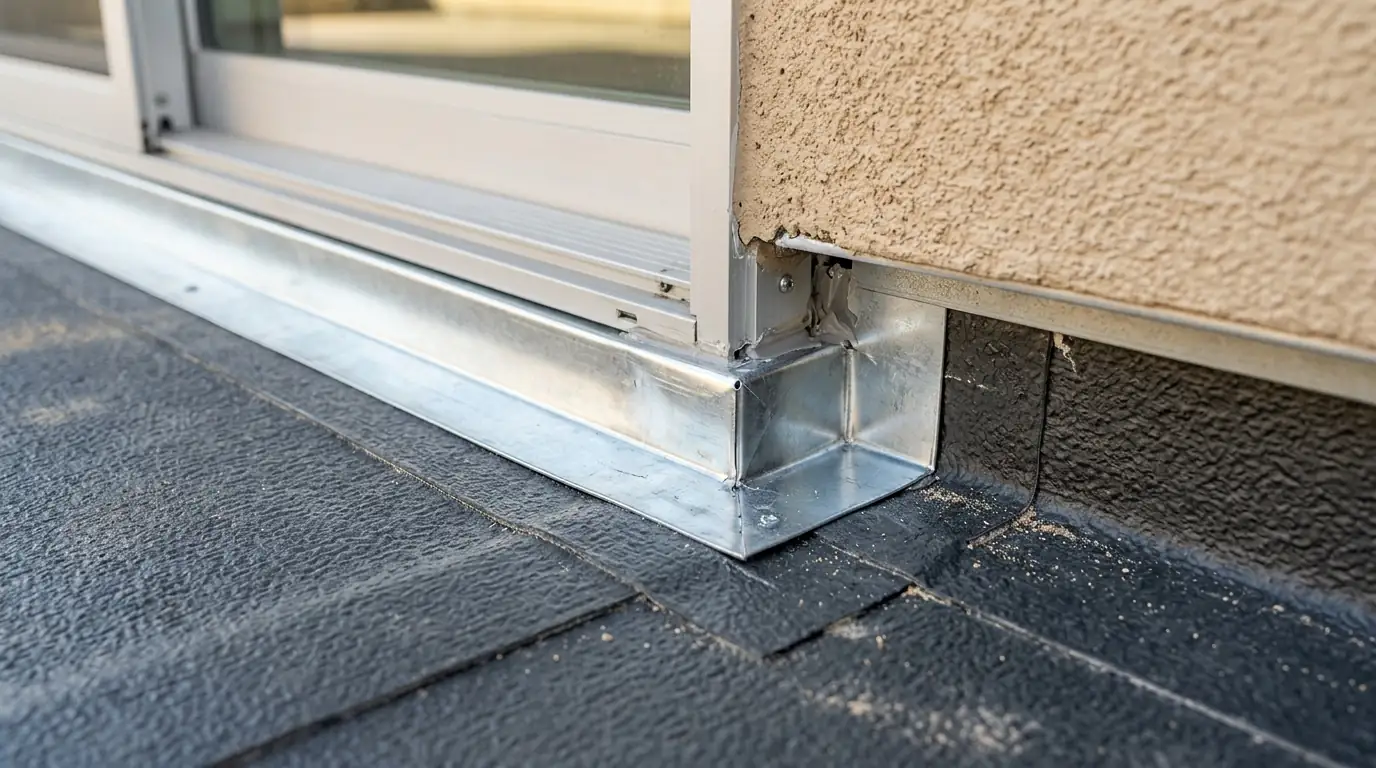
Waterproofing the flat surface is the easy part. The work that decides whether a deck leaks is at its edges. We cut back stucco at the wall so the membrane turns up the wall behind a new flashing, rather than stopping at the stucco line. At the door, a pan flashing under the threshold carries water back out onto the deck.
Railing posts are another common leak path. Posts screwed through the deck surface let water down every screw. We prefer side-mounted or fascia-mounted railings, and where a post must go through, we set it on a raised, flashed block.
- Membrane turned up the wall under new flashing
- Pan flashing under the door threshold
- Drip edge that throws water clear of stucco below
- Flashed blocks or side mounts for railing posts
- Scuppers or drains sized to clear a heavy rain
When we find rot under the deck surface
Decks that have leaked for years often hide soft plywood and damaged joists. We probe the deck and check the ceiling below before quoting, but the full picture shows once the old surface comes off. If we find rot, we stop and show you photos, explain what needs replacing and give a price for that framing work before going on.
Rebuilt decks get new sheathing with a slight slope away from the house, built into the framing or with tapered strips. A flat deck with no slope will pond, and no membrane lasts long under standing water near a door.
When to call about deck & balcony waterproofing
Stained ceiling below deck
Brown rings or peeling paint on the ceiling under a balcony mean water is reaching the framing.
Cracked deck coating
Cracks in a cementitious or urethane surface let water into the plywood beneath.
Bubbling stucco at edge
Stucco blistering or staining below the deck edge points to water running behind the wall.
Loose railing posts
Wobbly posts often mean the wood around them has rotted from water entering at the screws.
Puddles near the door
Water that sits against the threshold after rain shows the deck has lost its slope.
Soft spot under foot
A deck that gives slightly when you step on it can have rotted plywood beneath the coating.
Typical cost in Long Beach
What deck & balcony waterproofing usually costs
$9.80 to $21.60 per sq ft
- Membrane system and finish chosen
- Rotted sheathing or joists to replace
- Stucco cut-back and patching at walls
- Railing removal and reinstall
- Tile or pavers over the membrane
These are typical Long Beach ranges, and the real number comes after we look at your deck and what is under it. See every price range.
Decks and balconies near the Long Beach coast
Long Beach has a lot of decks over living space: roof decks on the canal homes of Naples, balconies on the condos and apartments along Ocean Blvd and in Alamitos Beach, and second-story decks added to homes in Belmont Shore and Belmont Heights to catch an ocean view. Salt air near the water corrodes railing fasteners and metal flashings faster, so we use corrosion-resistant metals on coastal decks.
Many balconies here look fine all summer and then leak in the first heavy winter storm. On condo buildings, balconies are often shared between owner and association responsibility, so we document what we find with photos for both. The City of Long Beach may require a permit for deck repair depending on the scope, especially when framing is replaced, and we check before starting.
How the job runs
How our crew handles deck & balcony waterproofing
- 1
Inspect deck and below
We probe the surface, look at the ceiling and walls below, and check posts and drains.
- 2
Open edges and surface
We remove the old surface and cut back stucco at walls to reach the flashing line.
- 3
Repair framing and slope
Rotted sheathing or joists are replaced with your approval, and slope is built in.
- 4
Flash and waterproof
New wall flashing, door pan and drip edge go in, then the membrane system is applied.
- 5
Finish and water test
The finish coat or top surface is installed, and we flood test before patching the stucco.
FAQ
Deck & Balcony Waterproofing questions
Can you waterproof my balcony without removing the tile?
Usually not reliably. Tile and grout are not waterproof, and the leak is almost always in the membrane or flashing beneath. Clear sealers on tile can slow water briefly, but a lasting fix means removing the tile and rebuilding the membrane below.
How long does deck waterproofing take on a Long Beach home?
A typical deck or balcony takes a few working days, plus curing time for coatings. Framing repair or tile adds time. We keep the deck covered if rain is forecast during the work.
Which deck waterproofing system is best for a roof deck over a bedroom?
For decks over living space we usually recommend a urethane traffic coating or vinyl membrane, both of which handle foot traffic and flex. If you want tile, we build a membrane and sloped base underneath. The choice depends on use, budget and look.
Why does my balcony leak only in winter storms?
Light rain often runs off without reaching weak spots. Heavy multi-day storms push water into open flashing at the wall, door thresholds and post holes. That is why many Long Beach balcony leaks show up only in the first big storm of the season.
Do condo balcony waterproofing jobs need HOA approval?
Often yes, since balconies can be shared between the owner and the association and the surface may be a common element. We provide photos and a written scope so the owner and HOA board can sign off before work begins.
Where we do this work
Deck & Balcony Waterproofing around Long Beach
Our crews do this work across Long Beach and the cities around it. A few of the places we cover:
A leak, a quote, or a question about your roof?
Call Denco at (562) 414-1770. Someone answers 24 hours a day, and our crews work out of Long Beach and La Mirada.