Low-slope roof systems
Flat roof replacement in Long Beach, CA
Your flat roof has been patched more times than anyone can count, the ceiling still stains in the first big storm, and you are not sure which new membrane is worth the money.
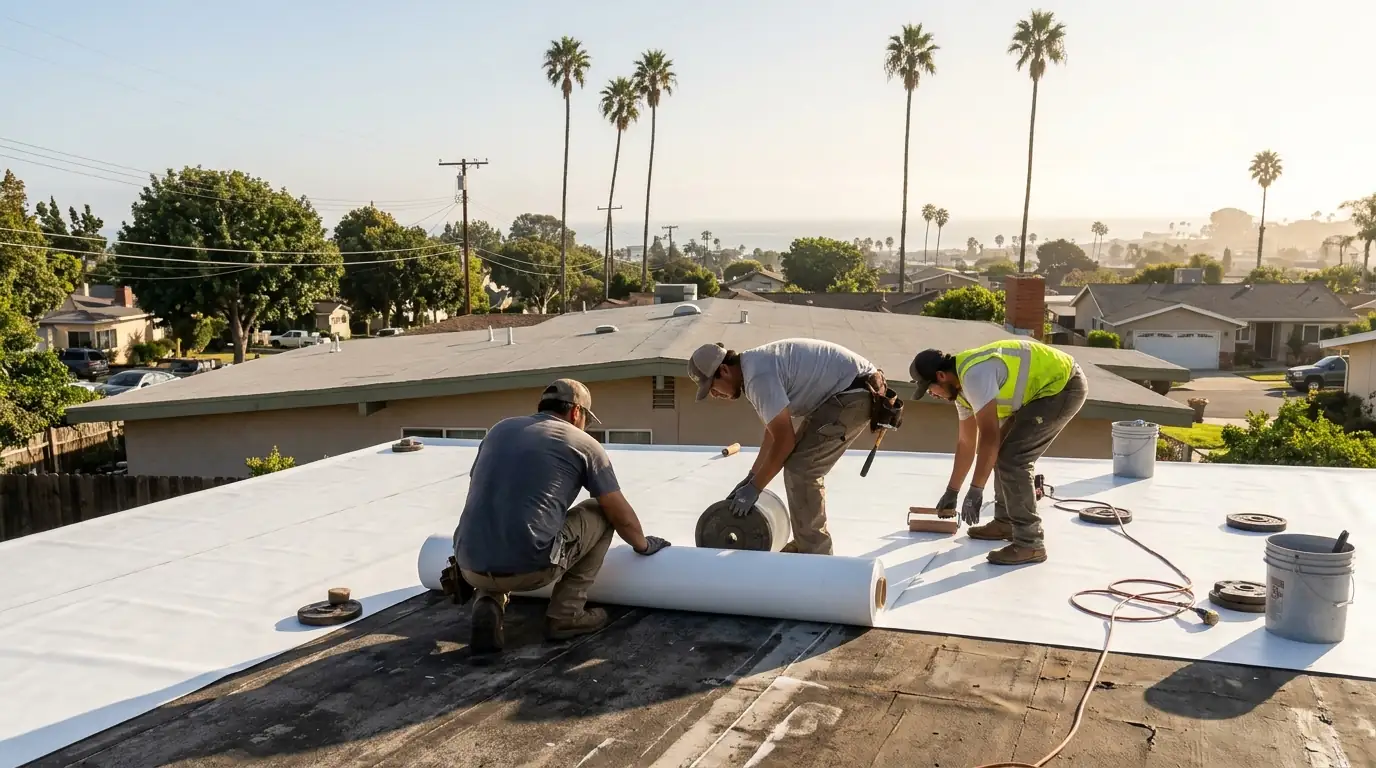
Flat roof replacement means removing the worn low-slope roof down to the deck, repairing wood and drainage, and installing a new membrane system such as TPO, PVC, torch-down, hot mop or spray foam. You need it when the surface is brittle, blistered or ponding across wide areas and patches no longer hold through a rainy season. In Long Beach it typically runs $6.40 to $13.90 per sq ft.
A flat roof is never truly flat. A good one has a slight pitch, usually a quarter inch per foot or more, that walks water toward a drain, scupper or gutter. When an old roof sags, gets buried under layers of patching, or loses its surface to the sun, that pitch stops working and water sits. Standing water finds every seam, and the leak often shows up far from where it starts.
Our crews replace flat and low-slope roofs on homes, garages, additions, apartment buildings and small commercial buildings across Long Beach. This page covers what replacement involves and how we choose among the main membranes, each of which has its own page.
Five flat roof systems and where each one fits
There is no single best flat roof. The right system depends on how the roof drains, how much foot traffic it sees, what sits on top of it, and how long you plan to own the building. These are the five systems we install most often in Long Beach, with the job each one does well.
A cheaper system on a roof with poor drainage can cost more over time than a better-matched one, because ponding ages some materials much faster.
- TPO: a white single-ply sheet with heat-welded seams, reflective and popular on homes and commercial roofs that need a cool surface
- PVC: a single-ply sheet like TPO but more resistant to grease, chemicals and long ponding, often used over restaurants and tight drainage
- Torch-down: layers of modified bitumen fused with a torch, tough under foot traffic and around odd shapes
- Hot mop: traditional built-up roofing of felt and hot asphalt, finished with a cap sheet or gravel, still common on older Long Beach buildings
- Spray foam: a sprayed insulating layer with a protective coating that fills low spots and seals around many penetrations
Tear-off or roof-over: what the existing roof tells us
Many Long Beach flat roofs carry two or three old layers. Building rules limit how many roof layers can stack up, and every extra layer hides wet insulation and soft decking. We core-cut small test samples to count layers and check for trapped moisture before we recommend anything. If the old roof is wet, it comes off, because a new membrane sealed over damp material blisters and rots the deck from below.
A roof-over can make sense when there is a single dry layer and a compatible system, such as spray foam or a coating over a sound surface.
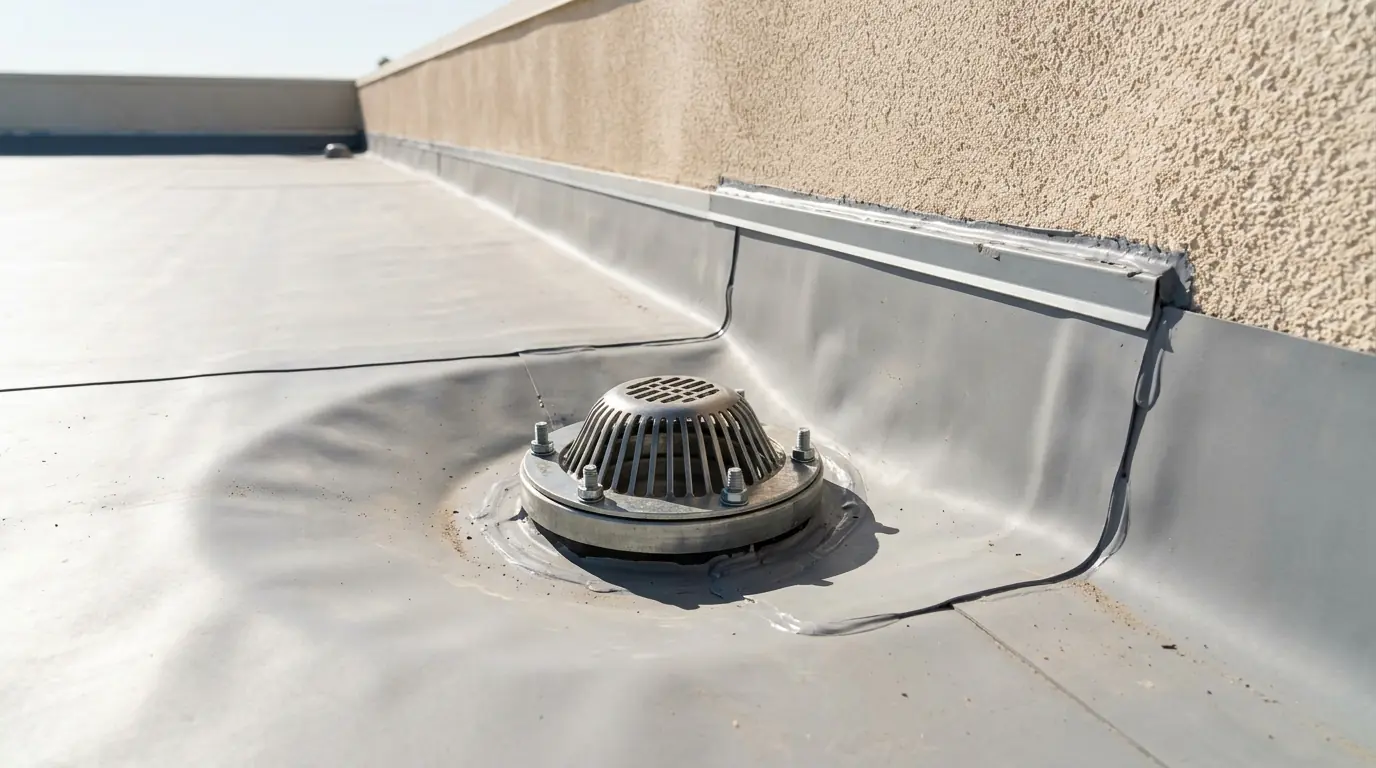
Drainage decides how long the new roof lasts
Most flat roof failures we see start with water that does not leave. We look at where water collects after rain or a hose test, how scuppers and drains are sized, and whether the parapet walls trap water against the roof edge.
The fixes are physical: tapered insulation boards that build slope back into the roof, crickets that split water around rooftop units and chimneys, enlarged scuppers, new drain bowls and overflow outlets.
- Tapered insulation to add slope where the deck sags
- Crickets behind HVAC curbs, skylights and chimneys
- Wider scuppers and new downspout heads at parapets
- Replacing rusted drain bowls and clamping rings
Questions we ask before recommending a membrane
We start with how the roof is used. A garage roof nobody walks on needs less than a roof with three condensers and a technician visiting monthly. Planned solar panels also change the system we suggest.
Then we look at energy and code. California's Title 24 energy code can require cool-rated roofing on some low-slope re-roofs depending on the climate zone, so we check what applies to your roof before ordering material. We also note which systems can be recoated later instead of torn off again.
When to call about flat roof replacement
Water stands for days
Puddles that remain two or three days after rain mean the slope or drains have failed and the membrane is aging fast.
Blisters and soft spots
Bubbles in the surface or a spongy feel under foot point to trapped moisture in the layers below.
Cracked, alligatored surface
A surface split into small plates from sun exposure has lost its flexibility and will open further each summer.
Seams lifting at the edges
Open laps along parapets, curbs and edge metal let wind-driven rain run straight under the roof.
Repeat leaks every winter
If the same ceiling stains each rainy season after patching, the roof has reached the end of repair.
Planning solar or new units
Replacing an aging flat roof before panels or condensers go on avoids paying to remove them later.
Typical cost in Long Beach
What flat roof replacement usually costs
$6.40 to $13.90 per sq ft
- Which membrane system you choose
- Number of old layers to tear off and haul away
- Rotted decking that needs replacing
- Tapered insulation and drainage corrections
- Rooftop units, skylights and pipes to flash around
These are typical Long Beach ranges, and the real number comes after we look at your roof and take core samples. See every price range.
Flat roofs across Long Beach, from Rancho Estates to the port
Long Beach has more flat and low-slope roofs than most people expect. The Cliff May ranchos in Rancho Estates were built in the 1950s with low-slope and flat roofs and wide eaves. Post-war ranch homes in Los Altos and the Plaza often have flat rear additions and carports. Downtown, Alamitos Beach and Ocean Blvd are full of parapet-roof apartment buildings, and older commercial roofs line Long Beach Blvd and the port area.
Weather here is hard on flat roofs in two ways. Long dry summers and strong UV bake membranes until they crack, and then winter atmospheric-river storms dump days of rain at once, which is when weak drains are exposed. The City of Long Beach requires a building permit for re-roofing, and cities outside Long Beach have their own building departments, which we work with from our Long Beach and La Mirada offices.
How the job runs
How our crew handles flat roof replacement
- 1
Survey and core samples
We measure the roof, take small cores to count layers and check moisture, and map where water collects.
- 2
System recommendation
We explain which membrane fits the use, drainage and budget, and pull the building permit with the city.
- 3
Tear-off and deck repair
Old layers come off in sections, and we replace rotted sheathing before anything new goes down.
- 4
Slope, drains and flashing
We add tapered insulation and crickets where needed, then set new drains, scuppers, curbs and edge metal.
- 5
Membrane and final check
The new system is installed and every seam is probed, then we water-test drains and walk the roof with you.
FAQ
Flat Roof Replacement questions
How long does a flat roof replacement take on a Long Beach home?
Most house flat roofs and garage roofs take one to three working days once the permit is issued. Larger roofs, heavy deck repair or added tapered insulation can stretch that. We watch the forecast in the rainy months and keep the roof watertight at the end of every day.
Which flat roof replacement system lasts the longest?
Lifespan depends more on drainage, installation and upkeep than on the label. PVC and well-installed TPO handle ponding and sun well, torch-down holds up under foot traffic, and foam can be recoated to extend its life. We match the system to how your roof drains and is used.
Can a flat roof replacement go over my existing roof?
Sometimes, if there is only one dry layer and the new system is compatible with it. If core samples show wet insulation or multiple layers, the old roof has to come off. We show you the samples so the decision is clear.
Will a flat roof replacement fix the water that pools on my roof?
It can, if drainage is corrected at the same time. We add tapered insulation, crickets and larger scuppers or drains where the roof holds water, because a new membrane alone will not move water off a sagging deck.
Do I need a permit for flat roof replacement in Long Beach?
Yes. The City of Long Beach requires a building permit for re-roofing, and we handle the permit for jobs inside the city. For buildings in other cities, we file with that city's building department.
Where we do this work
Flat Roof Replacement around Long Beach
Our crews do this work across Long Beach and the cities around it. A few of the places we cover:
A leak, a quote, or a question about your roof?
Call Denco at (562) 414-1770. Someone answers 24 hours a day, and our crews work out of Long Beach and La Mirada.