Storm prep
How to get your roof ready for winter storms
Long Beach roofs sit dry for months, then take days of heavy rain at once. Here is what to check and fix before the first atmospheric river of the season.
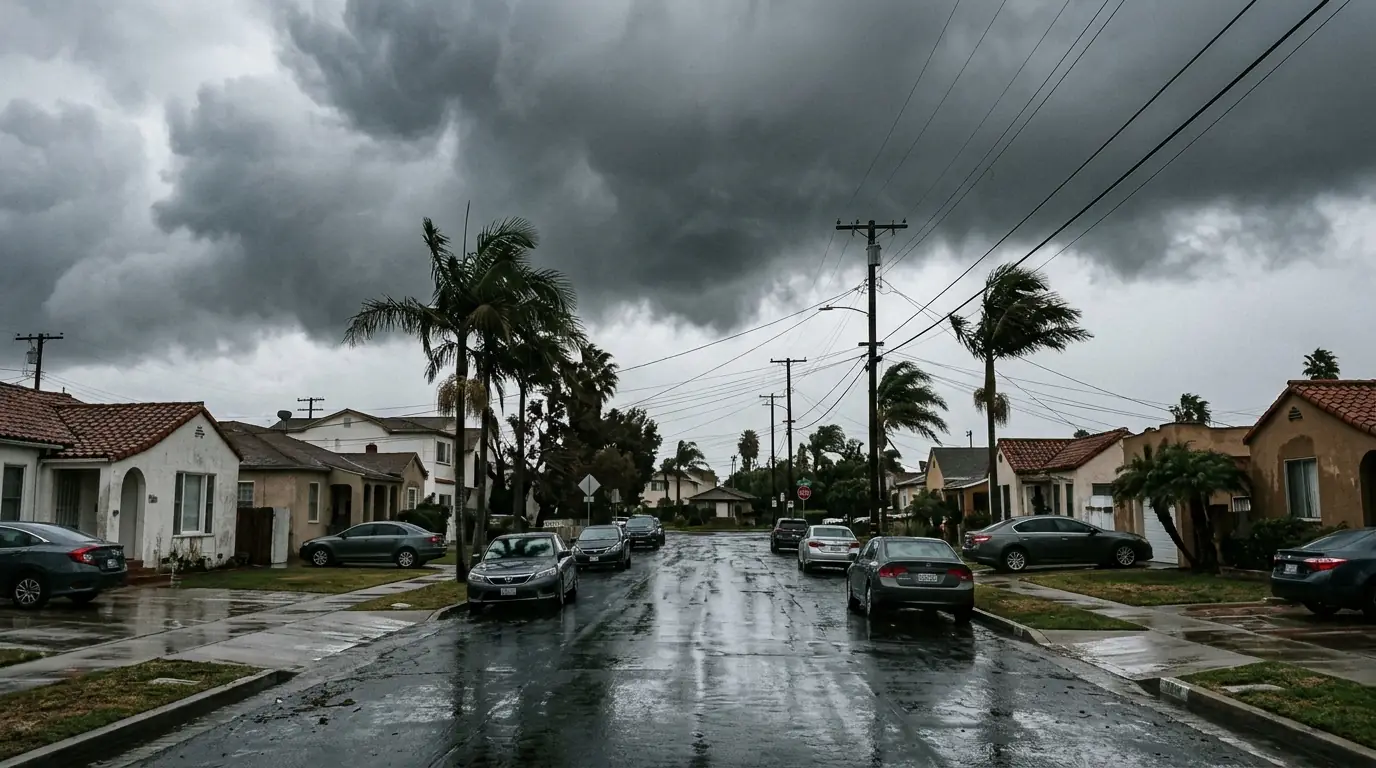
Our roofs live an unusual life. For most of the year they bake in sun and dry air, with barely a drop of rain. Then, mostly between November and March, atmospheric-river storms roll in and drop heavy rain over a few days. A small crack or a clogged drain that went unnoticed all summer suddenly becomes a ceiling stain, a wet attic or water running down an inside wall.
That pattern is why so many Long Beach leaks are found in the first big storm. The good news is that most of them can be prevented with a bit of work in late summer and fall. This checklist covers what to look at from the ground, what to leave to a roofer and how to plan so you are not trying to book a repair during the same storm as everyone else.
Why the first big storm finds so many leaks
Months of heat and UV do quiet damage. Sealants around vents and skylights shrink and crack. Shingles lose granules and their edges curl. Felt under tile dries out. Flat roof membranes blister and split at seams. None of this leaks while it is dry, so nothing seems wrong.
Atmospheric rivers bring a lot of rain, often with wind behind it, so water is pushed sideways under shingles, tiles and flashings. Rain that keeps falling for hours finds every weak point, and debris from a dry summer clogs gutters and roof drains within the first hour. A roof that handled a light shower in spring can leak badly in a long winter storm.
Clear the water paths first
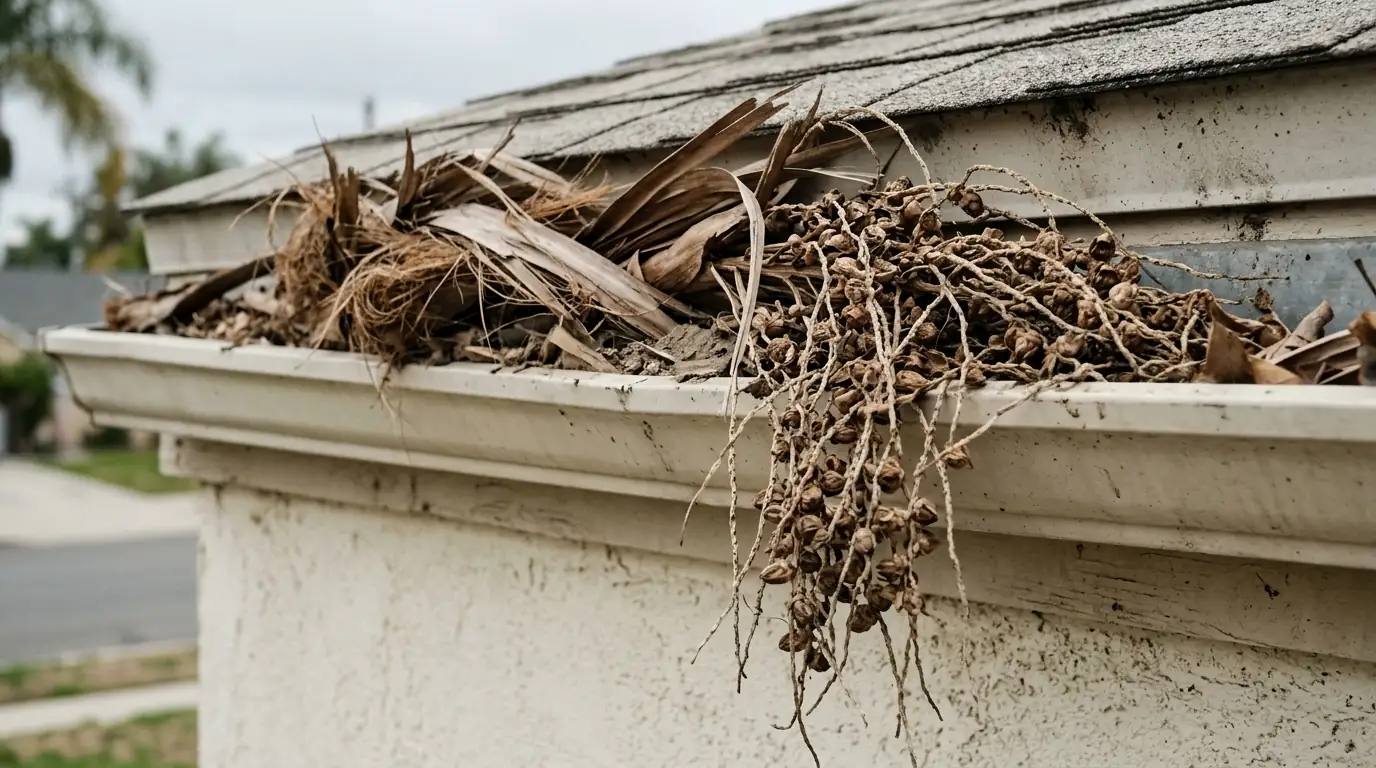
Water has to leave the roof quickly. Most storm leaks we see on flat roofs and in valleys start with a blocked path rather than a hole in the roof. Leaves, palm fronds, seed pods and blown dust pile up over summer, and when the rain comes the water backs up and finds a way in.
Clean gutters from a ladder only if you are comfortable doing so, and stay off tile roofs entirely. If you have a flat roof with interior drains or scuppers, those need special attention: a single blocked drain can turn a section of roof into a shallow pond that pushes water through any seam it finds.
- Gutters and downspouts, including the elbows at the bottom
- Roof valleys where two slopes meet
- Flat roof drains, scuppers and overflow outlets
- Behind chimneys and along walls where debris collects
- Overhanging branches that drop leaves onto the roof
Check the flashings and penetrations
Flashings are the metal and sealed pieces where the roof meets walls, chimneys, vents, skylights and the edges of the roof. They cause more leaks than the open field of the roof. Rubber collars on vent pipes crack in the sun, exposed sealant shrinks and pulls away, and near the coast metal rusts.
From the ground, binoculars help. Look for rust streaks below flashings, gaps where a wall meets the roof and cracked or missing caps on vent pipes. In the attic on a sunny day, check for light around pipes and stains on the sheathing near the chimney. Roof flashing repair typically runs $310 to $1,090 per flashing area in Long Beach, and the real price comes after we look at your roof.
Roof-by-roof: what to look for
Different roofs fail in different ways before a storm. On asphalt shingle roofs, look for missing or lifted shingles, bare patches without granules and shingles curled at the edges. Ridge caps are often the first to go.
On tile roofs, look for slipped, cracked or missing tiles and gaps at the ridge and hips. Remember that the real waterproofing is the underlayment under the tile, so a roof with aged felt can leak even when the tiles look fine. On flat roofs, look for blisters, cracks, open seams and low spots where water sat after the last rain. Dark rings or dried dirt show where ponding happens.
Wood fascia and rafter tails on older Craftsman and Spanish homes are worth a look too. Dry rot at the eave lets water into the wall and gives gutters nothing solid to hold.
Book a roof check before the season, not during it
When the first storm hits, phones at every roofing company light up. Tarping and emergency calls come first, and routine repairs wait. Getting your roof looked at in late summer or early fall means repairs happen in dry weather, on a schedule that suits you.
A roof inspection in Long Beach typically runs $185 to $385 per inspection. A maintenance visit, where we clean drains and valleys, reseal penetrations and fix small items, typically runs $265 to $640 per visit. Either one usually costs far less than drying out a wet attic. The real price for any repair comes after we look at the roof.
What to do if it leaks during a storm
Even well-kept roofs can leak in a strong storm. If water comes in, keep yourself safe first: never go on a roof in rain or wind. Inside, move belongings away, put a bucket under the drip and, if a ceiling bulges with water, poke a small hole in the center to let it drain in a controlled way rather than letting the drywall give out.
Take photos of the stain, the water and anything damaged. If you plan to involve your homeowner's insurer, those photos matter. Then call us. Our phone is answered 24 hours a day, 7 days a week, and emergency tarping typically runs $295 to $690, with the repair priced after. Once the storm passes, we find the cause and fix it properly.
- Stay off the roof until the weather clears
- Catch the water and protect furniture and floors
- Photograph the damage for your records
- Call for tarping, then plan the permanent repair
Key takeaways
- Most storm leaks start at drains, valleys and flashings
- Clean water paths before November
- Book roof work in fall, before emergency calls take priority
- Never go on the roof during a storm
About the author
Hubert Tisdale edits Roof Advice for Denco Roofing Company. The articles draw on what our roofers see on Long Beach roofs every week.
FAQ
Reader questions
How soon before the rainy season should I clean my roof drains and gutters?
Late October is a good target, since most atmospheric-river storms arrive between November and March. If you have trees over the roof, plan a second cleaning in mid-winter. Fall winds can refill gutters quickly, so check again after a windy week.
Can a tarp stay on my roof through a whole series of atmospheric-river storms?
A properly fastened tarp can protect a roof for several weeks, but wind and sun wear tarps down and loosen them. It is a temporary measure, not a repair. We prefer to make the permanent fix during the first dry stretch so the house is not relying on a tarp all winter.
Why did my roof leak in a long storm but not in a short shower?
Short showers often do not last long enough to soak through worn underlayment or back up a drain. Hours of heavy rain, often pushed by wind, let water creep under shingles, tiles and flashings and fill blocked gutters. The weak point was likely there all along and only showed under a long storm.
A leak, a quote, or a question about your roof?
Call Denco at (562) 414-1770. Someone answers 24 hours a day, and our crews work out of Long Beach and La Mirada.