Wind damage
What to check on your roof after a Santa Ana wind event
Santa Ana winds hit dry roofs hard, and the damage often hides until the first rain. Here is a safe way to check your roof after a strong wind event.

Santa Ana winds blow mostly in fall and winter, and they can be strong, dry and gusty. They push hot air down from the inland deserts toward the coast, and while Long Beach is usually less exposed than foothill areas, strong events still reach the city. A roof that has been baking all summer is at its most brittle when the winds arrive.
The tricky part is timing. Wind damage rarely leaks right away, because Santa Ana conditions are dry. The lifted shingle or cracked tile sits there until the first atmospheric-river storm, and then it leaks. A careful check after each strong wind event lets you catch damage while it is still a small repair, done in dry weather.
How wind damages a roof
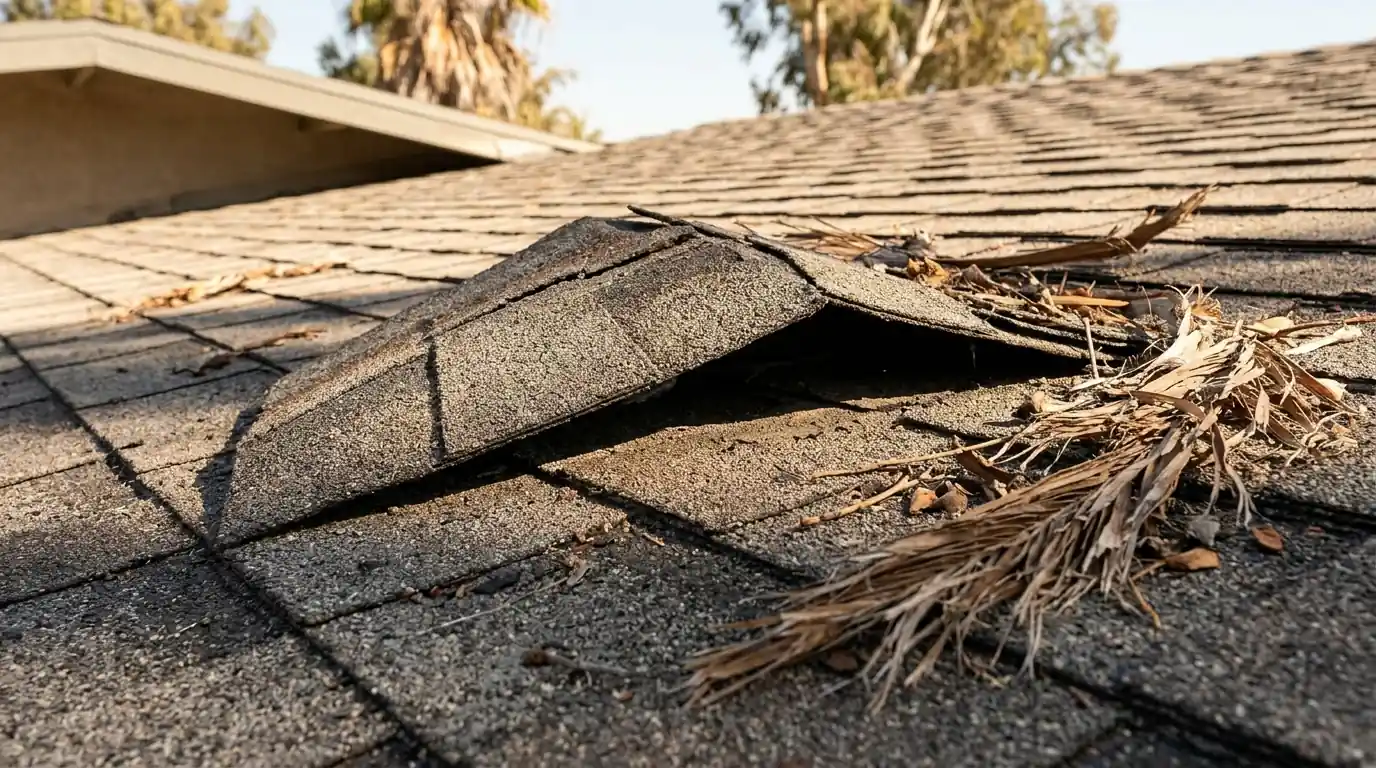
Wind does not just push down on a roof. As it flows over the roof, it creates lift, especially at edges, corners and ridges. Gusts can lift the edges of shingles and break the sealant strip that holds them down. Once a shingle's seal breaks, it flaps in the next wind and can tear or blow off.
On tile roofs, wind can lift loose tiles, especially those with rusted or missing fasteners, and drop them back cracked. Ridge and hip tiles set in old mortar are vulnerable. On flat roofs, wind can get under loose edges and lift membrane, and it can move or damage rooftop equipment. Flying debris from palms and other trees adds impact damage on top of all that.
Start with a safe look from the ground
Do not climb onto the roof after a wind event. Loose tiles and shingles shift underfoot, and broken pieces can be hidden under debris. A ground check with binoculars tells you most of what you need to know.
Walk around the whole house, and check the yard and gutters for pieces of shingle, tile fragments or bits of flashing. Finding roofing in the yard is a clear sign something came loose. Take photos of anything that looks off, from several angles, before it gets moved.
- Missing shingles or shingles with lifted, flapping edges
- Tiles out of line, cracked or missing, especially on ridges
- Bent, lifted or missing flashing at walls and chimneys
- Loose gutters, bent downspouts or detached eave metal
- Palm fronds or branches lying on the roof
- Damaged vents, caps or rooftop equipment
Check the attic and ceilings
On a sunny day, go into the attic if you can do so safely. Look for new points of daylight through the roof deck, especially along the ridge and at the edges. Daylight where there was none before means something has moved.
Inside the house, check ceilings and upper walls for new cracks or stains. Dry wind will not usually cause stains on its own, but if there is any morning moisture or a light rain soon after, a damaged spot may show itself. Note where anything looks different so we can check that area closely from the roof.
Trees, palms and debris
Palm fronds are a common sight on Long Beach roofs after a windy week. A single frond rarely causes damage, but heavy dead fronds, seed pods and branches can crack tiles, dent metal and gouge shingles. Large limbs can puncture the roof deck.
If a branch is resting on the roof, leave it unless you can remove it safely from the ground. Pulling it across the roof can do more damage than leaving it. For large limbs, a tree crew may need to remove the limb before we can repair the roof. Trimming trees back from the roof before the wind season helps prevent the problem in the first place.
When to call and what it costs
Call us if you see missing or lifted roofing, damaged flashing or debris impact, or if you are not sure what you are seeing. Our phone is answered 24 hours a day, 7 days a week. A roof inspection typically runs $185 to $385 per inspection in Long Beach. Wind and storm damage repair typically runs $420 to $2,350 depending on the area damaged, and the real price comes after we look at the roof.
If the damage left the roof open, emergency tarping typically runs $295 to $690, with the repair priced after. Getting the roof covered quickly matters most if rain is in the forecast. Many wind repairs are small, such as resealing a few shingles or resetting tiles, and doing them before the rainy season keeps them small.
Insurance and documentation
Strong winds sometimes cause damage that may be covered by a homeowner's insurance policy, depending on the policy and the cause. If you plan to contact your insurer, document everything: photos of the roof, debris in the yard, any interior stains and the date of the wind event.
We can inspect the roof and document what we find with photos and notes for your claim. Roof insurance claim inspection and documentation typically runs $185 to $385. What is covered is up to your insurer, so we focus on giving an accurate picture of the damage.
- Photograph damage and debris before cleanup
- Note the date and time of the wind event
- Make temporary repairs to prevent further damage
- Keep receipts for tarping and repairs
Getting ahead of the next wind season
Many wind problems start with roofs that are already weak. Shingles that have aged in the sun lose their seal, tile fasteners rust near the coast, and old mortar at ridges cracks. A pre-season check in late summer catches these issues before the winds arrive.
On older tile roofs, we check that tiles are properly fastened, which also matters for earthquake safety. On shingle roofs, we reseal lifted tabs and replace brittle shingles. On flat roofs, we secure edges and equipment. A little work before the season keeps the roof together when the gusts come.
Key takeaways
- Wind damage often stays hidden until the first rain
- Check from the ground and attic, not from the roof
- Document everything if you plan to contact your insurer
- Repair lifted shingles and loose tiles before the storms
About the author
Hubert Tisdale edits Roof Advice for Denco Roofing Company. The articles draw on what our roofers see on Long Beach roofs every week.
FAQ
Reader questions
Can Santa Ana winds break the seal on shingles without blowing them off?
Yes. Gusts can lift shingle edges enough to break the sealant strip while the shingle stays in place. An unsealed shingle can flap and tear in later winds or let rain blow underneath. These often look fine from the ground, which is why a close check after a strong wind helps.
Why do tiles on the ridge of my roof come loose in strong wind?
Ridge and hip tiles sit at the highest, most exposed part of the roof and are often set in mortar that cracks with age. Wind lift is strongest at ridges and edges, so loose ridge tiles are among the first to move. Securing them properly before wind season prevents most of these failures.
Should I wait for the first rain to see if the wind damaged my roof?
No. Waiting means finding damage through a leak, often during a storm when repair calls pile up. Checking right after the wind event lets small fixes happen in dry weather. It also keeps the date of damage clear if you plan to involve your insurer.
A leak, a quote, or a question about your roof?
Call Denco at (562) 414-1770. Someone answers 24 hours a day, and our crews work out of Long Beach and La Mirada.