Solar timing
Should you re-roof before installing solar panels
Solar panels can last a long time on a roof. If the roof under them will not, it pays to plan the order of work before the panels go up.
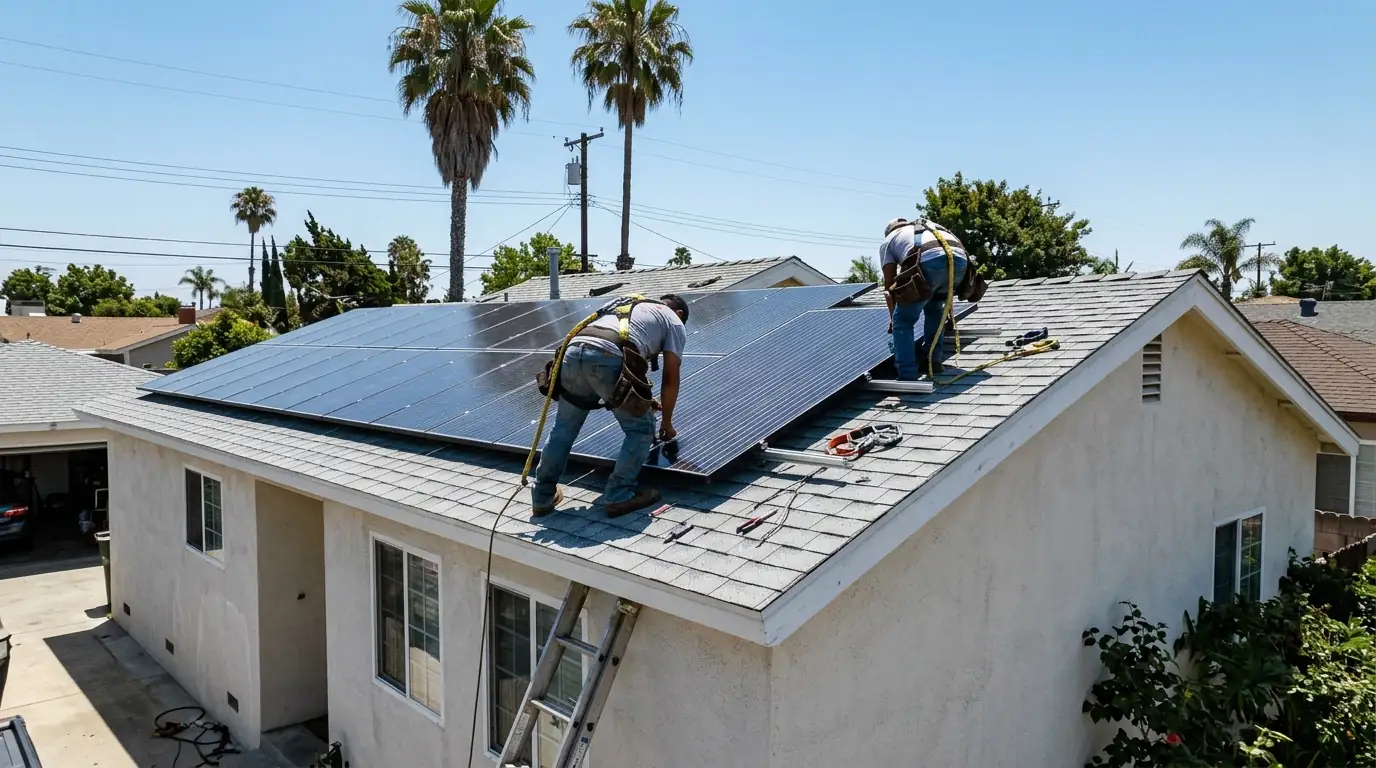
Solar makes a lot of sense in Long Beach, with long sunny summers and mild winters. But panels sit on your roof for many years, and the roof under them has to last that long too. If the roof wears out first, the panels have to come off before it can be replaced, then go back on afterward. That work adds a real cost that many homeowners do not plan for.
The fix is simple: think about the roof before the panels go up. This guide covers how to judge whether your roof has enough life left, what the panel removal and reinstall process involves, how a solar-ready re-roof differs from a standard one and what the typical costs look like in Long Beach.
Why the order of work matters
When panels are mounted, the installer attaches racking to the roof with brackets that are flashed into the roofing. Once the panels are on, the roof under them is hard to see, hard to reach and impossible to replace without taking the system apart.
If your roof has only a few years left when the solar goes up, you will pay for the panels to come off and go back on in the middle of the system's life. Solar panel removal and reinstall typically runs $2,650 to $4,950 for a typical home system in Long Beach. That money buys nothing new, so avoiding it is worth some planning. The real price comes after we look at your roof and the system.
How to tell if your roof has enough life left
Start with the roof's age and material. Asphalt shingle roofs age quickly under our strong UV, so an older shingle roof is usually a poor base for new panels. On tile roofs, the tile often lasts many decades, but the underlayment beneath it often fails after 20 to 30 years. A tile roof that looks fine can still need a lift and relay before panels go on.
Flat and low-slope roofs need a close look at the membrane, seams and drainage, since ponding around racking feet causes leaks. Then look at your leak history. A roof that already leaks in winter storms will not improve with a few dozen new holes for brackets.
A roof inspection before solar is a small cost that answers the question clearly. In Long Beach a roof inspection typically runs $185 to $385 per inspection, and we give you photos and an honest view of how many years the roof has left.
- Roof age compared with the expected life of the material
- Condition of underlayment on tile roofs
- Granule loss, curling or cracking on shingle roofs
- Membrane and seam condition on flat roofs
- Past leaks, soft decking or rotted fascia
What a solar-ready re-roof involves
A solar-ready re-roof is a roof replacement planned with panels in mind. The roof goes on new, and the areas where panels will sit get extra attention. That can mean confirming the decking is solid enough to hold brackets, placing the most durable underlayment under the array area and planning flashing details for the mounts.
Coordination with your solar installer is the key. We work from their layout so we know where the arrays will go, and we try to keep vents and other penetrations out of those areas where we can. Solar-ready re-roofing in Long Beach typically runs $6.10 to $11.90 per sq ft plus panel removal and reinstall when an existing system is involved. The real price comes after we look at your roof.
If you already have panels on an aging roof
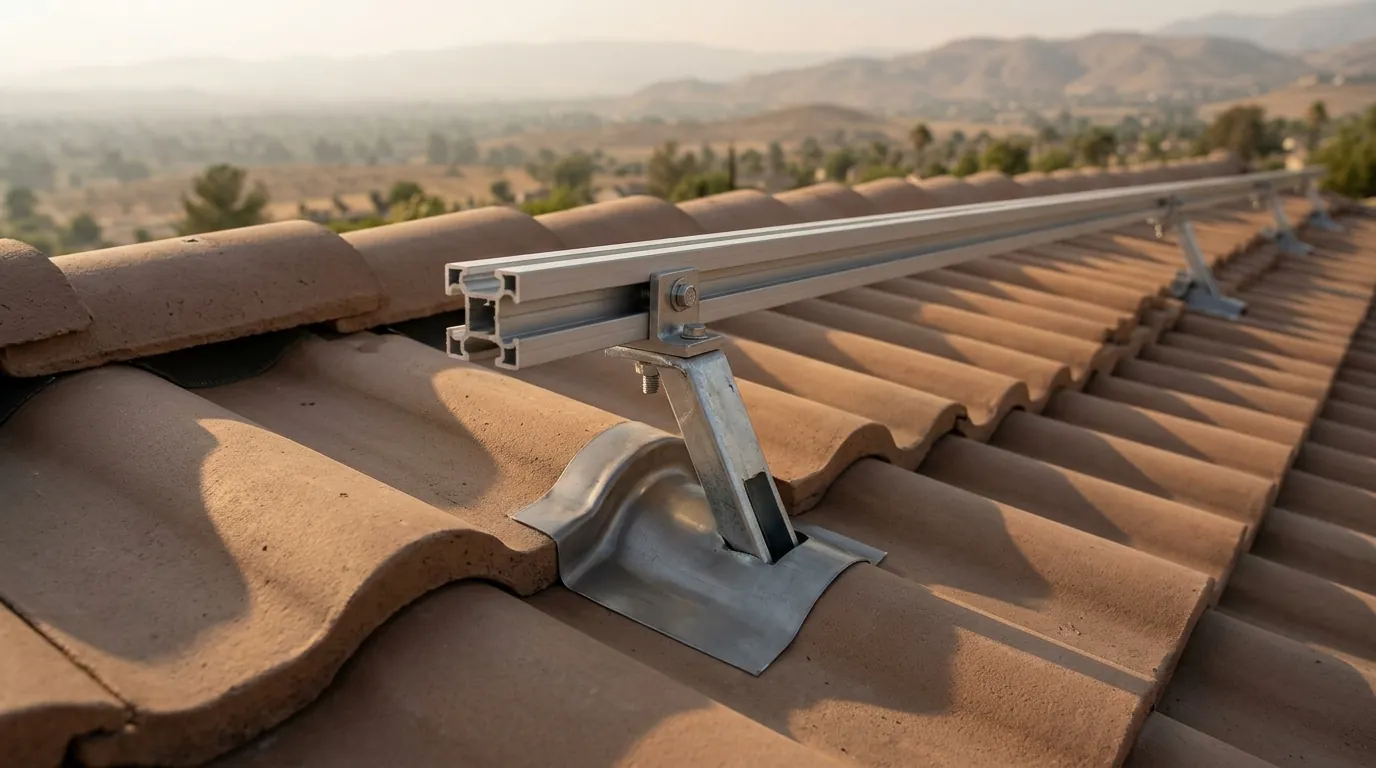
Many Long Beach homes got solar on roofs that were already middle-aged. If your roof now needs replacement, the panels have to come off. We handle panel removal and reinstall as part of the job: the system is safely shut down, panels and racking are removed and stored, the roof is replaced and the system goes back up with new flashing at each mount.
This is also a good moment to look at the system itself. If the panels or inverter are near the end of their life, you might choose to upgrade rather than reinstall. Talk to your solar provider about that before the roof work is scheduled.
- Shut down the system safely and document the layout
- Remove panels, racking and wiring and store them
- Replace the roof, including underlayment and flashings
- Install new flashed mounts and reinstall the racking
- Reinstall panels and restore the system to service
Roof materials that pair well with solar
Most roofing materials can carry solar, but some are easier. Asphalt shingle is the simplest to mount on, and replacing it before solar is the most cost-effective option for many ranch and Craftsman homes. Concrete tile works well with the right tile mounts, and the tile under the array is usually removed or replaced with flashed mount points.
Clay tile is more delicate and breaks more easily during installation, so it takes care. Flat roofs often use ballasted or attached racking depending on the roof and structure. Standing seam metal allows clamps that grab the seams without drilling through the roof, which some homeowners like. Each choice has costs and tradeoffs, and we walk you through them before you commit.
Permits, timing and the season
The City of Long Beach requires a building permit for re-roofing, and solar has its own permit and inspection process. Planning both together saves time. We can usually finish the roof and pass its final inspection before the solar crew arrives, so the two projects do not get in each other's way.
If you can, schedule the re-roof for late summer or fall. The roof goes on in dry weather, and the panels can follow before the winter storms. Neighboring cities run their own building departments, so the permit details differ if you live outside Long Beach, but the order of work is the same.
Key takeaways
- Replace an aging roof before panels go up
- Panel removal and reinstall is a cost worth avoiding
- Tile roofs may need a lift and relay before solar
- Coordinate the roof and solar layouts and permits together
About the author
Hubert Tisdale edits Roof Advice for Denco Roofing Company. The articles draw on what our roofers see on Long Beach roofs every week.
FAQ
Reader questions
How many years should my roof have left before I add solar panels?
Ideally, the roof should last at least as long as you expect the panel system to stay in place. If your roof is well into its expected life, replacing it first usually costs less than removing and reinstalling the panels later. A roof inspection before signing a solar contract gives you a clear answer.
Can the felt under my tile roof be replaced only under the planned solar array?
It is possible to relay just the array area, but the rest of the roof keeps its old underlayment. If that felt is near the end of its life, you may face a separate relay later in areas around the panels. We look at the whole roof and tell you whether a partial or full relay makes more sense.
Who is responsible for the roof penetrations made by solar mounts?
The crew that installs the mounts is responsible for flashing them correctly. When we replace a roof under an existing system, we install new flashed mounts as part of the work. Keep records of who did each part, since material warranties vary by product and manufacturer and may depend on proper installation.
A leak, a quote, or a question about your roof?
Call Denco at (562) 414-1770. Someone answers 24 hours a day, and our crews work out of Long Beach and La Mirada.