Coastal roofs
How the marine layer and salt air age roofs near the coast
Homes within a mile or two of the ocean lose roof metal faster than inland homes. Here is what salt air does, where it shows up first and how to slow it down.
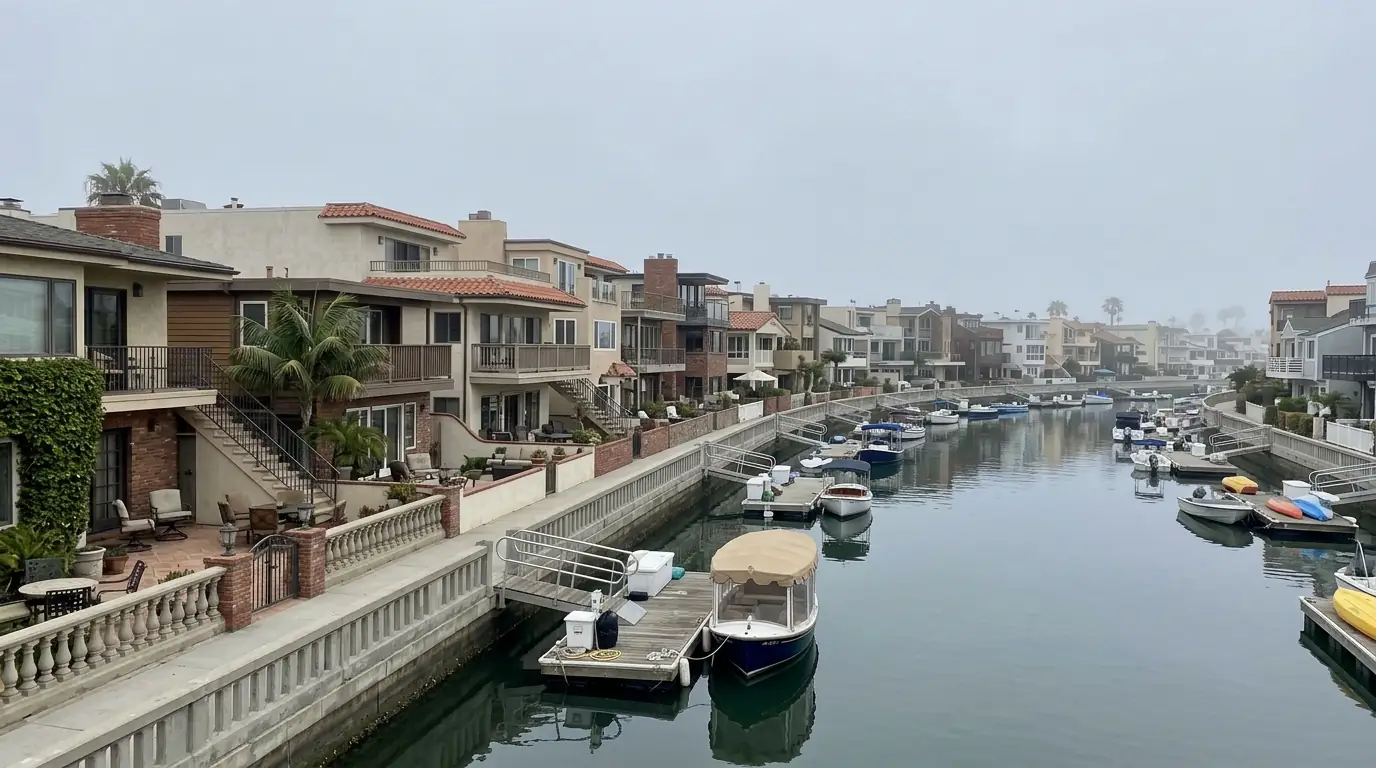
Living near the water in Naples, Belmont Shore, Alamitos Beach or along Ocean Blvd comes with a cost the roof pays first. Salt carried inland on the breeze settles on every surface, and the marine layer that rolls in most mornings keeps that salt damp. Damp salt is hard on metal. Fasteners, flashing, vents and gutters wear out faster within a mile or two of the ocean than they do a few miles inland.
The roofing material itself often holds up fine. It is the metal parts that tie the roof together that suffer. This guide covers how coastal conditions age a roof, where to look for early damage and which material and detail choices hold up best near the shore.
What salt and moisture actually do
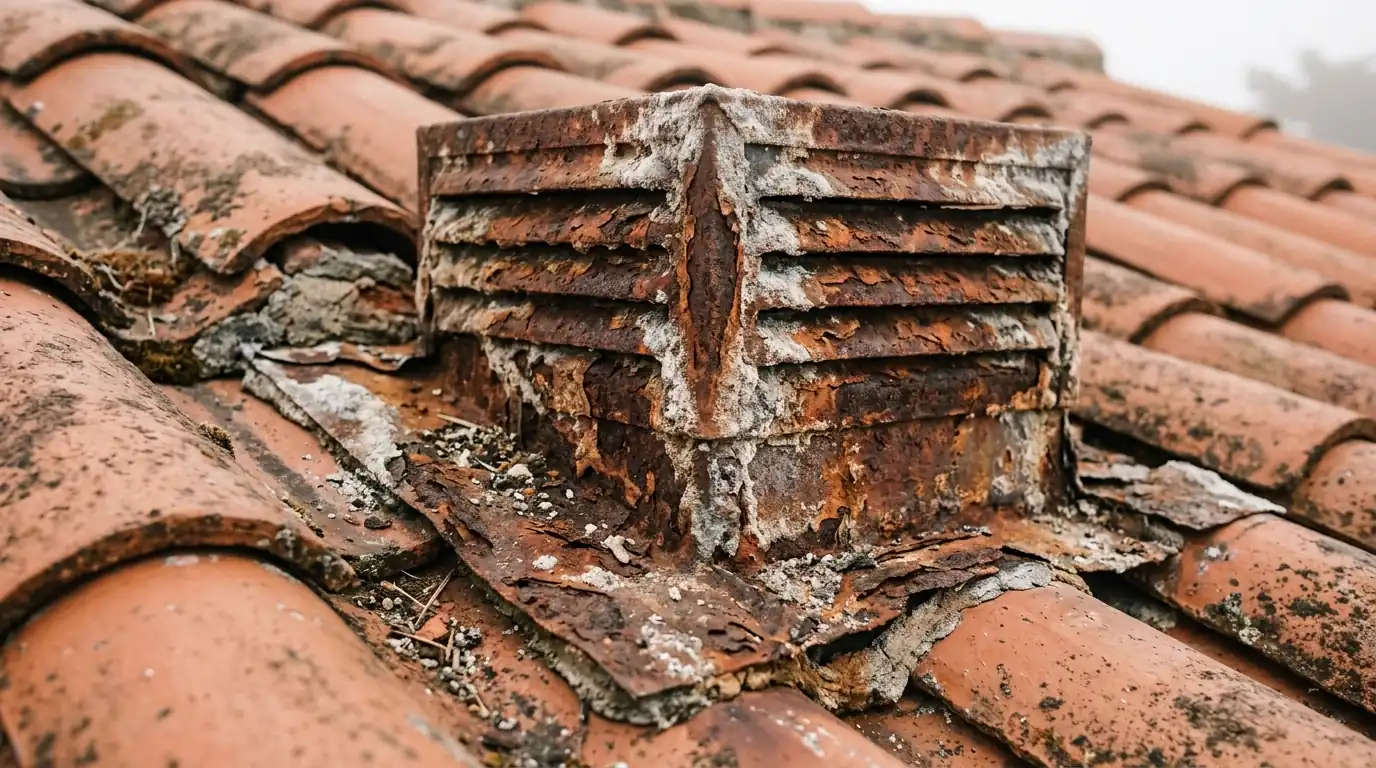
Salt left on metal pulls moisture from the air, so the surface stays wet longer than it would otherwise. Water and salt together speed up rust on steel and can pit some other metals. On a roof, that process eats at nail heads, screw shanks, flashing edges and the bottoms of vents where water sits.
The marine layer makes it worse. Many coastal mornings start gray and damp, then dry out by afternoon. That daily wet and dry cycle keeps fresh salt working on the metal and leaves a crust that holds the next morning's moisture. Rain is rare most of the year, so the salt is rarely washed away.
Distance from the water matters. Homes on the sand side of the peninsula, along the canals and on bluff-top streets get the most exposure, and the effect fades as you move inland. Wind direction, building height and shelter from neighboring homes all play a part.
Where coastal roof damage shows up first
Most coastal roof problems begin at metal parts, not in the roofing itself. These are the spots we check first on homes near the shore.
Rust stains running down tile, stucco or fascia are often the first visible clue. By the time a flashing leaks, the metal is usually thin or perforated along the bottom edge where water collects.
- Valley metal and wall flashing at the base of slopes
- Pipe jacks, roof vents and exhaust caps
- Drip edge and eave metal along the gutter line
- Exposed nail and screw heads, especially on ridge caps
- Gutter hangers, seams and downspout connections
- Rooftop equipment stands and bolts on flat roofs
How different roofs handle the coast
Clay and concrete tile hold up well to salt air, since the tile itself does not corrode. The weak points are the fasteners, the flashings and the underlayment underneath. On older coastal tile roofs we often find rusted nails that no longer hold tiles in place and valley metal that has rusted through.
Asphalt shingles do not rust, but the nails and flashings do, and the same strong coastal UV that dries out shingles inland is just as strong here. Flat roofs on canal homes and beach apartments see salt build up on membranes and around drains and equipment, and metal edge trim and scuppers corrode.
Metal roofing can work near the coast, but only with the right metal and finish. Some products are made for marine settings and others are not. Material warranties vary by product and manufacturer, and some limit coverage close to salt water, so we review the product details with you before choosing.
Material choices that last near the ocean
When we repair or replace roofs near the coast, the details matter more than the main material. Using the right fasteners and metal from the start can add years to a roof in this setting.
Tight lot lines in Naples and Belmont Shore add another reason to get it right the first time. Access is limited, staging is tight and neighbors are close, so repeat repairs are more disruptive than on a wide suburban lot.
- Stainless steel or corrosion-resistant fasteners rather than plain steel
- Flashing metal and finishes suited to coastal exposure
- Plastic or coated vent parts where they fit the roof system
- Underlayment that tolerates heat and moisture under tile
- Sealants rated for UV and salt exposure
Maintenance habits that slow the damage
A little upkeep goes a long way at the coast. Rinsing salt off is the simplest step, and it is best left to a roofer on tile and steep roofs, but low-pressure rinsing of gutters and accessible flashing helps. Avoid high-pressure washers on any roof, since they strip granules, crack tile and drive water under flashings.
We recommend coastal homeowners have the roof checked once a year, ideally in late summer or fall before the winter storms. A roof maintenance visit typically runs $265 to $640 per visit in Long Beach, and it usually includes clearing drains and valleys, checking and resealing penetrations and spotting rusted metal before it leaks. Flashing repair typically runs $310 to $1,090 per flashing area. The real price comes after we look at your roof.
Keep an eye on the house between visits, too. After a windy stretch, look along the eaves for rust streaks, loose gutter hangers or flashing edges that have lifted. Inside, check the ceilings below valleys and skylights after the first rain of the season. Small changes caught early are cheap to fix, while the same problem left for a few winters can mean wet sheathing and rotted wood.
When coastal wear means bigger work
If rust has spread through most of the flashings, or fasteners are failing across the roof, spot repairs stop making sense. On tile roofs, a lift and relay replaces the underlayment and all the flashings while keeping the tiles, and it is a good chance to switch to corrosion-resistant fasteners throughout. On shingle and flat roofs, a replacement lets us renew every metal edge and penetration at once.
Salt air also reaches the wood. Fascia and rafter tails take moisture from the marine layer, and dry rot at the eave is common on older coastal homes. We check the wood whenever the roof edge is open, since a new roof on a rotted eave will not last.
Key takeaways
- Salt air attacks roof metal, not the tile or shingle itself
- Damage starts at flashings, vents, fasteners and gutters
- Corrosion-resistant fasteners and metal pay off near the water
- A yearly check catches rust before it leaks
About the author
Hubert Tisdale edits Roof Advice for Denco Roofing Company. The articles draw on what our roofers see on Long Beach roofs every week.
FAQ
Reader questions
How far inland from the beach does salt air keep affecting roof metal?
The effect is strongest within a mile or two of the ocean and fades as you move inland. Wind direction, building height and how sheltered the house is all change it. Homes on the peninsula, along the canals and on the bluff see the most exposure.
Should I rinse the salt off my roof myself?
Low-pressure rinsing of gutters and reachable flashing from a ladder can help. Stay off tile and steep roofs, and never use a pressure washer on roofing, since it cracks tile, strips shingle granules and forces water under flashings. Leave roof-level rinsing to a roofer during a maintenance visit.
Why are the nails on my coastal tile roof failing before the tiles?
Plain steel nails rust in damp, salty air, and once they rust they lose their grip on the tile. The tile itself does not corrode, so it can outlast its fasteners by many years. When we relay or repair coastal tile roofs we use corrosion-resistant fasteners for that reason.
A leak, a quote, or a question about your roof?
Call Denco at (562) 414-1770. Someone answers 24 hours a day, and our crews work out of Long Beach and La Mirada.